
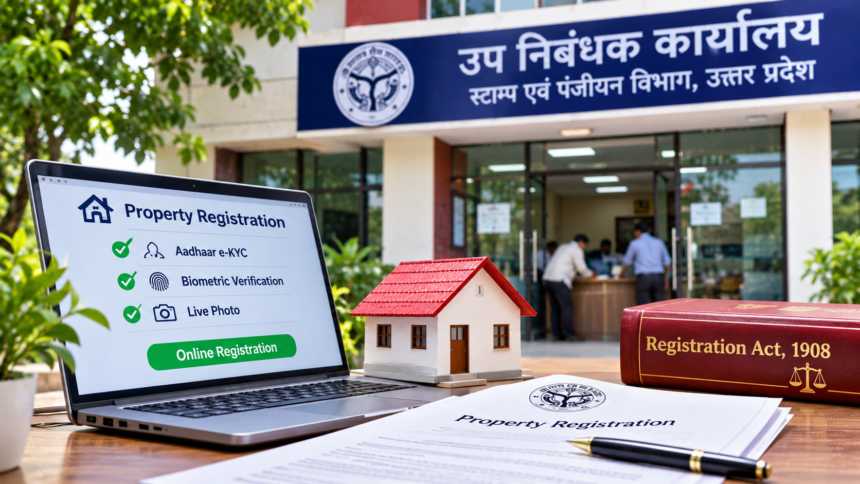
Property registration in Uttar Pradesh could become simpler as the state government moves towards modernising its decades-old registration system. A proposed change is expected to remove the requirement of bringing two witnesses to the registry office when buying or selling property.
Under the proposed arrangement, the identities of buyers and sellers will be verified through Aadhaar-based e-KYC, biometric authentication and live photograph verification. The move is aimed at reducing fraudulent property registrations while making the process more convenient for citizens.
Speaking to NDTV, Ravindra Jaiswal, Minister of State (Independent Charge) for Stamps and Registration, said Aadhaar-based biometric verification has already been introduced in the state. The system uses fingerprint or iris authentication along with live photo verification to establish the identity of the people involved in a property transaction.
Once the buyer and seller complete Aadhaar e-KYC and submit the required online application, the registration process can proceed without requiring two additional witnesses, subject to the proposed regulatory changes.
UP Cabinet May Approve New Property Registration Rules
Uttar Pradesh is considering reforms similar to those adopted in Madhya Pradesh and Maharashtra.
According to the proposal, the state cabinet is expected to discuss amendments to the relevant regulations at its next meeting. If the proposal receives approval and is implemented, buyers and sellers will no longer need to arrange two witnesses for every property registration.
The change is expected to reduce procedural difficulties for citizens and make property registration more straightforward.
Property Registry Timings May Become More Flexible
Along with changes to the witness requirement, the Stamps and Registration Department is also exploring ways to make registration services more accessible.
The department is planning to offer registration facilities beyond regular office hours on working days, excluding Sundays. This arrangement is particularly intended to help salaried employees and other working individuals who often find it difficult to visit registry offices during normal business hours.
The proposed extended timings could allow people to complete property registration without taking leave from work.
Does Property Registration Guarantee Legal Ownership?
Although registering a sale deed is an important step in a property transaction, it does not automatically guarantee that the buyer has acquired a legally valid title.
India follows a deed registration system rather than a system that provides title insurance. Under the Registration Act, 1908, registration primarily records the execution of a document. It does not independently certify that the seller has an undisputed ownership title.
Section 3 of the Transfer of Property Act, 1882, treats registration as constructive notice to the public. However, this does not amount to a statutory guarantee of ownership.
The legal principle of nemo dat quod non habet also applies, meaning that a person cannot transfer a better title than they actually possess. Therefore, if the seller does not have valid ownership rights, registering the sale deed cannot automatically give the buyer a valid title.
For this reason, buyers should carefully examine ownership records and the seller’s legal rights before completing a property purchase.
Disclaimer: This article is intended for general informational purposes only and should not be considered legal advice. The proposed changes to Uttar Pradesh property registration rules are subject to the required government approval and official implementation. Property buyers and sellers should verify the latest procedures with the relevant registration authorities and consult a qualified property lawyer before completing a transaction.