
Tata Motors’ passenger vehicle range is seeing significantly different delivery timelines in August 2026, depending on the model, variant and powertrain. While some Tata cars can be delivered within just one or two weeks, selected electric variants are currently attracting waiting periods of as long as 24 weeks.
The latest waiting-period data shows that customers choosing certain EV variants may need to plan considerably further ahead than buyers opting for petrol, diesel or CNG models.
Tata Cars With the Fastest Deliveries
The Tata Tigor and Altroz currently have some of the shortest waiting periods in the company’s portfolio. Their petrol, diesel, CNG and other available powertrain versions can generally be delivered within 1 to 2 weeks.
The Curvv EV is also available within a similar timeframe. Petrol and CNG versions of the Nexon likewise carry waiting periods of around 1 to 2 weeks.
The Curvv petrol follows the same delivery window, while customers opting for its diesel variants may have to wait slightly longer, at around 2 to 3 weeks.
Moderate Waiting Periods for Nexon, Tiago and Punch
Several Tata models fall into the mid-range waiting category.
The Nexon Diesel and Nexon EV currently have estimated delivery timelines of approximately 3 to 4 weeks.
For the Tiago, Smart variants with petrol and CNG powertrains have a significantly longer waiting period of around 10 to 12 weeks. Other Tiago variants can generally be delivered within 4 to 6 weeks.
A similar pattern is visible with the Punch. Its petrol and CNG Smart variants carry waits of around 10 to 12 weeks, whereas other variants have waiting periods of approximately 6 to 7 weeks.
The Sierra ICE also has varying delivery timelines. Its petrol naturally aspirated Smart variant may take around 6 to 8 weeks, while other petrol and diesel versions have estimated waiting periods ranging from 2 to 6 weeks.
Tata Harrier and Safari Waiting Periods
The waiting period for Tata’s larger SUVs varies considerably depending on the fuel type.
The Harrier Petrol and Safari Petrol currently require around 10 to 12 weeks for delivery.
Their diesel versions, however, are available considerably sooner, with estimated waiting periods of just 2 to 3 weeks.
The Harrier EV also has a relatively short delivery timeline. Across its variants, the electric SUV currently carries an estimated wait of around 2 to 3 weeks, making it one of the quicker Tata electric SUVs to reach customers.
Tata EVs Have the Longest Waiting Times
The most significant delivery delays in Tata Motors’ portfolio are concentrated among certain electric vehicle variants.
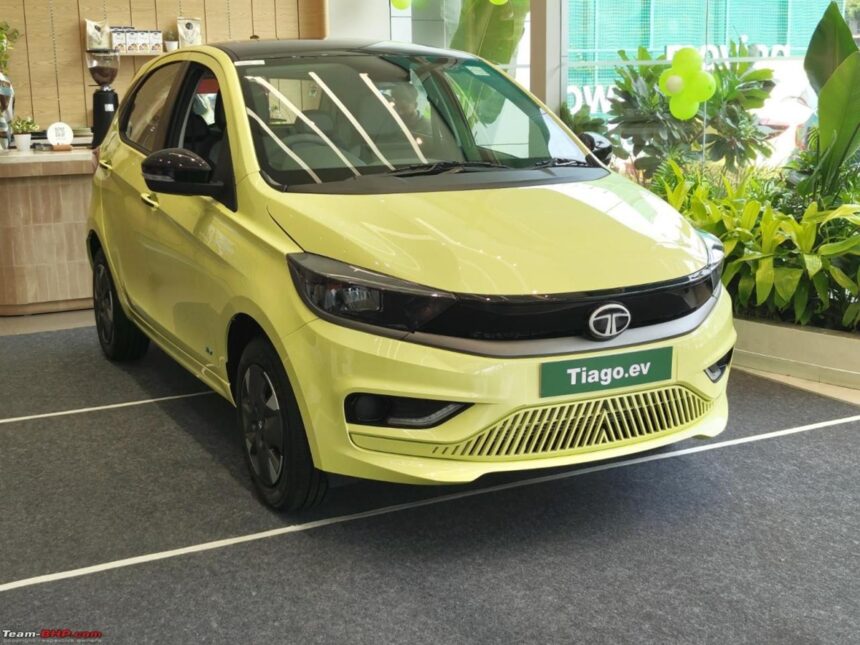
The Tiago EV Smart 19 and Pure+ 19 variants currently have the longest waiting period, ranging from 18 to 24 weeks. Other Tiago EV variants are comparatively quicker, with delivery expected within 4 to 6 weeks.
The Punch EV Smart 30 also carries a substantial waiting period of 18 to 24 weeks. Its Smart 40 variant requires around 10 to 12 weeks, while other Punch EV versions have estimated waiting periods of approximately 8 to 10 weeks.
The upcoming Sierra EV also has a noticeable variation between variants. The Pure 65 version has a waiting period of around 12 to 15 weeks, while other variants can reportedly be delivered within 4 to 6 weeks.
Tiago EV and Punch EV Top the Waiting-Period List
Tata Motors’ August 2026 delivery data shows a clear difference between conventional powertrains and selected electric variants.
Several petrol, diesel and CNG models, including the Tigor, Altroz and diesel versions of the Harrier and Safari, are available within a few weeks. In contrast, some Tata EV variants require customers to wait considerably longer.
The Tiago EV and Punch EV currently stand out, with certain variants carrying waiting periods of up to 18-24 weeks. The Sierra EV Pure 65 also has a significant estimated waiting period of 12-15 weeks.
For buyers planning to purchase a Tata car in August 2026, checking the waiting period for the specific variant and powertrain is therefore important, as delivery timelines can vary substantially even within the same model.