
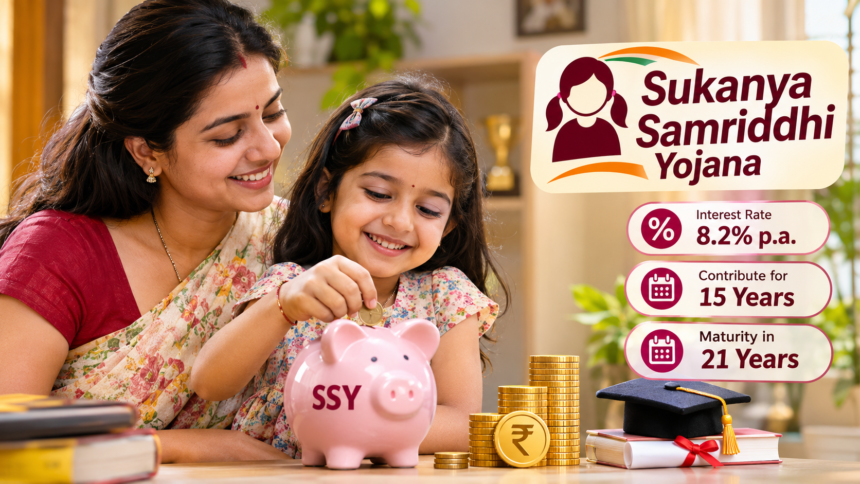
Every parent wants to secure their daughter’s financial future, particularly when it comes to higher education, marriage and other important life goals. The Sukanya Samriddhi Yojana (SSY), a government-backed savings scheme, offers an opportunity to build a substantial fund through regular investments over the long term.
For the October–December 2026 quarter, the scheme offers an annual interest rate of 8.2%. One of its biggest advantages is that parents do not need to deposit money throughout the entire investment period. Contributions are required for 15 years, while the account matures after 21 years from the date of opening.
Parents or legal guardians can open an SSY account for a daughter who is below 10 years of age. With regular contributions and the benefit of compounding, even relatively small monthly savings can grow into a significant amount over time.
Sukanya Samriddhi Yojana: How Much Can You Earn by Investing ₹2,000 to ₹12,500 Monthly?
The maturity value of a Sukanya Samriddhi Yojana account depends on the amount invested, the applicable interest rate and the investment period.
Assuming an annual interest rate of 8.2% throughout the investment period and deposits made before the 5th of every month, parents can potentially accumulate the following amounts:
| Monthly Investment | Estimated Maturity Amount |
|---|---|
| ₹2,000 | More than ₹11 lakh |
| ₹5,000 | Approximately ₹27.73 lakh |
| ₹12,500 | Approximately ₹69.33 lakh |
These examples show how regular savings can help parents create a sizeable financial reserve for their daughters.
However, these figures are illustrative estimates rather than guaranteed returns. The government reviews the SSY interest rate every three months. Any changes in the applicable rate during the investment period may affect the final maturity amount.
Why Does the SSY Account Continue Growing After 15 Years?
One of the most attractive features of the Sukanya Samriddhi Yojana is that deposits are required for only 15 years, even though the account remains active for 21 years.
This means parents do not have to continue making monthly contributions throughout the entire maturity period.
After completing the initial 15-year contribution period, the account continues earning interest for the remaining six years. During this period, no additional deposits are necessary to keep the savings growing.
The interest continues to accumulate on the existing balance, allowing the benefits of compounding to increase the overall fund.
This additional six-year period can make a significant difference to the final savings amount, as the accumulated balance continues earning interest even after regular contributions have stopped.
Sukanya Samriddhi Yojana: Why Long-Term Savings Matter
The SSY scheme is designed to encourage parents to start saving early for their daughters. By opening an account when a girl is below 10 years of age, families can benefit from a long investment horizon.
Instead of arranging a large amount at the last moment, parents can build savings gradually through manageable monthly contributions.
Whether the monthly investment is ₹2,000, ₹5,000 or ₹12,500, maintaining financial discipline over the long term can help create a useful fund for future expenses.
The scheme’s combination of regular contributions, government-declared interest rates and long-term compounding makes it an option worth understanding when planning for a daughter’s financial future.
Disclaimer
This article is intended for general informational and educational purposes only and should not be considered financial or investment advice. The maturity amounts mentioned are illustrative estimates based on an assumed annual interest rate of 8.2% and may change if the government revises the interest rate. Actual returns depend on the applicable scheme rules, deposit timing and contribution amounts. Readers should check the latest Sukanya Samriddhi Yojana guidelines and interest rates through official government sources before investing.