
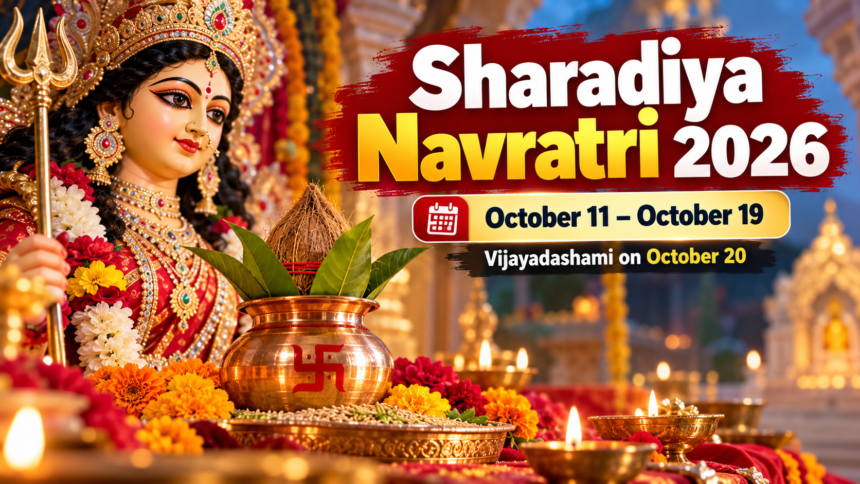
New Delhi: Sharadiya Navratri 2026 will begin on October 11 and continue until October 19. The nine-day Hindu festival is dedicated to the nine forms of Maa Durga, with devotees observing prayers, fasting and traditional rituals throughout the period. Vijayadashami, also known as Dussehra, will be celebrated on October 20, marking the conclusion of the festival.
Navratri holds an important place in Hindu tradition. Devotees worship Maa Durga during these nine days and seek blessings for prosperity, good health, happiness and well-being. The festival begins with Ghatasthapana, also called Kalash Sthapana, which marks the formal start of Navratri worship.
Sharadiya Navratri 2026: Ghatasthapana Muhurat
According to the timings provided, Ghatasthapana will be performed on Sunday, October 11, during the following auspicious periods:
- Ghatasthapana muhurat: 6:31 am to 10:27 am
- Abhijit muhurat: 12:01 pm to 12:49 pm
Ghatasthapana is one of the key rituals performed on the first day of Navratri. Devotees prepare a designated worship area, establish the kalash and sow barley seeds as part of the traditional ceremony.
The ritual symbolises the beginning of the nine-day period of devotion to Maa Durga. Families prepare their prayer spaces and follow their customary practices while beginning the festival.
Why Is the North-East Direction Considered Auspicious?
The north-east direction, known as Ishan Kon, is traditionally considered auspicious for Ghatasthapana. According to Hindu beliefs, this direction is associated with the abode of the gods and is therefore preferred by many devotees for establishing the kalash.
Before starting the ritual, devotees clean the selected area and arrange the necessary puja materials. The kalash is then established according to family customs and traditional religious practices.
Navratri Day 1: Maa Shailputri Puja and Mantra
The first day of Sharadiya Navratri is dedicated to Maa Shailputri, the first of the nine forms of Goddess Durga. Devotees worship her and pray for prosperity, good fortune, wealth and good health.
The following mantra is traditionally chanted during Maa Shailputri worship:
“Om Aim Hreem Kleem Shailputryai Namah”
Devotees may chant the mantra according to their personal practice and religious tradition. According to Hindu beliefs, worshipping Maa Shailputri is also associated with overcoming obstacles in marriage. Those facing marriage-related difficulties may pray to the goddess for blessings, while others seek good health, happiness and overall well-being.
Importance of Durga Saptashati Recitation During Navratri
Reciting the Durga Saptashati is considered an important spiritual practice during Navratri. The scripture is associated with the worship of Maa Durga, and many devotees include its recitation in their prayers throughout the nine-day festival.
According to religious beliefs, reading or listening to the Durga Saptashati is believed to provide spiritual strength and protection from fear, difficulties, worries and enemies. Devotees also associate the practice with happiness, peace and prosperity.
As Sharadiya Navratri 2026 begins, Ghatasthapana, Maa Shailputri worship and Durga Saptashati recitation will form part of the observances followed by many households. The specific rituals and practices may differ according to regional customs and family traditions.
Disclaimer
This article is intended for general informational and cultural purposes. The dates, ritual timings, mantras and religious interpretations are presented according to the information provided and traditional Hindu beliefs. Customs and interpretations may vary by region, family tradition and local panchang. Devotees should verify auspicious timings with a trusted local priest or panchang before performing religious rituals.