
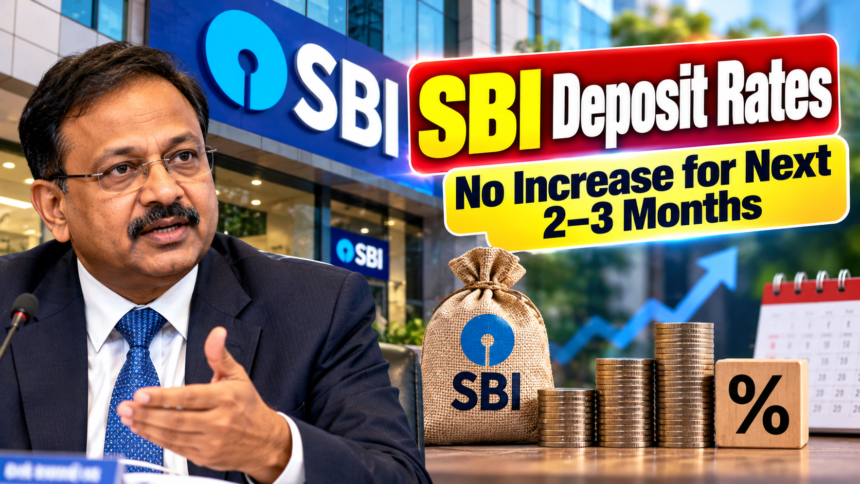
State Bank of India (SBI) is unlikely to raise its deposit interest rates over the next two to three months, as liquidity in the banking system remains comfortable. SBI Chairman C.S. Shetty said the current liquidity situation reduces the immediate need for banks to offer higher returns to attract deposits.
However, he indicated that recent changes in the Reserve Bank of India’s (RBI) repo rate could support banks’ net interest margins (NIMs) over the next two to three quarters. His comments come as lenders assess the impact of changing interest rates, credit demand and funding costs.
The RBI’s Monetary Policy Committee recently increased the repo rate by 0.25 percentage points to 5.50%. Following the decision, major lenders, including Punjab National Bank (PNB), Indian Bank and Bank of Baroda, raised their lending rates by up to 0.25 percentage points, potentially increasing borrowing costs for some customers.
Why SBI Does Not Expect Deposit Rates to Rise Soon
According to Shetty, the banking system currently has sufficient liquidity, making an immediate increase in deposit rates less likely. However, the situation could change if strong credit growth continues and banks require additional funds to support lending.
He noted that sustained loan growth could eventually prompt some lenders to increase deposit rates to attract more funds. Shetty also stressed that depositors should receive positive real returns, meaning their interest earnings should be considered alongside inflation.
For savers, SBI’s position suggests that higher deposit returns may not arrive immediately. The rates offered by individual banks will depend on their funding requirements, liquidity conditions and broader interest rate developments.
RBI Repo Rate Hike May Support SBI’s Net Interest Margin
Shetty said the recent repo rate increase could benefit banks’ net interest margins over the next two to three quarters. NIM measures the difference between the interest a bank earns on loans and other assets and the interest it pays on deposits and other borrowings.
He said market expectations point towards a cumulative rate increase of 0.75 percentage points, potentially delivered in two or three stages. According to Shetty, the benefits for banks’ NIMs could become visible over a period of two to three quarters.
More than half of the loans across the banking system are linked to external benchmark lending rates, which adjust in line with changes in the RBI’s repo rate. Changes in these rates can influence the interest income banks earn from eligible loans.
The eventual impact on each bank will depend on how quickly lending rates and deposit costs adjust to changing market conditions.
SBI Expects Loan Portfolio Growth of 14–15%
Shetty expressed confidence that SBI could maintain loan portfolio growth of around 14–15%. He said the bank’s loan growth should remain two to three percentage points above the prevailing nominal GDP growth rate.
Strong lending growth can increase banks’ need for funding, making deposit mobilisation an important consideration. Although SBI does not expect to raise deposit rates in the immediate future, continued credit demand could influence banks’ deposit pricing decisions later.
The balance between lending growth, deposit mobilisation and funding costs will remain important for SBI as it seeks to maintain its growth momentum.
Five-Day Workweek Demand Under Discussion
Shetty, who also chairs the Indian Banks’ Association (IBA), said discussions are continuing over the demand for a five-day working week in the banking sector.
According to him, bank management representatives are engaging with the stakeholders concerned through a committee established under the IBA to examine the issue.
Bank employee unions had threatened a widespread strike in September over the demand. The discussions are intended to address the issue through engagement between the relevant parties.
Disclaimer: This article is intended for general informational purposes only and does not constitute financial or investment advice. Interest rates, bank policies and economic conditions may change. Readers should verify the latest deposit and lending rates directly with SBI or the relevant bank before making financial decisions.