
The beginning of October has brought several changes related to banking, LPG, UPI, NPS, income tax and railway services. While some of these changes came into effect on October 1, the new UPI MDR rule is scheduled to take effect from October 15. These updates are important for customers because they may affect everyday banking and financial transactions.
One of the key changes concerns SBI ATM withdrawals, particularly for State Bank of India salary package account holders using ATMs operated by other banks.
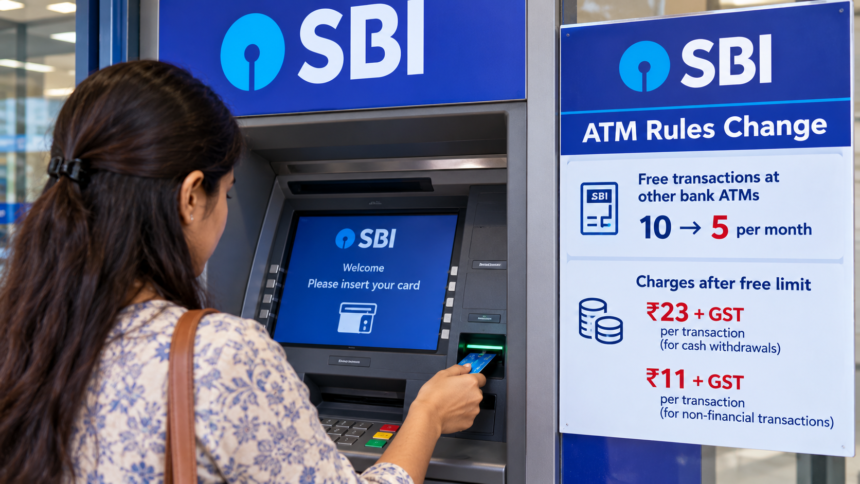
SBI Salary Account ATM Limit Cut From 10 to 5
From October 1, SBI salary package account holders can make only five free transactions per month at other banks’ ATMs and Automated Deposit and Withdrawal Machines (ADWMs).
Earlier, customers were allowed up to 10 free transactions at other banks’ ATMs. The revised limit covers both financial and non-financial transactions.
Once the five free transactions have been exhausted, charges will apply to subsequent transactions.
SBI ATM Charges After Free Limit
After the free transaction limit is reached, the sixth and subsequent financial transactions at other banks’ ATMs will attract a charge of ₹23 per transaction, along with applicable GST.
For non-financial transactions, such as balance enquiries or similar services, the charge will be ₹11 plus GST.
SBI customers using other banks’ ATMs should therefore keep track of their monthly transactions to avoid unexpected charges.
BSBD Account Withdrawal Charges
For customers holding a Basic Savings Bank Deposit (BSBD) account, the first four cash withdrawals in a month remain free.
After these four withdrawals, a charge of ₹15 plus GST will be applicable on each additional cash withdrawal. The charge applies specifically to cash withdrawals, while digital transactions are not covered by this fee.
Disclaimer
This article is intended for general informational purposes. Banking charges and transaction rules may be revised by the concerned bank or regulatory authorities. Customers should check the latest official SBI terms and conditions before making financial decisions.