
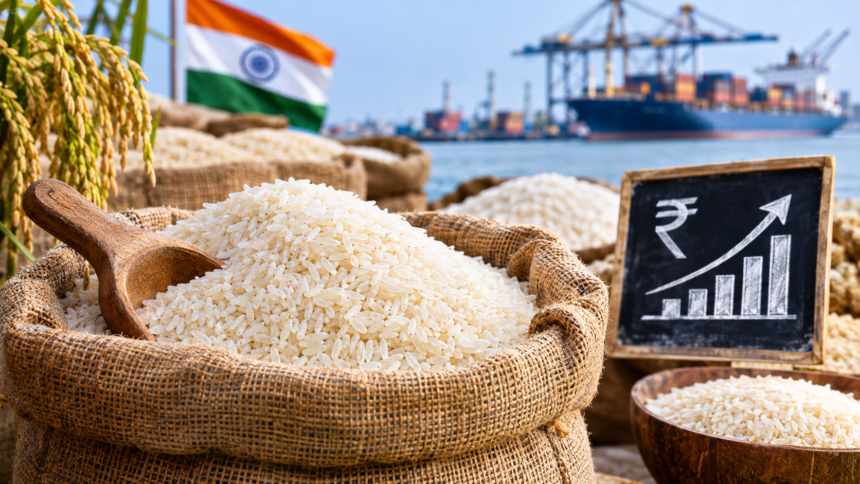
New Delhi: Rising food prices have become a concern for households across India, with essential commodities such as rice, pulses and sugar becoming increasingly expensive. To prevent further increases in rice prices, the Central Government is considering new measures to improve domestic supply and control market rates.
According to media reports, the government is examining a proposal to introduce an export duty of up to 20% on selected varieties of rice. The proposed move could cover broken rice and certain premium non-basmati varieties.
The main objective is to ensure that more rice remains available in the Indian market instead of being exported overseas. If implemented, the decision could help improve domestic availability and ease price pressure on consumers and businesses.
Why Is the Government Considering a 20% Rice Export Duty?
The proposed export duty comes amid concerns about rising rice prices and declining availability of certain varieties in different parts of the country.
According to reports, non-basmati rice stocks have become limited in some southern states. At the same time, the increasing cost of broken rice has created difficulties for industries that depend on it as a major raw material.
The poultry and animal feed sectors are among the industries affected by higher broken rice prices.
By increasing the cost of exporting selected rice varieties, the government wants to encourage greater availability of these products in the domestic market. Keeping more supplies within the country could provide some relief to local businesses, industries and consumers.
Will Rice Exports From India Become More Expensive?
If the proposed export duty of up to 20% is introduced, Indian rice could become more expensive for international buyers.
Higher export costs may reduce the competitiveness of certain Indian rice varieties in overseas markets. As a result, exporters could face difficulties, and the overall volume of rice exports may decline.
However, India is one of the world’s major rice-exporting countries, and its position in the international rice market remains important. Therefore, even if additional export duties are imposed, Indian rice exports are unlikely to stop completely.
The actual impact will depend on the final government decision and the varieties covered under the proposed duty.
Thailand, Vietnam and Myanmar Could Benefit
A possible reduction in India’s rice export competitiveness could create additional opportunities for other major rice-exporting countries.
Thailand, Myanmar and Vietnam could benefit if international buyers begin looking for alternative suppliers. These countries have previously faced difficulties competing with Indian rice because their prices were comparatively higher.
If Indian rice becomes more expensive due to the proposed export duty, overseas buyers may consider purchasing more rice from these competing markets.
The government’s final decision will therefore be important not only for domestic rice prices but also for India’s position in the global rice trade.
For now, the proposed 20% export duty remains under consideration. Consumers, traders, rice exporters and industries dependent on broken rice will be watching for further developments.
Disclaimer: This article is based on media reports and information available at the time of publication. The proposed rice export duty has been described as a measure under consideration and should not be treated as an officially implemented decision. Final rates, affected rice varieties and implementation details will depend on government notifications. Readers and businesses should refer to official announcements for the latest updates.