
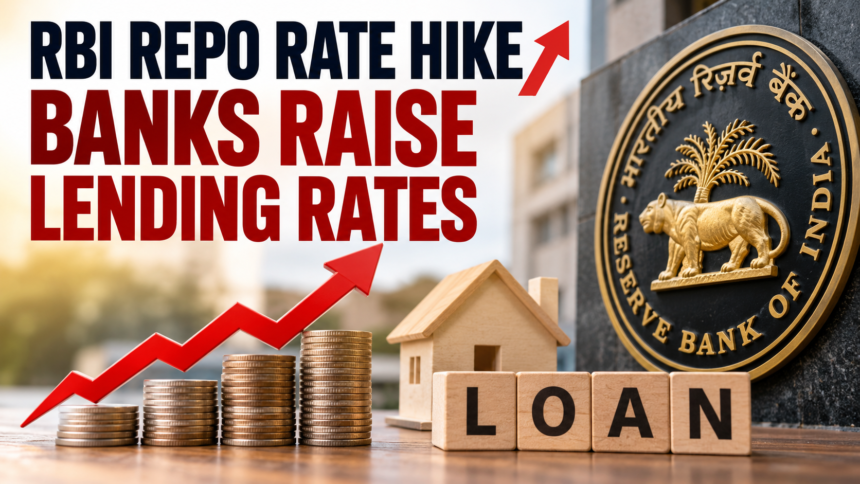
Several leading banks, including Punjab National Bank (PNB), Bank of Baroda and Indian Bank, have raised their lending rates shortly after the Reserve Bank of India (RBI) increased the benchmark repo rate. The move is expected to make borrowing more expensive for customers.
The RBI raised the repo rate by 25 basis points to 5.50% on October 7, marking its first increase in nearly four years. The central bank also indicated a shift towards tighter monetary policy as rising inflation and a weakening domestic currency influenced its decision.
The decision was taken unanimously by the six-member Monetary Policy Committee (MPC). It was also the first repo rate increase under RBI Governor Sanjay Malhotra, who took charge in December 2024. Along with the rate hike, the RBI changed its policy stance to “calibrated tightening”, signaling that immediate rate cuts are unlikely.
PNB Revises Repo Linked Lending Rate
Punjab National Bank announced that it had increased its Repo Linked Lending Rate (RLLR) following the RBI’s repo rate decision.
According to a regulatory filing, PNB raised its RLLR from 8.10%, including a 0.35% BSP, to 8.35%. The revised rate came into effect on October 8.
The bank, however, said there was no change in its Marginal Cost of Funds Based Lending Rate (MCLR) or Base Rate.
Bank of Baroda and Indian Bank Also Raise Rates
Bank of Baroda increased its Repo-Based Lending Rate (RBLR) by 25 basis points. Its rate has moved from 7.90% to 8.15%.
Indian Bank, headquartered in Chennai, also revised its Repo Linked Benchmark Lending Rate from 7.95% to 8.20%. The new rate became effective on October 8.
Bank of India and Indian Overseas Bank have also raised their RBLR to 8.35%, with the revised rates effective from October 8. Bank of India confirmed the change through a regulatory notification and attributed the revision to the RBI’s policy rate increase.
Tamilnad Mercantile Bank Joins the Rate Hike
Among private sector lenders, Tamilnad Mercantile Bank increased its Repo Linked Lending Rate from 8.25% to 8.50%.
With the RBI’s repo rate now higher, other public and private sector banks may also revise their lending rates in the coming days. Such changes can affect the cost of loans linked to external or repo-based benchmarks.