
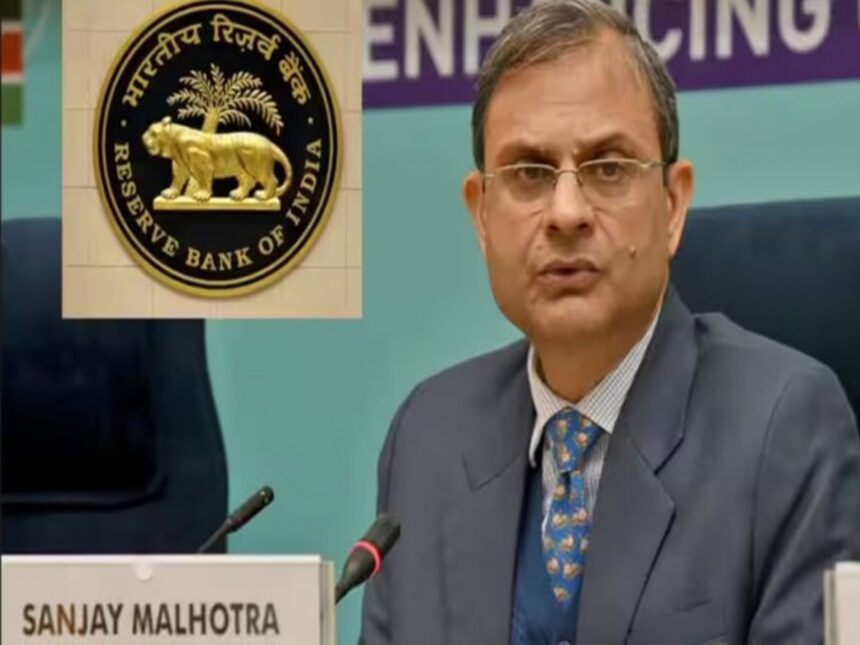
We need to be watchful as risks of higher food, fuel, other input prices translating into broad-based rise in inflation and de-anchoring of expectations persist’: RBI governor.
The Reserve Bank of India’s Monetary Policy Committee (MPC) has kept the door open for interest rate hikes later in the financial year if rising food, fuel and other input costs begin to translate into broader and more persistent inflation, the minutes of its August meeting showed.
The six-member MPC, headed by RBI Governor Sanjay Malhotra, unanimously voted to keep the benchmark repo rate unchanged at 5.25% at its August 3-5 meeting. However, the discussions revealed growing caution over the inflation outlook, particularly amid elevated energy prices, geopolitical uncertainty and weather-related risks.
“We also need to be watchful as the risks of higher food, fuel and other input prices translating into a broad-based increase in inflation and de-anchoring of expectations persist. Any evidence of these risks materialising may need policy tightening,” said Malhotra, according to the RBI MPC minutes released on August 19.
The minutes suggest that the central bank is not yet ready to raise rates, but could reconsider its policy stance if evidence emerges that the recent increase in inflation is becoming broad-based or threatens to push inflation expectations higher.
Malhotra said the RBI needed greater clarity on the inflation trajectory before considering any recalibration of the policy rate. He noted that a monetary policy response to a supply-side shock becomes necessary when it starts leading to a generalisation of inflation, de-anchoring of inflation expectations or persistent inflation.
While such risks remain, the Governor said evidence of them materialising was still limited.
“I would prefer to wait for more certainty to emerge on the inflation trajectory,” Malhotra said, pointing to the need to assess the persistence of inflation readings, the forecast trajectory and the level at which inflation is likely to normalise.
At the same time, the Governor warned that the risks could not be ignored.
The MPC needs to remain watchful of the possibility that higher food, fuel and other input costs could translate into a broad-based rise in inflation and weaken the anchoring of inflation expectations, he said. “Any evidence of these risks materialising may need policy tightening.”
RBI MPC: Rate hike case could emerge later this year
Deputy Governor and MPC member Poonam Gupta was more explicit about the possibility of a future rate increase.
Gupta said that with headline inflation projected to rise to as much as 5.9% in the third quarter of 2026-27, “a case for a hike may emerge during the course of the year.”
However, she backed the decision to wait for more information at the current juncture. Persistent uncertainty over global developments and weather-related risks, she said, made a wait-and-watch approach appropriate.
This would allow the RBI to assess how weather conditions evolve, whether supply-side inflation is becoming entrenched and how the global situation develops.
The comments indicate that the MPC’s immediate priority is to establish whether the rise in inflation is temporary and driven largely by supply-side factors, or whether it is beginning to spread across the wider economy.
Why is the RBI worried about inflation?
Inflationary risks have increased as food and fuel prices have moved higher. The situation has been complicated by geopolitical developments in West Asia, volatile crude oil prices and uncertainty around the monsoon and the potential impact of El Niño.
The conflict in West Asia and concerns surrounding energy supplies have added to the risks for an oil-importing economy such as India. Higher crude prices can raise transportation and input costs and, if sustained, can eventually feed into prices across a wider range of goods and services.
The MPC, however, has so far found limited evidence of such second-round effects becoming widespread.
RBI Executive Director and MPC member Indranil Bhattacharyya said the pass-through from spikes in food and fuel inflation had remained limited, suggesting that inflation had not yet become broad-based.
He also argued that in an environment of high uncertainty, economic agents would be better served by broad framework guidance rather than explicit guidance on the future path of monetary policy.
Growth remains resilient
The RBI’s caution on inflation comes even as it sees the Indian economy performing relatively well.
Malhotra said the economy had performed better than expected in the first quarter of 2026-27 despite the disruption to supply chains caused by the West Asia conflict, heightened uncertainty and an erratic monsoon.
Domestic demand, investment and exports have continued to support economic activity.
MPC member Ram Singh also pointed to the strength of economic growth, noting that growth of around 7% had not been accompanied by noticeable signs of demand-driven overheating. He highlighted the fact that core inflation had remained below 4% for several consecutive quarters.
This is important for the RBI’s policy decision because a supply-driven increase in headline inflation is generally treated differently from inflation caused by excessive domestic demand.
What does this mean for the repo rate?
For borrowers and investors, the August MPC minutes suggest that the RBI’s rate-cut cycle has effectively given way to a period of caution. The immediate message is not that a rate hike is imminent. Rather, the central bank wants to see whether inflation pressures persist before making its next move.
If food and fuel prices remain elevated but their impact stays confined to a few volatile components, the RBI could continue to hold rates. But if higher energy and input costs begin feeding into core inflation, inflation expectations or a broader set of goods and services, the case for tightening would become stronger.
The minutes therefore leave the future direction of monetary policy data-dependent.
The MPC’s unanimous decision to hold the repo rate at 5.25% shows that members were not yet convinced that inflation required immediate monetary tightening. At the same time, the comments from Malhotra and Gupta indicate that the possibility of a rate hike later in FY27 is firmly back on the policy radar.
The next MPC meeting is scheduled for October 5-7, 2026, when the committee will have more data on inflation, crude oil prices, the monsoon and the broader economic impact of geopolitical developments.
Rewrite this article to make it 100% unique and SEO-friendly. Keep the same meaning, but change the wording and sentence structure. Make it engaging, informative, and natural for human readers