
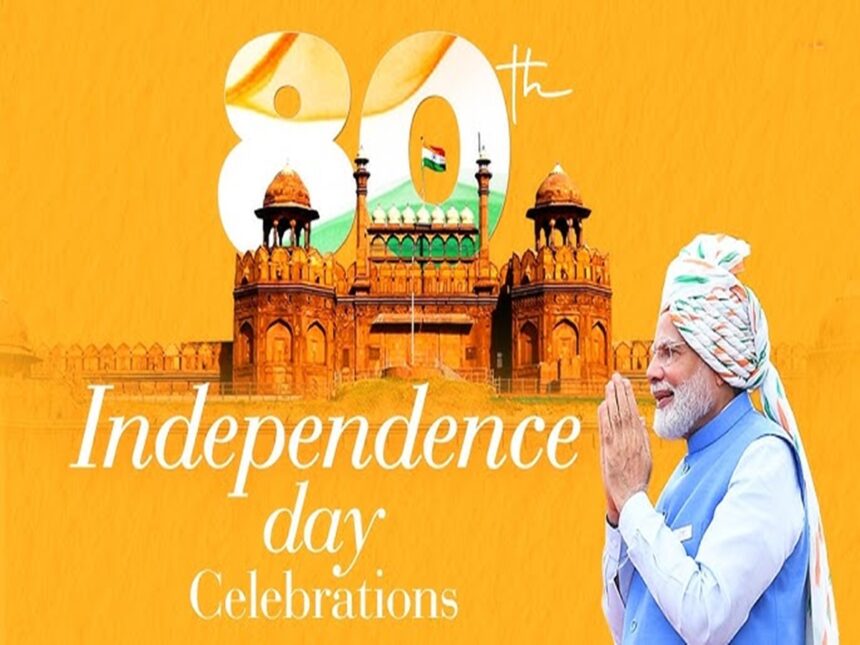
Sapta Sindhu: Prime Minister Narendra Modi has outlined a seven-part vision for India’s development, describing “Sapta Sindhu” — seven streams of strength that he believes can help the country achieve its goal of becoming a developed nation by 2047.
In his 80th Independence Day address from the Red Fort, Modi presented the seven areas as key pillars of India’s long-term growth. The vision spans sectors ranging from manufacturing and agriculture to national defence and India’s soft power.
The Prime Minister also emphasised the role of India’s young population, saying the country’s youth power would be brought directly into the nation-building process.
What Is ‘Sapta Sindhu’?
The term Sapta Sindhu, meaning “seven rivers” or “seven streams,” was used by Modi to describe seven major sources of strength that India needs to develop.
Rather than focusing on a single sector, the framework brings together different parts of the economy, society and national capability.
According to the Prime Minister’s vision, strengthening these areas can help India build the economic capacity, technological capabilities and global influence needed to achieve the Viksit Bharat 2047 goal.
Manufacturing Gets Major Focus
Among the seven streams, manufacturing received the most detailed attention in Modi’s Independence Day speech.
The Prime Minister called on Indian businesses, entrepreneurs and micro, small and medium enterprises (MSMEs) to help transform India into a reliable destination for global supply chains.
He stressed that the country’s ambition should go beyond assembling finished products. India should develop capabilities across the entire production ecosystem — beginning with design and research and extending through manufacturing, components and the wider value chain.
The objective is to ensure that products made in India are not only competitive domestically but are also trusted by international markets.
Youth Power at the Centre of the Vision
Modi linked the Sapta Sindhu framework closely with India’s demographic strength.
With a large young population, the Prime Minister argued that India’s youth can become one of the country’s most important assets in its journey towards development.
Their skills, entrepreneurship, innovation and participation in emerging industries could play a crucial role in creating jobs, strengthening businesses and expanding India’s global economic footprint.
Agriculture, Defence and Soft Power Also Part of the Plan
The Sapta Sindhu vision extends beyond traditional economic growth.
Agriculture remains an important pillar because of its role in livelihoods, food security and rural development. Strengthening agricultural productivity and value addition can also help create new opportunities for farmers and rural businesses.
Defence represents another major area of focus. Expanding domestic defence manufacturing and technological capabilities can strengthen national security while creating opportunities for Indian companies to participate in global defence supply chains.
The framework also recognises India’s growing soft power — the country’s cultural influence, traditions, heritage, knowledge, diplomacy and global appeal.
A Broader Roadmap for Viksit Bharat 2047
By bringing these different sectors together under the Sapta Sindhu concept, Modi presented development as a broader national mission rather than an economic target alone.
The emphasis on manufacturing and supply-chain integration reflects India’s ambition to become a major global production centre, while agriculture, defence and soft power represent other dimensions of national strength.
The Prime Minister’s message from the Red Fort was that India must use its economic resources, young population, industrial capabilities, strategic strength and cultural influence together to achieve the vision of a developed India by 2047.