
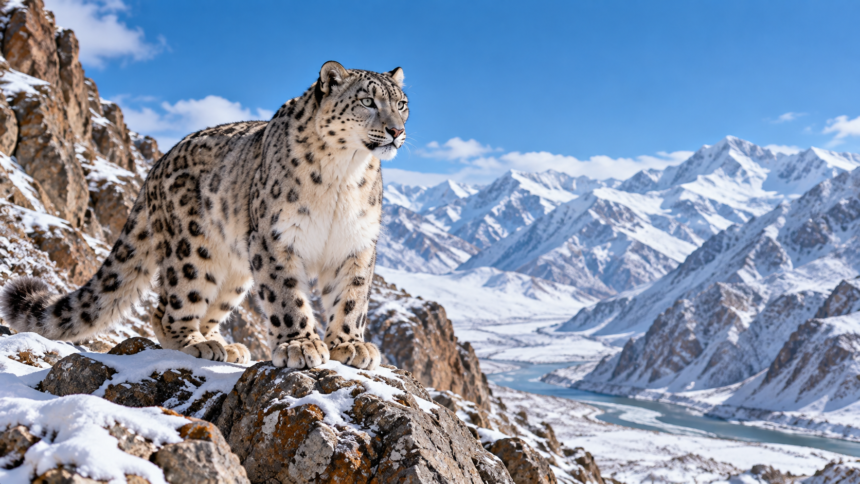
Snow leopard tracking in Ladakh has secured the fourth position globally in the Wildlife Experience Index published by travel company Bailey Robinson. The experience received a score of 85.5 out of 100 in a ranking that evaluated 30 wildlife encounters on factors including rarity, remoteness, conservation value, exclusivity, accessibility and the likelihood of an encounter.
Only mountain gorilla trekking in Rwanda or Uganda, emperor penguin expeditions in Antarctica and saiga antelope expeditions in Kazakhstan were placed ahead of the Ladakh experience.
Unlike a conventional safari, snow leopard tracking involves travelling through remote mountain valleys, observing rocky slopes through spotting scopes and looking for clues such as paw prints, scent markings and prey movement. Experienced local trackers play an important role in locating the elusive animals.
Best Places to Track Snow Leopards in Ladakh
Hemis National Park
Located close to Leh, Hemis National Park is one of the best-known areas for snow leopard tracking in Ladakh. Its rugged terrain, steep mountains and deep valleys provide suitable habitat for snow leopards and prey species such as bharal, also known as blue sheep.
Guided expeditions commonly cover the Rumbak Valley and nearby areas within the park. Visitors may also encounter Himalayan ibex, Tibetan wolves, red foxes, golden eagles and Himalayan griffon vultures during their journey.
Ulley Valley
Ulley, a mountain village west of Leh, has also become an important base for snow leopard expeditions. Wildlife trips in the area generally use local homestays or specialised lodges, while experienced trackers search the surrounding slopes for signs of animal activity.
The destination can also provide travellers with an opportunity to combine wildlife tracking with a winter village experience.
When Is the Best Time to Visit?
Snow leopards remain in Ladakh throughout the year, but November through April is generally considered the practical tracking season. During winter, blue sheep and other prey species move towards relatively lower valleys, and snow leopards follow them. This can make it easier for trackers to search for the animals.
February and March are popular months among tour operators because of longer daylight hours and increased tracking activity. However, specialist expedition operator Voygr says its multi-season sighting records have not shown a significant difference in sighting probability between November and April.
Travellers looking for relatively milder conditions can consider late March or April. Those planning a trip between December and February should be prepared for extreme cold, frozen trails and possible weather-related disruptions.
A sighting, however, is never guaranteed, even during the most favourable tracking period.
How Long Should a Snow Leopard Trip Be?
A snow leopard expedition should not be planned as a short day trip from Leh. Organised itineraries typically run for around eight to 14 days, covering arrival, acclimatisation and several days in the tracking areas.
Spending more days in the field can provide additional opportunities to encounter a snow leopard, as the animals can cover large territories and remain concealed among rocky terrain for long periods.
Patience is an essential part of the experience. Travellers may spend hours walking, waiting and scanning distant mountain ridges before spotting any wildlife.
Acclimatisation and Packing Essentials
Leh is situated at approximately 3,500 metres above sea level, while tracking routes can take visitors to even higher elevations. The Leh district administration advises tourists arriving in Ladakh to spend at least 48 hours acclimatising before travelling to higher-altitude areas.
Strenuous activity should be avoided immediately after arrival. Anyone experiencing severe headache, breathlessness while resting, confusion or loss of coordination should seek medical assistance. Travellers with existing heart, lung or other medical conditions should consult a doctor before planning a high-altitude winter expedition.
Winter travel also requires appropriate equipment. Essential items include thermal base layers, an insulated down jacket, waterproof and windproof outerwear, insulated trekking boots, woollen socks, gloves, a warm cap, sunglasses and high-SPF sunscreen. Travellers should also carry reusable water bottles, personal medicines, binoculars, spare camera batteries, a headlamp and a portable power bank.
Extreme cold can quickly drain electronic batteries, so carrying spares and keeping them close to the body when they are not being used can help.
Guides, Permits and Wildlife Safety
Snow leopard tracking should be undertaken with experienced local trackers and registered operators who understand the terrain, weather conditions and wildlife protocols. Travellers should not attempt to independently enter remote winter landscapes or follow animals.
Permit requirements can vary depending on the traveller’s nationality and the locations included in the itinerary. The district administration provides an online Protected Area Permit and Inner Line Permit portal. Travellers should confirm the latest requirements with the administration or their registered operator before departure, particularly when an itinerary includes protected or border-sensitive areas beyond the main tracking locations.
Wildlife safety is equally important. Visitors should maintain a safe distance, keep noise to a minimum and never chase, surround or bait animals for photographs. Flash photography, drones and loud activity can disturb wildlife. Travellers should also avoid leaving food or plastic waste behind and follow instructions from trackers and forest officials.
Snow leopard tracking ultimately requires patience rather than an expectation of a guaranteed sighting. It can take several days of searching to catch even a distant glimpse of the elusive cat. For those who do, the experience combines Ladakh’s stark winter scenery, rare Himalayan wildlife and the knowledge of local trackers.