
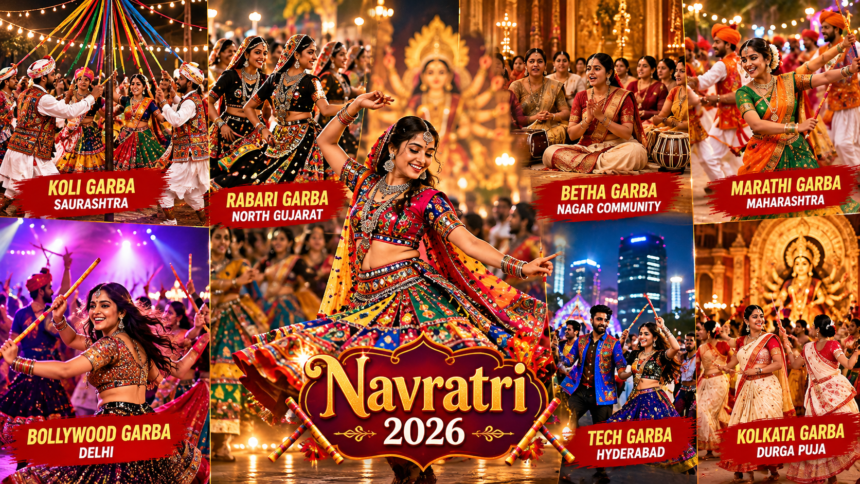
Navratri 2026 will begin on October 11, bringing nine days of devotion, music and festive celebrations. During this period, markets fill with colourful traditional outfits, including chaniya cholis, jewellery and festive accessories. Along with prayers and fasting, Garba and Dandiya Raas remain among the most popular ways for people to celebrate the festival.
Although Garba originated in Gujarat, the traditional dance has evolved as it has spread to different parts of India. Communities have adapted their celebrations to reflect local customs, music and cultural influences. From traditional folk performances in Gujarat to Bollywood-inspired dance nights in Delhi, these variations offer different ways to experience the festive spirit of Navratri.
1. Koli Garba in Saurashtra, Gujarat
Saurashtra’s Koli Garba is associated with the Koli and Kanbi communities and forms part of the region’s folk traditions. One notable variation is Gof Gunthan, which involves coordinated movements using sticks and strings connected to a central pole.
This style draws on the broader Raas tradition and differs from the more familiar circular Garba and Dandiya performances. Its coordinated movements and traditional elements make it a distinctive part of Gujarat’s cultural heritage.
2. Rabari Garba in North Gujarat
Rabari Garba reflects the folk traditions of the pastoral Rabari community in North Gujarat. Women often participate in these performances, which bring together regional music, traditional movements and the community’s cultural heritage.
Other folk traditions, including Dakla performances, also form part of the wider cultural landscape associated with Gujarat’s community celebrations. During Navratri, these traditions provide an opportunity to preserve and share local music and dance.
3. Betha Garba of the Nagar Community
Betha Garba, also known as Sitting Garba, offers a more devotional approach to Navratri celebrations. Associated with the Nagar Brahmin community, this practice centres on singing religious songs dedicated to Goddess Amba rather than performing elaborate dance movements.
Participants sit together and sing devotional compositions, often accompanied by simple instruments such as the dholak and manjira. The emphasis remains on prayer, collective participation and spiritual connection.
4. Marathi Garba Celebrations in Maharashtra
Garba has also become popular among communities across Maharashtra during Navratri. Rather than representing one specific Marathi dance form, these celebrations reflect the adoption of Gujarat’s traditional dance by people in different parts of the state.
Garba and Dandiya events bring communities together through music, colourful outfits and group performances. They also demonstrate how festivals can encourage cultural exchange between different regions of India.
5. Bollywood Garba Nights in Delhi
Delhi adds a modern entertainment element to Navratri through Bollywood-themed Garba and Dandiya events. These celebrations combine traditional dance steps with popular Hindi film music, live DJs and festive decorations.
Events such as the Global Garba Festival, Rock N Dhol Shubharambh and other Dandiya nights have been associated with this style of celebration. Depending on the event, visitors may also find food stalls, competitions and organised festive activities.
6. Tech Garba Celebrations in Hyderabad
Hyderabad offers another blend of traditional and contemporary Navratri celebrations, particularly around commercial and technology hubs such as HITEC City.
Events including SK Navratri Utsav and Navkar Navratri Utsav have been associated with celebrations featuring traditional Garba, Bollywood music, DJs and other festive activities. These gatherings give residents and working professionals an opportunity to participate in Navratri celebrations alongside their daily routines.
7. Garba and Dandiya During Kolkata’s Durga Puja Season
Kolkata is widely known for its Durga Puja celebrations, while Garba traditionally has stronger roots in western India. However, some venues and event organisers in Kolkata have incorporated Garba and Dandiya nights into the festive season.
These events bring together elements of Navratri dance and the city’s Durga Puja atmosphere, creating opportunities for people to enjoy music, dance and community celebrations. Both festivals honour Goddess Durga, although their customs and regional traditions differ.
Experience India’s Diverse Navratri Traditions
Navratri offers more than nine days of religious observance. It is also an opportunity to discover India’s regional cultures through folk music, traditional clothing, devotional singing and dance.
Whether it is the community-based folk traditions of Gujarat, the wider popularity of Garba in Maharashtra or the Bollywood-inspired celebrations of Delhi and Hyderabad, each setting brings its own character to the festival. As Navratri 2026 approaches, these different traditions highlight the cultural diversity that makes the celebrations special.
Disclaimer: This article is intended for general informational and cultural purposes only. Garba traditions, event names and festival programmes may vary by region and organiser. Readers planning to attend specific Navratri or Durga Puja events should confirm the latest dates, schedules and venue details through the organisers’ official announcements.