
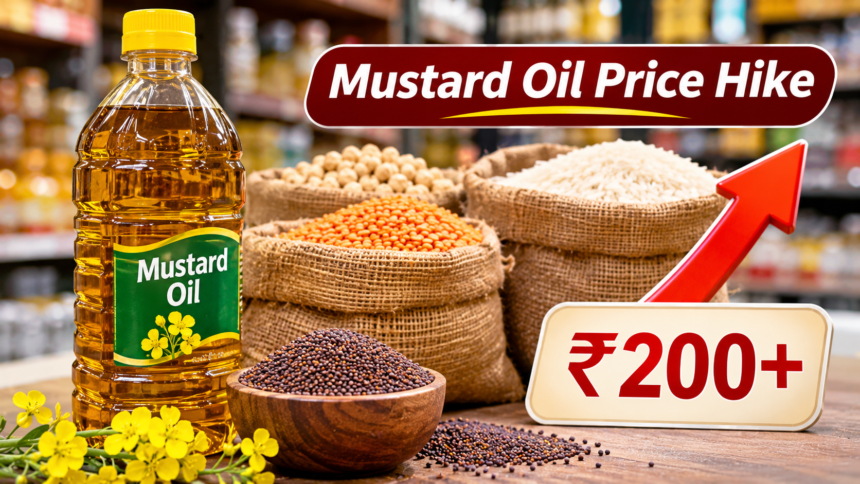
Rising prices of everyday food items are putting additional pressure on household budgets across India. Mustard oil, which is commonly used in Indian kitchens for cooking and other household purposes, has become more expensive during the ongoing wedding season. Along with edible oils, the prices of pulses, rice and flour have also increased in recent weeks.
Over the past 15 days, retail prices of several essential commodities have moved upward. Mustard oil, which was earlier available for around ₹170 to ₹195 per litre, is now being sold at approximately ₹190 to ₹220 per litre in some markets. Other reported retail prices have reached ₹200 to ₹230 per litre.
Refined oil has also become costlier. Its earlier price range of ₹145 to ₹155 per litre has increased to around ₹155 to ₹165 per litre. These increases are adding to the financial burden on middle-class families, particularly those managing higher household expenses during the wedding season.
Mustard Oil and Rice Prices Increase
Mustard oil and pulses have recorded some of the most noticeable price increases. Basmati rice has become more expensive by approximately ₹10 to ₹15 per kilogram, while regular rice prices have increased by up to ₹5 per kilogram.
Prices of different varieties of pulses have also gone up by around ₹2 to ₹5 per kilogram.
The reported market figures for several other products include:
| Item | Reported price figures |
|---|---|
| Basmati rice | ₹80, ₹85 and ₹90 |
| Pistachios | ₹1,000–₹1,400 |
| Walnut kernels | ₹800–₹900 |
| Almond kernels | ₹800–₹900 |
| Refined oil (per tin) | ₹2,400, ₹2,500, ₹2,670 and ₹2,700 |
| Mustard oil | ₹180–₹220 |
The units for some of these individual market figures were not specified in the supplied price information.
Latest Prices of Pulses, Rice, Flour and Cooking Oil
The following are the reported retail price ranges for commonly purchased grocery items:
| Grocery item | Price |
|---|---|
| Arhar Dal (Split Pigeon Pea) | ₹150–₹165 per kg |
| Urad Dal (Split Black Gram) | ₹140–₹150 per kg |
| Whole Chana (Chickpea) | ₹85–₹90 per kg |
| Chana Dal (Split Chickpea) | ₹100–₹105 per kg |
| Red Masoor (Red Lentil) | ₹90–₹95 per kg |
| Rice (Hari Patti variety) | ₹127–₹130 per kg |
| Basmati Rice | ₹105–₹115 per kg |
| Rajma (Kidney Beans) | ₹125–₹130 per kg |
| Atta (Wheat Flour) | ₹35–₹42 per kg |
| Besan (Gram Flour) | ₹100–₹115 per kg |
| Mustard Oil | ₹200–₹230 per litre |
| Refined Oil | ₹155–₹165 per litre |
These figures represent the reported market prices and may vary depending on the location, shop and product quality.
Why Are Mustard Oil, Pulses and Rice Becoming More Expensive?
Several factors have contributed to the increase in grocery prices. Higher wholesale demand during the wedding season is one of the reasons behind the recent rise in prices.
Unseasonal rainfall has also affected pulse and oilseed crops, putting pressure on supplies. At the same time, rising international edible oil prices have influenced domestic market rates.
Higher transportation and procurement expenses are another factor. Increased diesel prices and freight charges have raised the cost of bringing goods from other states, which can eventually affect retail prices.
Rising Grocery Costs Put Pressure on Household Budgets
The increase in mustard oil, pulses, rice and other essential food items is making everyday shopping more expensive for households. Families preparing for weddings and other celebrations may face additional expenses as grocery prices continue to fluctuate.
Consumers should compare prices at different shops and check product quality before purchasing. Since retail rates can change between markets, buyers should confirm the latest local prices before making bulk purchases.
Disclaimer: The prices mentioned in this article are based on the supplied market information and are indicative. Actual retail rates may differ depending on the city, retailer, brand, product quality and market conditions. Some listed figures do not specify a measurement unit. Consumers should confirm the applicable price with local sellers before purchasing.