
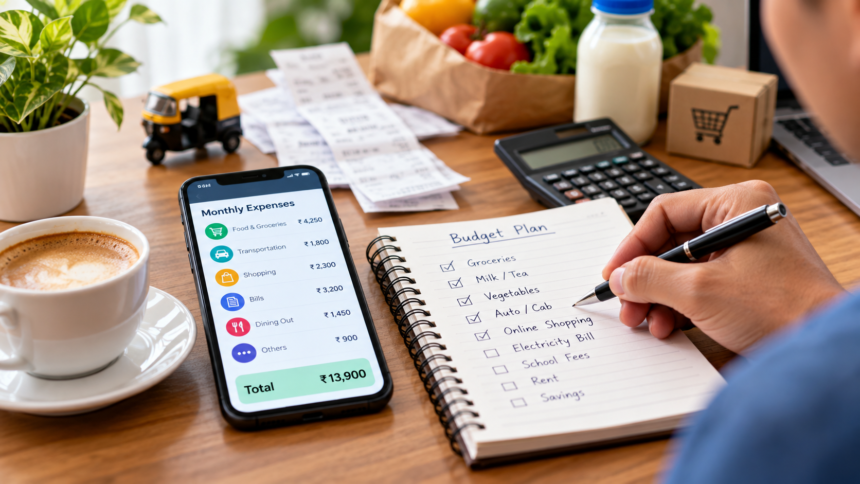
It is common for a monthly salary to disappear faster than expected, especially when several small expenses are made throughout the day. Spending ₹50–100 on tea, coffee, milk, vegetables, auto-rickshaw or cab rides, and small online purchases may seem harmless individually, but these costs can add up to a significant amount by the end of the month.
Managing household finances does not always require complicated budgeting techniques. A simple habit of recording daily expenses and reviewing them regularly can help you understand where your money is going and make it easier to control unnecessary spending.
Record Your Expenses as Soon as You Spend
One of the simplest ways to manage household expenses is to record every payment. You can use your phone’s notes app or an Excel sheet to maintain a daily record.
For example, if you spend ₹60 on milk, ₹80 on vegetables, ₹120 on an auto-rickshaw and ₹150 on an online purchase, enter each amount in your record. If doing this throughout the day is inconvenient, spend five to 10 minutes at night noting down all the day’s expenses.
However, simply recording amounts is not enough. Divide your spending into categories such as household needs, children’s expenses, transportation, eating out and online shopping. Reviewing these categories at the end of the month can help you identify where you are spending more than necessary.
Keep Track of UPI and Cash Spending
With UPI payments becoming common, even small purchases are often paid for digitally. This means monitoring only cash expenses can give you an incomplete picture of your spending.
Check your bank account and UPI transaction history at least once a week to identify payments that may have been overlooked. For cash purchases, maintain a note on your phone or use a small diary to keep track of the amounts.
Keeping both digital and cash expenses in one record gives you a clearer view of your total monthly spending.
Review Your Budget Every Week
Waiting until the end of the month to examine your expenses can make it difficult to control overspending. Instead, take some time every week to review where your money went.
If you notice that expenses on online shopping, tea or coffee outside, or auto-rickshaw and cab rides have increased, you can reduce these costs during the following week. Regular reviews also make it easier to adjust your spending before it affects the rest of your monthly budget.
Set Limits for Non-Essential Spending
Small purchases can become a bigger expense when they are made frequently. Setting a monthly limit for non-essential spending can help prevent this.
For example, you can decide in advance how much you are willing to spend on online shopping or dining out during the month. Having a fixed limit can reduce impulsive purchases and help keep household expenses within the planned budget.
Disclaimer: This article is intended for general financial awareness and budgeting purposes. Individual spending patterns and financial requirements may vary, so readers should assess their own income and expenses before making financial decisions.