
Defence cooperation is expected to dominate the upcoming meeting between Prime Minister Narendra Modi and Russian President Vladimir Putin, with discussions likely to cover the delivery of additional S-400 air defence systems, possible cooperation on Russia’s Su-57 fighter jet and the next-generation development of the BrahMos missile.
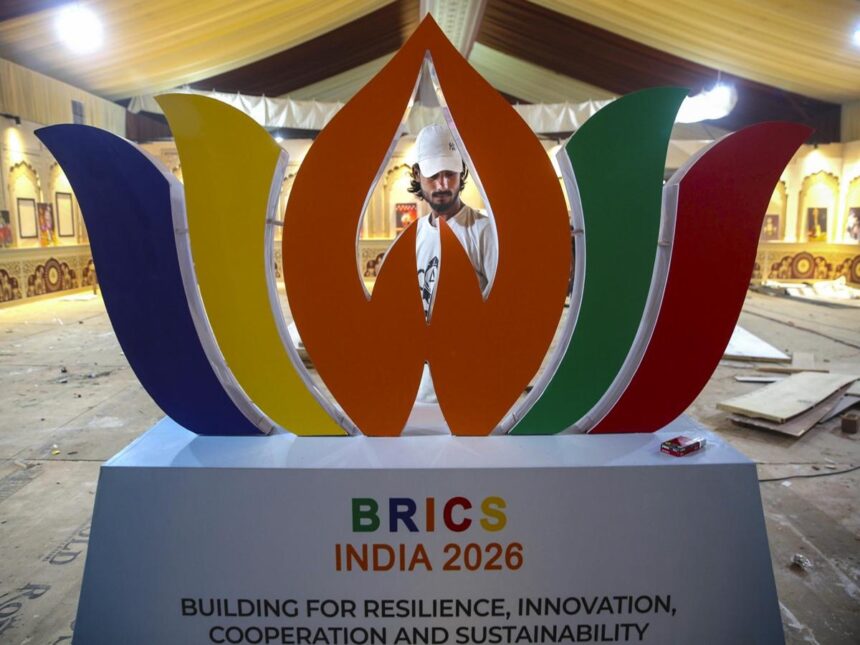
Modi and Putin are scheduled to meet in New Delhi on September 11 on the sidelines of the BRICS Summit. While the two leaders are expected to review the broader India-Russia strategic partnership, Moscow has made it clear that military and defence cooperation will be an important part of the discussions.
Russian presidential spokesperson Dmitry Peskov has indicated that Moscow is willing to discuss some of its most advanced defence technologies with India. This includes the potential sale and technology cooperation related to the Su-57 fifth-generation fighter, as well as further improvements to the jointly developed BrahMos missile.
S-400 Deliveries Likely to Be a Key Discussion
The remaining deliveries under India’s existing S-400 Triumf missile system agreement are expected to feature prominently in the talks.
India signed a deal worth around $5.43 billion with Russia in 2018 to acquire five S-400 systems. Three units have already been delivered, while the final two are expected to arrive in 2026.
Moscow has reiterated that it remains committed to completing the agreement. Peskov said Russia is capable of meeting its obligations and will fulfil them, indicating that the S-400 deliveries remain firmly on the bilateral agenda.
The S-400 is an important part of India’s multi-layered air-defence network. The system is designed to detect and engage different types of aerial threats, including aircraft, cruise missiles and certain ballistic missile targets across varying ranges.
India’s continued interest in the system also reflects its broader efforts to strengthen air defence capabilities. The Defence Acquisition Council has approved the procurement of additional S-400 systems, signalling that the Russian platform continues to hold strategic importance for New Delhi.
Su-57 Could Become the Biggest Talking Point
Beyond the S-400, the Russian Su-57 fighter jet could prove to be the most significant defence issue during the Modi-Putin talks.
Russia has been actively promoting its fifth-generation fighter to India, and Peskov has openly confirmed that the possibility of selling the aircraft to India is part of the discussions.
The Su-57 is designed as a fifth-generation multirole combat aircraft featuring stealth characteristics, advanced avionics, integrated sensors and capabilities for both air-to-air and air-to-ground missions.
For India, acquiring the aircraft could help address the Indian Air Force’s requirement for more advanced combat platforms and strengthen its fighter fleet.
However, New Delhi’s interest may extend well beyond purchasing completed aircraft.
India Seeks Greater Access to Production Technology
Technology transfer and domestic manufacturing could become the most important elements of any potential Su-57 agreement.
Peskov acknowledged that Indian scientists and officials are interested in gaining access to production technologies associated with the fighter. He also suggested that the issue would require detailed negotiations.
Such a development would fit with India’s growing emphasis on local defence manufacturing, technology absorption and domestic production.
Instead of relying solely on imports, India has increasingly sought arrangements that allow advanced defence equipment to be manufactured or assembled domestically while giving Indian companies and scientists greater access to critical technologies.
However, transferring technology related to a fifth-generation fighter would be highly complex. Areas such as stealth materials, advanced radar, electronic warfare, engines and specialised manufacturing processes involve some of the most sensitive technologies in modern military aviation.
Peskov also stressed that military-technical cooperation of this nature cannot be negotiated entirely in public, highlighting the confidential nature of such discussions.
BrahMos Upgrade Could Give India a Bigger Defence Export Role
The BrahMos missile programme is another major defence issue expected to come up during the meeting.
Developed jointly by India and Russia, BrahMos has become one of the most prominent examples of successful bilateral defence cooperation. The supersonic cruise missile has been integrated with several platforms, including land-based systems, naval vessels and fighter aircraft.
Moscow now wants the programme to move beyond its existing capabilities.
Peskov has suggested that the two countries should explore improvements to the missile, including additional capabilities that could make it more effective and competitive in international markets.
For India, an upgraded BrahMos could have significance on two fronts. It could strengthen the country’s own precision-strike capabilities while simultaneously increasing the export potential of one of its most successful indigenous defence products.
India has already been working to expand its defence exports, and BrahMos has emerged as an important symbol of that shift from being predominantly a defence importer to becoming a manufacturer and exporter of advanced military equipment.
India-Russia Defence Ties Enter a New Phase
The Modi-Putin meeting comes as the traditional India-Russia defence relationship undergoes significant changes.
For decades, Russia remained India’s largest source of military equipment, supplying platforms ranging from fighter aircraft and tanks to submarines and air-defence systems. In recent years, however, India has diversified its defence procurement, increasing cooperation with countries such as the United States, France and Israel.
Russia is also dealing with major geopolitical and economic constraints linked to the ongoing Ukraine conflict and Western sanctions.
Against this backdrop, Moscow’s focus on the S-400, Su-57 and BrahMos demonstrates an effort to reshape the defence partnership around advanced technology, joint production and capability upgrades, rather than depending primarily on older weapons platforms.
For New Delhi, closer cooperation with Russia could provide access to advanced military technologies while supporting India’s broader goal of expanding domestic defence manufacturing.
September 11 Meeting Could Shape Future Defence Cooperation
The upcoming Modi-Putin meeting could therefore become an important moment for determining the next phase of India-Russia military cooperation.
While the completion of the S-400 contract remains an immediate priority, the potential Su-57 technology partnership and the proposed BrahMos upgrade could have much longer-term implications.
With Moscow openly placing the Su-57 on the agenda and signalling its willingness to discuss production technology, the Russian fighter is likely to attract considerable attention during the BRICS Summit week.
The talks could ultimately determine whether India-Russia defence cooperation moves toward a deeper model based on technology sharing, joint manufacturing and advanced weapons development.