
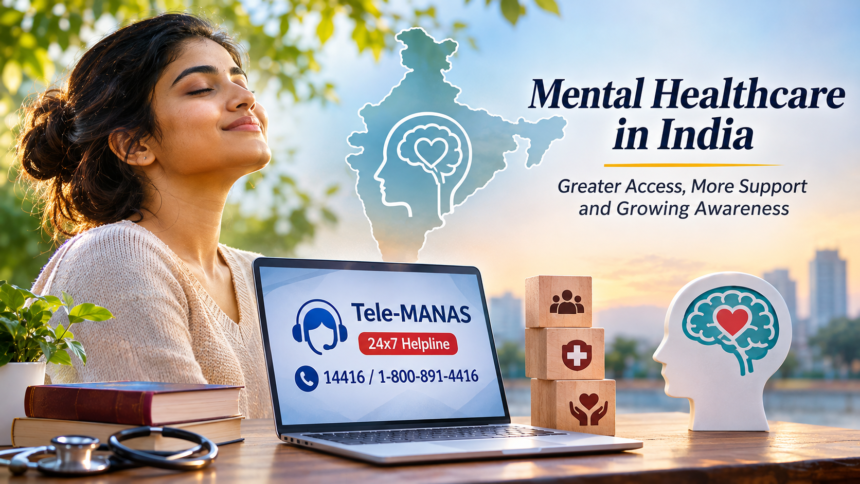
Mental health is receiving increasing attention in India’s healthcare system as awareness about emotional well-being continues to grow. For years, people experiencing anxiety, depression, emotional distress and other psychological challenges often found it difficult to discuss their problems or access professional assistance. The situation was particularly challenging for people living in smaller towns and rural areas where mental health specialists were not easily available.
However, attitudes towards mental healthcare are gradually changing. More people are recognising the importance of emotional well-being, while counselling services and digital platforms are providing additional ways to seek professional support. Government initiatives, community programmes and greater public awareness are also helping bring mental healthcare closer to people across the country.
How India’s Mental Healthcare System Is Changing
One of the most important developments has been the growing recognition that mental health should receive the same attention as physical health.
The Mental Healthcare Act, 2017, introduced important protections for individuals living with mental health conditions. The legislation focuses on their rights, dignity and access to appropriate treatment. It also requires health insurance policies to provide coverage for mental illnesses on the same basis as physical health conditions.
Another significant provision concerns people who attempt suicide. Under Section 115 of the Act, anyone who attempts suicide is presumed to be experiencing severe stress. The provision emphasises providing care, treatment and rehabilitation rather than punishment.
India’s National Mental Health Policy, introduced in 2014, also established an important direction for improving mental healthcare. It emphasised integrating mental health services into the broader public healthcare system instead of relying exclusively on specialised psychiatric hospitals.
This approach aims to make professional assistance available closer to people’s homes and communities.
Tele-MANAS: Free Mental Health Support Available Across India
Digital healthcare services are playing an increasingly important role in making mental health assistance accessible. People who cannot easily visit a counsellor or specialist in person can now seek initial support over the telephone.
One of the major government initiatives in this area is Tele-MANAS, launched on October 10, 2022.
The programme provides free, 24-hour mental health assistance through the toll-free helpline numbers 14416 and 1-800-891-4416. Services are available in multiple Indian languages, allowing callers from different regions to communicate more comfortably.
Depending on an individual’s requirements, the service can connect callers with specialised mental health professionals and arrange referrals for in-person treatment.
According to the Ministry of Health and Family Welfare, Tele-MANAS had received 43.64 lakh calls by August 11, 2026. The initiative was operating through 53 cells across 36 states and Union Territories, providing support in 20 languages.
The programme has also expanded its services to include video consultations and a dedicated mobile application.
These facilities are particularly valuable for people who face difficulties travelling long distances, managing treatment expenses or finding qualified mental health professionals nearby. Telephone-based assistance also provides an accessible starting point for individuals who are uncertain about seeking professional help.
District Mental Health Programme and Online Counselling Services
Government healthcare programmes are also working to make mental health services available beyond major cities.
The District Mental Health Programme (DMHP), implemented under the National Mental Health Programme, aims to provide mental healthcare through district hospitals and other government healthcare facilities.
According to government figures, the programme has been sanctioned for implementation in 767 districts.
Its services include mental health assessments, counselling, outpatient treatment, medication and referrals to specialised facilities when necessary.
Mental healthcare is also being integrated into primary healthcare centres, including Ayushman Arogya Mandirs. This approach can help people access assistance through their existing healthcare facilities rather than travelling to larger cities for every consultation.
Alongside government initiatives, private digital platforms are creating additional opportunities for people to connect with counsellors and mental health professionals.
Platforms such as Amaha, YourDOST, MindPeers and TalktoAngel offer different types of online mental health services, including counselling and therapy consultations.
Depending on the platform, users can communicate with professionals through video calls, audio sessions or text-based interactions. Flexible appointment options can make counselling more convenient for students and working professionals.
For some individuals, starting a conversation online may also feel more comfortable than visiting a counselling centre.
However, it is important to verify the qualifications and professional credentials of anyone providing clinical mental health services. General wellness information and online advice should not replace proper diagnosis or treatment from a qualified professional.
Why Mental Health Awareness and Community Support Matter
Improving access to professional counselling is only one part of strengthening India’s mental healthcare system. Equally important is helping people recognise emotional difficulties and understand when professional support may be necessary.
Social stigma, family expectations and fear of being judged can prevent individuals from discussing mental health concerns openly. These barriers are particularly relevant in communities where psychological difficulties are still misunderstood.
Educational institutions and workplaces can contribute significantly by creating supportive environments.
Schools and colleges can introduce student counselling facilities, peer-support programmes and awareness activities to help young people understand stress, anxiety and emotional well-being.
Employers can also support employees through workplace counselling, employee assistance programmes and mental health awareness initiatives.
Entertainment, social media and regional-language content have further helped bring mental health discussions into everyday conversations. When people encounter these topics in familiar and understandable language, it can become easier to recognise that seeking professional assistance is a normal and important step towards better health.
What Is the Future of Mental Healthcare in India?
India’s future progress in mental healthcare will depend on connecting digital services with dependable treatment facilities at the district and community levels.
Increasing the number of trained professionals, improving referral systems and expanding services in regional languages will be important steps towards making mental healthcare more accessible.
The National Suicide Prevention Strategy also provides a framework for coordinated efforts across different sectors. It aims to reduce suicide mortality by 10% by 2030.
Achieving this objective will require continued cooperation between healthcare institutions, educational organisations, workplaces, government agencies and local communities.
Although awareness and access to counselling are improving, consistent efforts will be necessary to ensure that people receive affordable and reliable assistance regardless of where they live.
India’s changing approach to mental health reflects an important shift towards recognising emotional well-being as an essential part of overall healthcare.
Quick Take: Mental Healthcare Access in India
Government programmes such as Tele-MANAS and the District Mental Health Programme are expanding access to counselling and treatment across India. Private online platforms are providing additional options for professional support, while schools, workplaces and community initiatives are helping reduce stigma.
Together, these developments are creating more opportunities for people to seek mental health assistance beyond major urban centres.
Disclaimer
This article is intended for general informational and educational purposes only. It does not constitute medical advice, diagnosis or treatment recommendations. Mental health conditions require individual assessment by appropriately qualified healthcare professionals. Readers experiencing emotional distress or psychological difficulties should seek support from a qualified mental health professional or an appropriate healthcare service. Government schemes, helpline services and programme details may change over time, so readers should verify the latest information through official sources.