
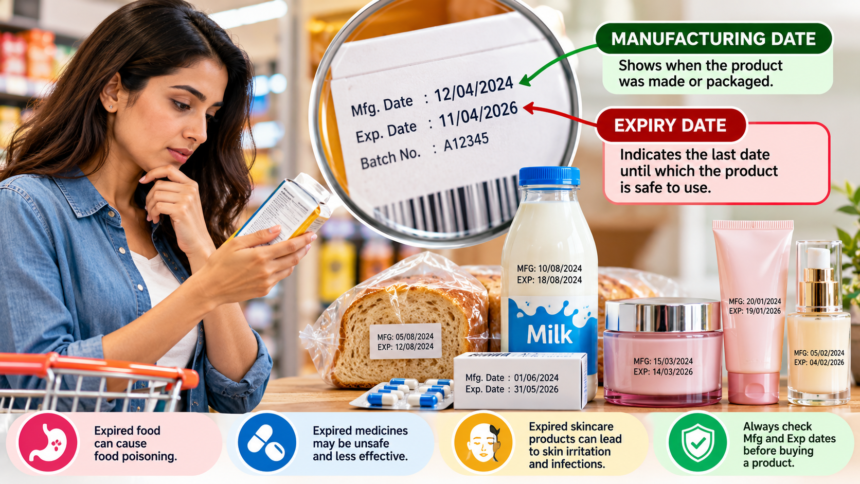
Checking product labels before making a purchase is an important habit that can help protect your health. Two details consumers should pay attention to are the Manufacturing Date (Mfg) and Expiry Date (Exp). Although both are commonly printed on product packaging, they serve different purposes.
Understanding what these dates mean can help you determine how long a product can be stored and when it should no longer be used. This is particularly important when purchasing food items, medicines, skincare products and other personal care essentials.
What Do Manufacturing Date and Expiry Date Mean?
The Manufacturing Date indicates when a product was manufactured or packaged. It marks the beginning of the product’s shelf life and helps consumers understand how recently it was produced.
In comparison, the Expiry Date indicates the final date until which a product is expected to remain safe for use under the specified storage conditions. Once this date has passed, the product may no longer be suitable for consumption or application.
However, the labelling requirements can vary depending on the type of product. Food items such as bread and milk, along with medicines and cosmetics, commonly carry manufacturing and expiry-related information to guide consumers.
Manufacturing Date vs Expiry Date: What Is the Difference?
Although both dates are related to a product’s shelf life, they provide different information.
| Basis | Manufacturing Date | Expiry Date |
|---|---|---|
| Meaning | The date when a product was manufactured or packaged. | The last date until which a product is expected to remain safe for use. |
| Purpose | Indicates when the product’s shelf life begins. | Identifies when the product’s shelf life ends. |
| Importance | Helps consumers understand the product’s age. | Helps consumers avoid using products that may no longer be safe. |
In simple terms, the manufacturing date tells you when a product was made, while the expiry date indicates how long it is expected to remain suitable for use.
How Can Using Expired Products Affect Your Health?
Using products beyond their expiry dates can expose consumers to various health risks. The possible effects depend on the type of product and how it has been stored.
Food products: Consuming expired food can increase the risk of food poisoning. Common symptoms include nausea, vomiting, diarrhoea and fever. In some cases, foodborne illness can also lead to more serious health complications.
Medicines: Taking medication after its expiry date may create health risks because its quality, effectiveness and safety may no longer be guaranteed. This can potentially lead to complications, particularly when the medicine does not work as intended.
Skincare products: Applying expired skincare products may cause skin irritation, damage or bacterial infections. Changes in product quality can also affect how safely the product works on the skin.
Why Checking Product Dates Is Important
Paying attention to manufacturing and expiry dates is a simple step towards safer shopping and product usage. Before purchasing food, medicines, cosmetics or skincare products, consumers should carefully read the information printed on the packaging.
Checking these details helps you understand a product’s shelf life, avoid potentially unsafe items and make more informed purchasing decisions. Always follow the recommended storage instructions and avoid using products beyond their expiry dates.