
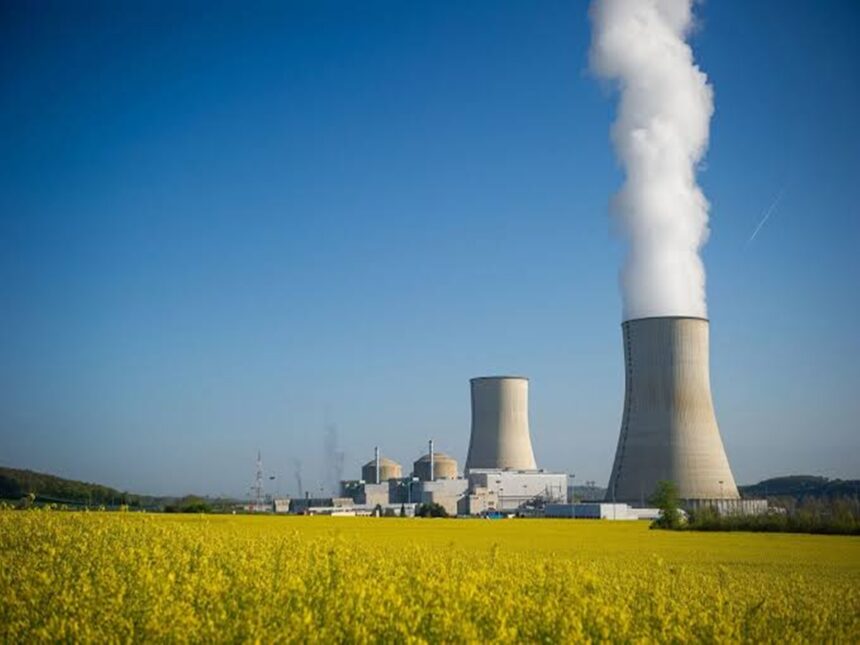
Karnataka is poised to strengthen its position in India’s nuclear power sector as the Kaiga Atomic Power Station in Uttara Kannada district undergoes a major capacity expansion.
The Centre has confirmed that two new 700 MW nuclear reactors, Kaiga-5 and Kaiga-6, are currently under construction. Together, the reactors will add 1,400 MW to the site’s generating capacity and further increase Karnataka’s contribution to India’s nuclear energy production.
Two 700 MW Reactors Under Construction at Kaiga
Minister of State for Personnel, Public Grievances and Pensions and Prime Minister’s Office Dr Jitendra Singh informed the Lok Sabha about the ongoing expansion while responding to a question raised by Davangere MP Dr Prabha Mallikarjun.
According to the Centre, the existing four Kaiga units are already operational, while the fifth and sixth units are being developed with a combined capacity of 1,400 MW.
The expansion is part of India’s broader strategy to increase nuclear power generation and meet the country’s rapidly rising electricity requirements.
India’s Nuclear Power Capacity Expected to Rise
The government said India currently has an installed nuclear power capacity of 8,780 MW spread across 24 nuclear power plants. Nuclear energy contributed around 3.1% of the country’s total electricity generation during 2025-26.
The government expects India’s nuclear generation capacity to expand significantly in the coming years. According to the Centre, nuclear capacity could reach approximately 22 GW by 2031-32, as projects currently under construction, commissioning and pre-project stages are completed.
Kaiga is among the nuclear projects being developed or commissioned as part of this expansion programme. Other projects are also progressing in states including Rajasthan, Haryana and Tamil Nadu.
Strong Focus on Nuclear Plant Safety
The government also highlighted the safety measures followed at India’s nuclear power facilities.
Dr Jitendra Singh said nuclear plants operate under a multi-layered defence-in-depth safety system, incorporating features such as redundancy, diverse safety mechanisms and fail-safe designs.
Nuclear facilities undergo safety assessments at several levels, while operations are handled by trained and licensed professionals. The Atomic Energy Regulatory Board (AERB) also continuously monitors nuclear plant operations and safety standards.
India Targets 100 GW Nuclear Capacity by 2047
The Kaiga expansion forms part of India’s much larger long-term nuclear energy strategy.
Under the Nuclear Energy Mission for Viksit Bharat, the government has set an ambitious target of achieving 100 GW of nuclear power capacity by 2047.
The addition of Kaiga-5 and Kaiga-6 is therefore expected to play an important role in expanding Karnataka’s nuclear power footprint while contributing to India’s broader goal of increasing reliable, low-carbon electricity generation.