
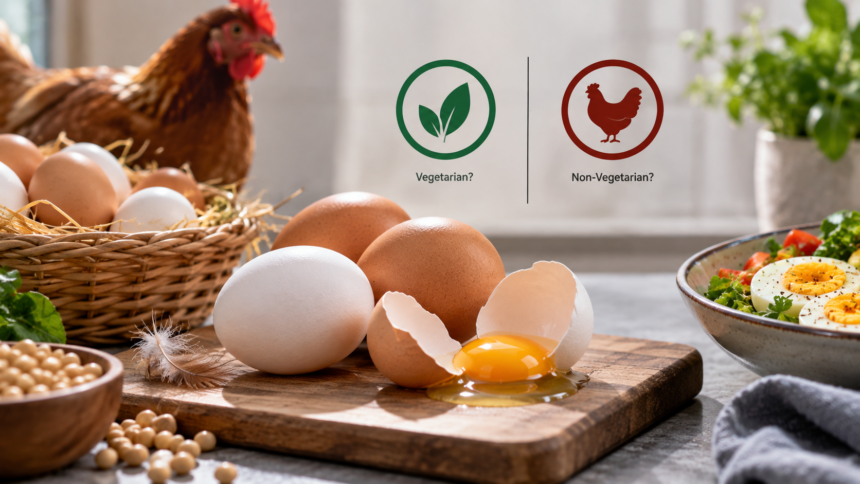
Eggs are a common part of the diet for many people, particularly those looking for a convenient source of protein. They are eaten in several forms, including boiled eggs, omelettes and egg curry. However, one question continues to create confusion: Is an egg vegetarian or non-vegetarian?
The answer depends on whether we are looking at the biology of an egg or the way different cultures and dietary systems classify animal-derived foods. Here’s what science says about fertilisation and why people have different views about eggs.
Does Every Egg Contain a Chick?
No. A chick does not develop inside every egg laid by a hen.
A female chicken can lay eggs without mating with a rooster. Such eggs are unfertilised, meaning there is no fertilised embryo inside them. Therefore, an unfertilised egg cannot develop into a chick.
Commercial egg production generally involves hens being kept without roosters, which means most ordinary table eggs sold in the market are unfertilised.
A chick can develop only when an egg has been fertilised. Even then, development does not happen automatically. A fertilised egg requires suitable conditions, including appropriate temperature, humidity and incubation, for an embryo to develop.
Therefore, the common assumption that every chicken egg contains a potential chick is incorrect.
Why Do Some People Consider Eggs Vegetarian?
The classification of eggs largely depends on dietary and cultural beliefs rather than on whether the egg contains a chick.
From a biological perspective, an unfertilised egg does not contain a developing embryo. Some people therefore include such eggs in their diets while avoiding meat, fish and chicken.
At the same time, many strict vegetarians do not eat eggs because eggs are an animal-derived food. In other words, the absence of an embryo does not automatically make an egg vegetarian under every dietary system.
This is why the classification can differ between individuals and communities.
How Are Eggs Viewed in India and Western Diets?
In India, eggs are generally treated as non-vegetarian food, particularly in traditional vegetarian households. However, dietary practices vary, and some people who avoid meat, fish and poultry still eat eggs.
Such people may follow an ovo-vegetarian diet, which includes eggs while excluding meat and other animal flesh.
In several Western dietary classifications, eggs are also treated separately from meat. People who eat eggs but do not consume meat may describe themselves as ovo-vegetarians.
There is therefore no single worldwide definition that classifies eggs in exactly the same way. Personal beliefs, culture, religion and dietary choices all influence how people view them.
Can You Build Muscle Without Eggs?
Eggs are not the only source of protein available to people following a vegetarian diet. Those who choose not to eat eggs can obtain protein from several other foods.
Dairy products such as paneer, milk and curd can provide protein, while plant-based sources include soybeans, lentils, chickpeas, kidney beans, other beans and seeds.
For people who exercise regularly, protein requirements can vary according to factors such as body weight, workout intensity and overall nutritional needs. A balanced diet can therefore be planned without necessarily depending on eggs.
What Are Vegetarian or Plant-Based Eggs?
Some newer food products are marketed as vegetarian eggs or plant-based eggs. These products are different from conventional chicken eggs because they are not laid by hens.
Instead, manufacturers use plant-based ingredients such as green gram, soy, lentils, seeds and other plant proteins to recreate some of the taste, texture and cooking characteristics of conventional eggs.
These products should therefore be understood as egg alternatives rather than ordinary chicken eggs.
So, Is an Egg Veg or Non-Veg?
There is no universally accepted answer to the question.
Scientifically, an unfertilised chicken egg does not contain a developing embryo or chick. However, food classification is a separate matter. Many people consider eggs non-vegetarian because they are obtained from an animal, while others include unfertilised eggs in their diet while avoiding meat.
Understanding the difference between how an egg develops biologically, how food is classified and what an individual’s dietary rules permit helps explain why opinions about eggs vary.
Disclaimer
This article is intended for general informational purposes only. Dietary choices can vary according to individual nutritional requirements, cultural practices and personal beliefs. People with specific dietary or health requirements should consult a qualified nutritionist or healthcare professional before making significant changes to their diet.