
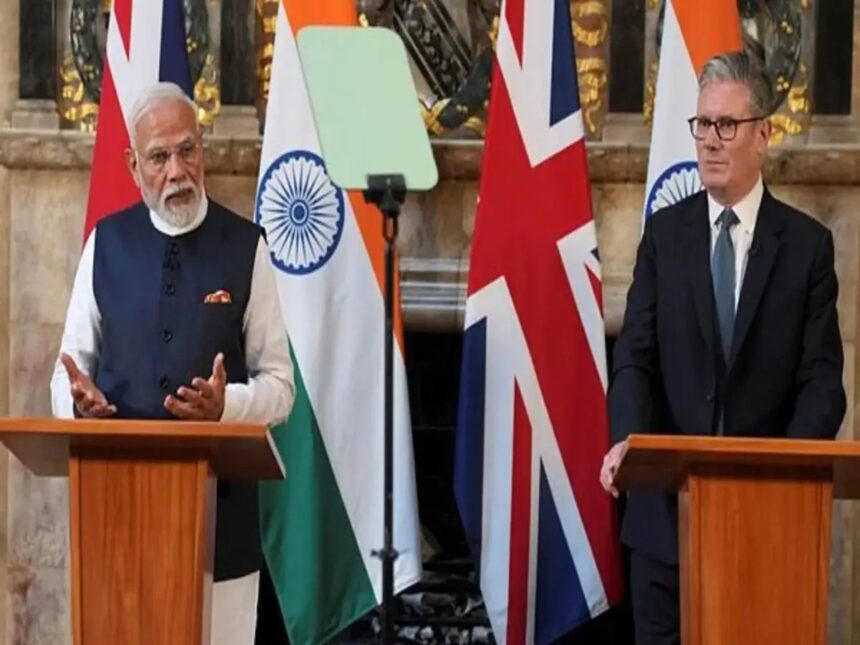
The India-UK Comprehensive Economic and Trade Agreement (CETA) officially came into force on July 15, marking a major milestone in bilateral trade between the two countries. The landmark agreement is expected to make several products—including textiles, leather goods, footwear, gems and jewellery—more affordable while opening up new business opportunities for exporters and investors on both sides.
The free trade agreement provides Indian exporters with duty-free access to a large portion of the UK market, while British businesses gain improved access to India’s rapidly growing economy.
India-UK CETA to Boost Trade and Lower Costs
The newly implemented trade pact is designed to strengthen economic cooperation by reducing tariffs, improving market access, and encouraging investment.
With the agreement now in force, Indian exporters will receive immediate duty-free access to most UK tariff lines, making their products more competitive in the British market.
Labour-intensive industries are expected to benefit the most, including:
- Textiles and apparel
- Leather products
- Footwear
- Gems and jewellery
- Marine products
- Processed food
The removal of import duties is expected to reduce costs for buyers in the UK while increasing export opportunities for Indian manufacturers.
Indian Exports to Gain Competitive Advantage
Several Indian industries previously faced UK import duties ranging between 4% and 20%. Under the new agreement, many of these tariffs have been eliminated.
As a result, exporters in sectors such as textiles, seafood, leather, footwear, and jewellery are expected to become more competitive, helping Indian businesses expand their presence in the British market.
Industry experts believe the agreement will also encourage higher production, increased exports, and job creation in these labour-intensive sectors.
UK Businesses Get Greater Access to India’s Growing Market
The agreement also offers significant benefits for British companies.
India has agreed to gradually reduce tariffs and improve market access across several sectors, including:
- Automobiles
- Alcoholic beverages
- Financial services
- Insurance
- Education
- Professional services
- Government procurement
Passenger vehicle imports from the UK will be allowed under a phased quota system, with 37,000 completely built units (CBUs) eligible for preferential tariff treatment each year.
Services Sector to Benefit from Wider Market Access
Beyond trade in goods, the India-UK CETA significantly expands opportunities in the services sector.
The agreement opens access across 137 service sub-sectors, including:
- Information Technology (IT)
- Business services
- Telecommunications
- Financial services
- Education
It also simplifies temporary movement for:
- Business visitors
- Company transferees
- Investors
- Independent professionals
- Service providers
These measures are expected to strengthen collaboration between businesses in both countries and improve cross-border service delivery.
Officials Welcome the Landmark Agreement
Speaking on the implementation of the agreement, British High Commissioner to India Lindy Cameron said the trade deal would make business between the two countries “cheaper and easier.”
Union Commerce and Industry Minister Piyush Goyal described the agreement as a significant step toward expanding bilateral economic ties.
According to the minister, the pact will create new opportunities for trade, investment, innovation, and business growth while strengthening economic cooperation between India and the UK.
Industry Sees Major Export Opportunity
Industry leaders have also welcomed the agreement.
Chandrajit Banerjee, Director General of the Confederation of Indian Industry (CII), said the trade pact marks the beginning of a new phase for Indian businesses.
He noted that zero-duty access for nearly 99% of India’s exports to the UK will significantly improve the global competitiveness of industries such as:
- Textiles and apparel
- Leather goods
- Footwear
- Gems and jewellery
- Marine products
- Processed food
In addition, engineering products, auto components, chemicals, and other value-added manufacturing sectors are also expected to benefit from improved market access and a more predictable trade environment.
What the India-UK Trade Agreement Means
The implementation of the India-UK Comprehensive Economic and Trade Agreement is expected to strengthen trade relations between the two countries while creating long-term benefits for businesses, exporters, manufacturers, and consumers.
By reducing tariffs, improving market access, and encouraging investment, the agreement is likely to boost exports, generate employment, and enhance economic cooperation across multiple industries.
Final Thoughts
The India-UK CETA represents one of the most significant trade agreements signed by India in recent years. With reduced import duties, expanded market access, and greater opportunities in goods and services, the pact is expected to benefit businesses on both sides while making products such as textiles, footwear, leather goods, and jewellery more competitively priced in the UK market.
As implementation begins, industries will be closely watching how the agreement contributes to higher exports, stronger bilateral trade, and long-term economic growth.
Disclaimer: This article is based on official announcements and publicly available information regarding the India-UK Comprehensive Economic and Trade Agreement (CETA). The impact on product prices and trade volumes may vary depending on market conditions, implementation timelines, and future policy changes.