
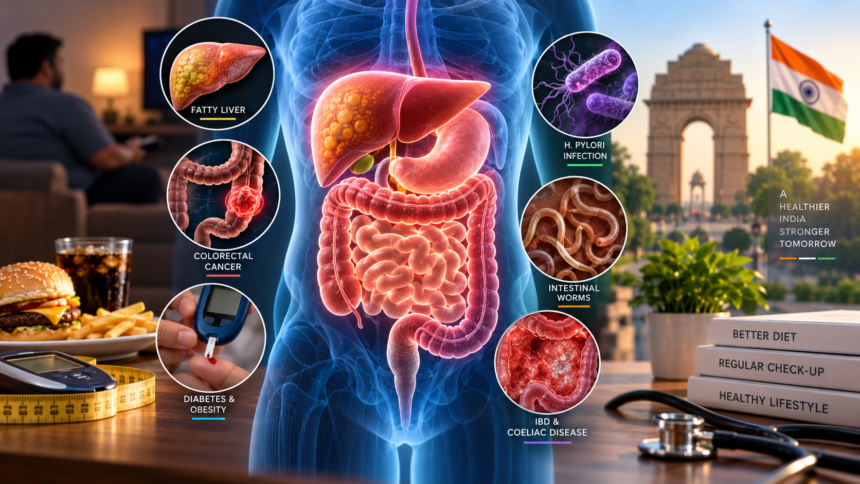
India is experiencing a significant change in its digestive health landscape. While improvements in sanitation, vaccination and public health have helped reduce several infectious diseases, lifestyle and metabolic conditions affecting the digestive system are becoming increasingly common.
Doctors say the country is now dealing with two challenges at the same time. Infections such as Helicobacter pylori and intestinal worm infestations remain widespread, while conditions including fatty liver disease, colorectal cancer, inflammatory bowel disease and coeliac disease are being diagnosed more frequently.
The changing pattern of digestive diseases will be among the key areas of discussion at the World Congress of Gastroenterology (WCOG) 2026. The event is scheduled to take place in India for the first time from September 30 to October 3 at Yashobhoomi in Dwarka, Delhi.
Fatty Liver Disease Emerges as a Major Concern
Fatty liver disease has become one of the major concerns in India’s changing health profile. An AIIMS-led systematic review and meta-analysis found the condition in 38.6 per cent of Indian adults and 35.4 per cent of children.
Fatty liver develops when excess fat accumulates in the liver and is closely associated with obesity, type 2 diabetes, high blood pressure and other metabolic conditions.
One of the challenges is that the disease can progress without obvious symptoms. Many people may not realise they have a liver problem until substantial damage has already developed.
A recent study also reported clinically significant liver fibrosis in one out of four people with type 2 diabetes, highlighting the strong connection between metabolic health and liver disease.
India included fatty liver disease under its National Programme for Prevention and Control of Non-Communicable Diseases in 2021. Guidelines were subsequently introduced to support detection at the primary-care level. Despite these measures, doctors continue to point to gaps in screening and awareness.
Changing Lifestyles Add to Metabolic Risk
Urbanisation and changing daily habits are contributing to the growing burden of metabolic diseases.
Sedentary work, lower levels of physical activity and diets containing large amounts of refined carbohydrates, processed foods and unhealthy fats can increase the risk of obesity and insulin resistance.
The country’s increasing diabetes burden adds another concern. When diabetes occurs alongside excess weight and hypertension, the risk of fatty liver and related complications can rise.
Doctors say addressing these conditions requires more than treatment after a disease has developed. Prevention, healthier eating habits, regular physical activity and timely screening also need greater attention.
Colorectal Cancer and Chronic Digestive Disorders on the Rise
Colorectal cancer is another growing concern. India recorded an estimated 40,430 new cases among men and 24,433 among women in 2022.
Doctors are also reporting more cases among younger adults. The reasons for this trend are complex and may include changes in diet, obesity, physical inactivity and other lifestyle factors. Increased access to diagnostic testing may also be contributing to the identification of more cases.
A major challenge is that early symptoms can sometimes be overlooked. Blood in the stool, unexplained weight loss and continuing changes in bowel habits may be mistaken for less serious digestive problems.
Doctors advise that symptoms continuing for more than two or three weeks should be medically evaluated instead of repeatedly ignored.
At the same time, infections that have long affected the population have not disappeared. Helicobacter pylori, a bacterial infection associated with peptic ulcers and an increased risk of gastric cancer, remains widespread. Intestinal worm infections also continue to affect children and can contribute to anaemia, poor nutrition and impaired growth.
This combination of infectious and lifestyle-related diseases creates a double burden for India’s healthcare system, which must manage both conditions requiring immediate treatment and chronic illnesses requiring long-term care.
Greater Focus Needed on Early Diagnosis
Digestive conditions that were once considered less common are also being recognised more frequently. These include coeliac disease and inflammatory bowel diseases such as Crohn’s disease and ulcerative colitis.
A community-based AIIMS study found coeliac disease in around one in 96 people in northern India. Some of the increase in diagnosis may be linked to greater awareness and improved testing facilities, although changing environmental and lifestyle factors may also have a role.
Delayed diagnosis can make chronic digestive conditions harder to manage. Persistent diarrhoea, abdominal pain, bloating, unexplained weight loss and blood in the stool should not be repeatedly ignored or treated without proper medical evaluation.
India’s changing digestive disease profile highlights the growing importance of prevention and early detection. Doctors say that although the country has skilled specialists and advanced medical technology, many patients still seek medical attention only after symptoms become severe.
As India continues to address infections such as H. pylori and intestinal worms, it is also facing a growing burden from obesity, diabetes, fatty liver disease and digestive cancers. Greater awareness, healthier lifestyles and timely medical evaluation will remain important in addressing these changing health challenges.