
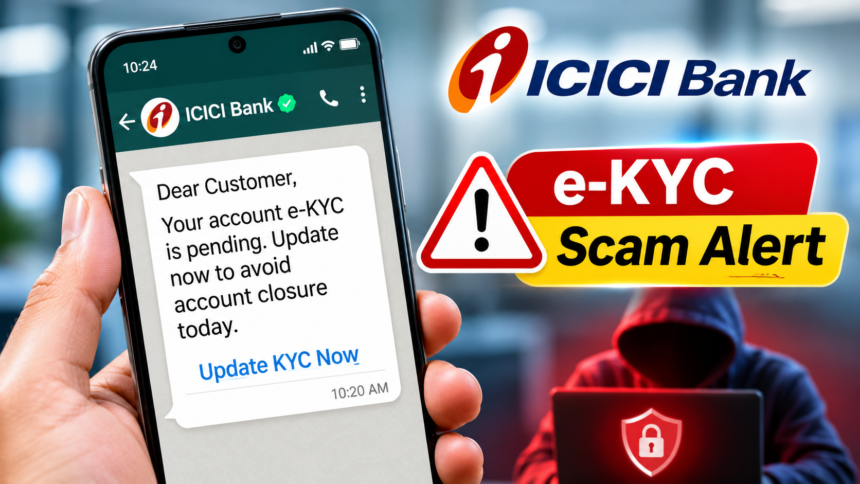
ICICI Bank Cyber Fraud Alert: Cybercriminals are increasingly using fake e-KYC update notifications to trick bank customers into revealing confidential financial information. ICICI Bank and cyber safety agencies have warned people to stay alert against such scams, in which fraudsters send misleading messages through SMS, WhatsApp and email.
These messages often threaten that a customer’s bank account will be blocked or closed by the end of the day if KYC details are not updated immediately. The intention is to create panic and pressure people into clicking suspicious links.
Once a customer opens these links and enters personal or banking information, fraudsters may misuse the details to gain access to their account and steal money. Customers should therefore avoid responding to such messages without verifying their authenticity.
How Does the Fake e-KYC Scam Work?
Scammers usually send messages pretending to represent a bank. They warn recipients about incomplete KYC verification and demand immediate action to prevent account suspension.
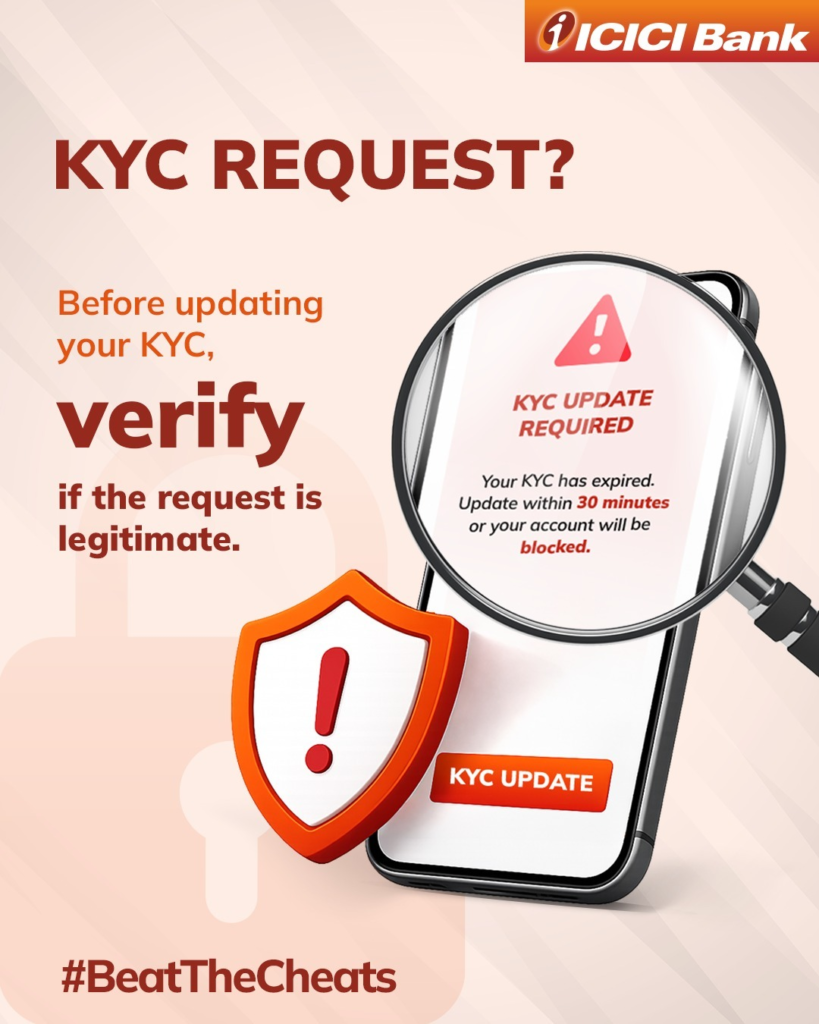
The messages may contain links to fake websites designed to look like genuine banking portals. Customers who enter their account details, OTPs or other confidential information on these websites risk financial fraud.
5 Ways to Protect Yourself From Banking Scams
1. Avoid clicking on suspicious links: Do not open unfamiliar links received through SMS, WhatsApp or email, even if the message appears to come from your bank.
2. Never share confidential banking details: Banks do not ask customers to disclose their OTP, ATM PIN or CVV through phone calls or messages. Keep these details private.
3. Use official channels for KYC updates: If your KYC needs updating, use the official ICICI Bank website, iMobile Pay application or visit your nearest ICICI Bank branch.
4. Report cyber fraud immediately: If you become a victim of online financial fraud, call the national cybercrime helpline at 1930 or register a complaint through the official cybercrime reporting portal.
5. Inform the bank about suspicious messages: Forward or report fraudulent emails and messages to the bank so that the matter can be investigated and recorded.
What Should You Do If You Receive a Fake KYC Message?
Do not panic if you receive a notification threatening to block your bank account over incomplete KYC details. Avoid clicking any links or sharing personal information. Instead, contact ICICI Bank through its authorised communication channels to confirm whether any KYC update is actually required.
Staying alert and verifying banking notifications before taking action can help protect your savings from cybercriminals.
Disclaimer: This article is intended for general information and cyber safety awareness. Customers should verify all KYC-related notifications directly through ICICI Bank’s official channels. Never share OTPs, PINs, CVVs or confidential banking information with unknown individuals or websites.