
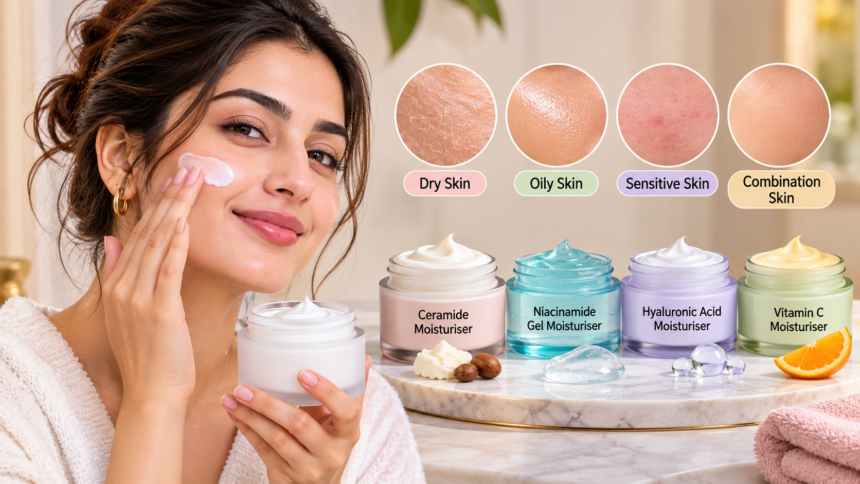
Choosing the right moisturiser is an important step towards maintaining healthy, hydrated and glowing skin. However, finding a suitable product can be challenging, especially when different skin types require different formulations. Before purchasing a moisturiser, it is essential to understand your skin’s needs and select ingredients that support its natural moisture balance.
Ingredients such as hyaluronic acid, vitamin E, vitamin C and glycerin are commonly used in skincare products to support hydration and improve the appearance of the skin. People with dry skin may benefit from moisturisers containing ceramides and shea butter, while those with oily skin can consider lightweight, gel-based formulas with niacinamide and hyaluronic acid.
Using a product that does not suit your skin type may contribute to problems such as excessive dryness, tightness or clogged pores. Here is a guide to choosing the best moisturiser for glowing skin based on your skin type, daily routine and skincare requirements.
Important Factors to Consider When Choosing a Moisturiser
Understanding your skin type is the first step towards selecting an effective moisturiser. Different formulations offer different benefits, making it important to consider texture, ingredients and individual skincare concerns before making a choice.
1. Best Moisturiser for Dry Skin
Dry skin often feels tight after cleansing and may appear rough, flaky or dull. It requires a moisturiser that provides sufficient hydration while helping maintain the skin’s protective barrier.
Here are some important factors to consider when choosing a moisturiser for dry skin:
- Check whether your skin feels tight, rough or flaky shortly after washing your face.
- Choose rich creams or balm-based moisturisers instead of lightweight lotions.
- Look for ingredients such as glycerin, ceramides and shea butter to support hydration and strengthen the skin barrier.
- Apply moisturiser immediately after cleansing while your skin is slightly damp to help retain moisture.
- Prefer fragrance-free formulations, particularly if your skin is easily irritated. Richer creams can be useful during colder weather.
Some suitable moisturiser options for dry skin include ceramide-based barrier creams, rich hyaluronic acid creams and shea butter moisturisers.
2. Best Moisturiser for Oily Skin
Oily skin also needs regular moisturisation. Skipping this step can leave the skin dehydrated, even when the face appears shiny. However, heavy formulations may feel uncomfortable and contribute to clogged pores.
When selecting a moisturiser for oily skin, keep the following points in mind:
- Choose lightweight gel-based or water-based formulations instead of heavy creams.
- Look for products labelled oil-free and non-comedogenic.
- Consider ingredients such as niacinamide, hyaluronic acid and glycerin for hydration without a heavy feel.
- Avoid overly rich formulations containing ingredients such as heavy butters if they do not suit your skin.
- Use a lightweight moisturiser with SPF during the daytime and a simple gel moisturiser at night.
Water-based gel moisturisers, oil-free lotions containing niacinamide and gel-cream formulas with hyaluronic acid are suitable options to consider.
3. Choosing a Moisturiser for Sensitive Skin
Sensitive skin can react to certain skincare ingredients, including fragrances, essential oils and strong formulations. People with dry and sensitive skin should pay particular attention to product ingredients and choose gentle moisturisers with minimal formulations.
Ceramides and glycerin are useful ingredients to look for because they help support hydration and the skin’s protective barrier.
Consider these precautions before purchasing a moisturiser:
- Avoid products containing added fragrances, essential oils and denatured alcohol if these ingredients irritate your skin.
- Perform a patch test behind the ear or on the inner forearm and observe the area for 24 to 48 hours before applying the product to your face.
- Introduce only one new skincare product at a time to identify possible reactions.
- Prefer products packaged in tubes or airless pumps to help protect the formulation.
- Consult a dermatologist if irritation or other skin symptoms persist for more than two weeks.
A gentle, fragrance-free moisturiser containing ceramides, glycerin, panthenol or oatmeal can be considered for sensitive skin.
How to Build a Daily Moisturising Routine
Selecting the right moisturiser is only one part of an effective skincare routine. Applying it consistently and choosing products according to the time of day and environmental conditions can also help maintain healthy-looking skin.
Morning skincare routine: Start by cleansing your face with a suitable face wash. You can follow this with a vitamin C serum if it suits your skincare needs. Apply a moisturiser according to your skin type and finish with sunscreen.
Night skincare routine: Begin by cleansing your face to remove dirt and product residue. Apply any suitable treatment products and follow with a moisturiser. A slightly richer formulation may be preferred at night, particularly for dry skin.
Apply moisturiser to both your face and neck while the skin is still slightly damp to help retain hydration.
Your moisturising routine can also change according to weather conditions and skin requirements:
- During humid weather: Lightweight gel moisturisers are generally more comfortable.
- During winter: Rich creams and balm-based formulations can help address dryness.
- For combination skin: Consider using a lightweight gel or gel-cream on the T-zone and a richer cream on drier cheek areas.
- In air-conditioned environments: A more hydrating moisturiser may help manage dryness.
Comparing Different Skin Types and Recommended Moisturisers
Choosing a moisturiser becomes easier when you understand the textures and ingredients that are suitable for your skin. The following table provides a quick comparison of different skin types and their recommended moisturising options.
| Skin Type | Recommended Texture | Key Ingredients | Morning Choice | Night Choice |
|---|---|---|---|---|
| Dry | Cream or balm | Ceramides, shea butter, glycerin | Moisturising cream with SPF protection through sunscreen | Rich cream or balm |
| Oily | Gel or lightweight fluid | Niacinamide, hyaluronic acid | Lightweight gel with SPF protection through sunscreen | Light gel moisturiser |
| Sensitive | Gentle, lightweight cream | Panthenol, oatmeal, ceramides | Fragrance-free cream | Same gentle formulation |
| Combination | Gel-cream | Hyaluronic acid, glycerin | Lightweight gel-cream | Light cream as needed |
Final Thoughts
The best moisturiser for glowing skin is one that matches your skin type, addresses your specific concerns and fits comfortably into your daily skincare routine. People with dry skin can consider rich formulations containing ceramides and shea butter, while those with oily skin may prefer lightweight gels enriched with niacinamide and hyaluronic acid.
For sensitive skin, gentle and fragrance-free products are worth considering, while combination skin may benefit from different textures across different areas of the face. Understanding your skin’s requirements and choosing suitable ingredients can help maintain hydration and support a healthy, naturally radiant appearance.