
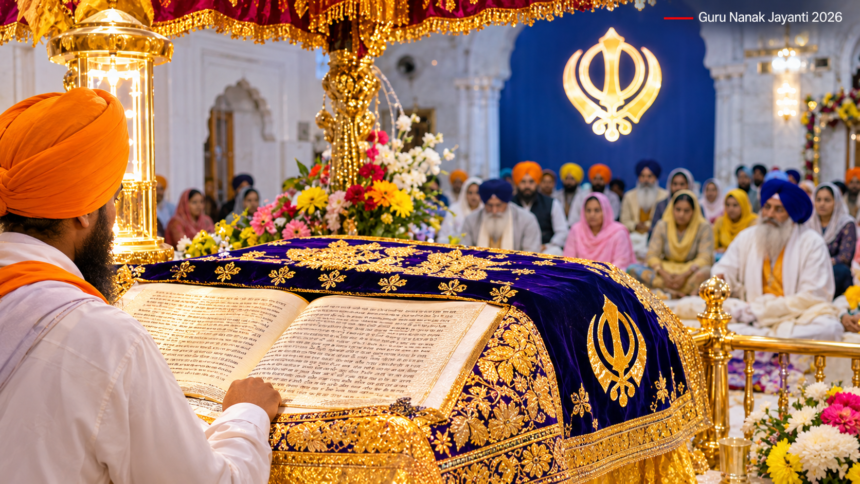
New Delhi: Sikh devotees are preparing to celebrate Guru Nanak Jayanti on November 24, 2026, with prayers and religious ceremonies at Gurdwaras and homes. One of the most important traditions associated with the occasion is Akhand Path, a continuous recitation of Sri Guru Granth Sahib Ji, the holy scripture of Sikhism.
The religious practice generally takes around 48 hours to complete and brings families and Sikh communities together through prayers, Gurbani and Seva. Devotees participate in the recitation to remember the teachings of Guru Nanak Dev Ji and seek spiritual guidance.
But what is Akhand Path, how is it organised, and why does it hold special importance before Guru Nanak Jayanti? Here is everything you need to know.
What Is Akhand Path in Sikhism?
Akhand Path refers to the uninterrupted reading of the complete Sri Guru Granth Sahib Ji, beginning with the first page and continuing until the final page.
The word ‘Akhand’ means continuous or unbroken, while ‘Path’ refers to reading or reciting sacred scripture. The entire recitation usually takes approximately 48 hours.
To maintain continuity, several readers take turns reading Gurbani so that the recitation does not stop. Meanwhile, devotees gather to listen to the sacred verses and reflect on the teachings of the Sikh Gurus.
Akhand Path is organised on various important occasions, including Gurpurabs, weddings, family celebrations and other religious events. Families may also arrange it during difficult periods to find spiritual strength, comfort and guidance through Gurbani.
Why Is Akhand Path Performed Before Guru Nanak Jayanti?
Akhand Path is an important way for Sikh devotees to prepare spiritually for Gurpurab. Before celebrating the birth anniversary of Guru Nanak Dev Ji, continuous recitation of Gurbani provides an opportunity to remember and understand his teachings.
Guru Nanak Dev Ji’s message emphasised devotion to God, equality, compassion and earning an honest living. Listening to the sacred verses encourages devotees to reflect on these values and incorporate them into their daily lives.
The tradition also strengthens community participation. Family members and devotees come together to listen to Gurbani, take part in the recitation, prepare Langar and volunteer at the Gurdwara.
The Akhand Path concludes with the Bhog ceremony, followed by Ardas. Karah Prasad is then distributed among the congregation as part of the religious observance.
How Is Akhand Path Performed? Know the Main Rituals
Akhand Path follows a traditional religious procedure in which the complete Sri Guru Granth Sahib Ji is recited without interruption. Different readers take responsibility for the recitation to ensure continuity.
The main stages of the ceremony include:
1. Beginning with Ardas: The congregation offers prayers before the Akhand Path starts.
2. Continuous Gurbani Recitation: Readers take turns reading the complete scripture, ensuring that the recitation continues without a break.
3. Listening to Gurbani: Devotees gather to listen to the sacred verses and reflect on the Guru’s teachings.
4. Bhog Ceremony: Once the entire scripture has been recited, the ceremony concludes with the traditional Bhog observance and prayers.
5. Distribution of Karah Prasad: Karah Prasad is offered and distributed among the devotees after the concluding prayers.
Religious Significance of Akhand Path and Difference Between Akhand Path and Sehaj Path
Akhand Path holds an important place in Sikh religious life because it allows devotees to spend time listening to Gurbani and understanding the teachings of the Sikh Gurus.
Its significance is reflected in three important aspects.
- Spiritual connection: Listening to Gurbani encourages devotion, self-reflection and a deeper understanding of the Guru’s message.
- Community participation: Families and congregations work together through prayers, shared responsibilities and religious activities.
- Seva: Volunteers contribute by organising the recitation, preparing Langar and helping visitors at the Gurdwara.
Another important distinction is between Akhand Path and Sehaj Path. Both involve reading the complete Sri Guru Granth Sahib Ji, but they differ in the time taken and the pace of recitation.
| Akhand Path | Sehaj Path |
|---|---|
| Continuous and uninterrupted recitation | Completed gradually |
| Generally takes around 48 hours | May take several weeks or months |
| Readers take turns to maintain continuity | Reading follows a comfortable pace |
| Often organised for Gurpurabs and special occasions | Commonly undertaken as an individual or family devotional practice |
Akhand Path brings Sikh families and communities together through Gurbani, prayer and selfless service. As Guru Nanak Jayanti approaches, the tradition provides an opportunity to remember the first Sikh Guru and reflect on his timeless message of truth, equality, kindness and compassion.
Frequently Asked Questions About Akhand Path
1. How long does Akhand Path take to complete?
Akhand Path generally takes approximately 48 hours. Different readers take turns to ensure that the entire scripture is recited without interruption.
2. Is Akhand Path compulsory before Guru Nanak Jayanti?
No. It is a widely observed Sikh religious tradition, but organising Akhand Path before Gurpurab is not compulsory for every Gurdwara or family.
3. Can Akhand Path be organised at home?
Yes. Families can arrange Akhand Path at home or at a Gurdwara while following the appropriate Sikh religious discipline.
4. What happens after Akhand Path is completed?
The recitation concludes with the Bhog ceremony and Ardas. Karah Prasad is subsequently distributed among the congregation.
Disclaimer
This article is intended for general informational and educational purposes. It explains Sikh religious traditions and practices associated with Akhand Path and Guru Nanak Jayanti. Specific arrangements and observances may vary according to Gurdwara practices and religious traditions. Readers are encouraged to consult their local Gurdwara for guidance on ceremonies and participation.