
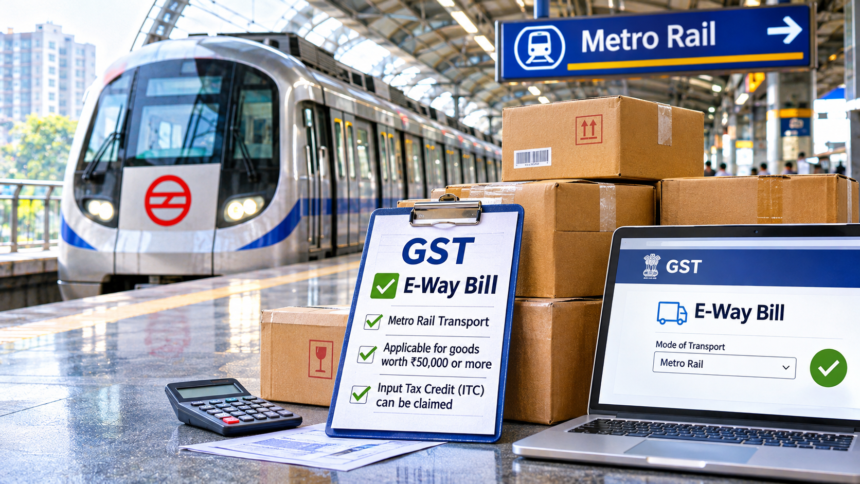
New Delhi: Businesses and traders transporting valuable goods through metro rail will now have an additional option under the GST system. The Goods and Services Tax Network (GSTN) has introduced a facility allowing businesses to generate e-way bills for goods transported through metro services, whether they are moving products between markets or delivering them directly to customers.
The change is expected to make goods transportation easier for traders in metropolitan cities, including Kanpur. It will also help businesses maintain proper documentation for the movement of goods and support their input tax credit (ITC) claims.
To enable this facility, GSTN has amended CGST Rule 138(2A), adding metro rail as the fifth mode of transportation in Part B of the e-way bill. Previously, the available transport options included road, rail, air and waterways.
Metro Rail Added as a New E-Way Bill Transport Option
Until now, businesses transporting goods valued at Rs 50,000 or more were required to generate e-way bills using the available transportation categories. However, the absence of a dedicated metro rail option created difficulties for traders using metro services.
One of the major challenges was the requirement to enter a vehicle registration number in the e-way bill system. Since metro trains do not have a separately registered vehicle number for this purpose, businesses faced difficulties recording the correct mode of transportation.
With the latest amendment, traders can now select metro rail as the transportation method and provide the relevant transport document number. This will help maintain proper records whenever goods are moved through metro services.
GSTN Activates Metro Rail E-Way Bill Facility on Its Portal
According to the GSTN advisory, the new facility is now available on the GST web portal. Businesses can generate fresh e-way bills for metro transportation and update transport details in bills that have already been created.
The facility is expected to simplify compliance for traders who regularly use metro networks to move goods.
Large businesses and transport companies using ERP or billing software connected to the GST portal through APIs can currently test the functionality in a sandbox environment. The GSTN will announce the date for launching the feature on the live API platform separately.
Traders to Get Relief From Transport-Related GST Issues
The new provision is particularly relevant for businesses that transport lightweight but expensive products through metro services. Traders and their representatives often carry valuable goods in bags or parcels rather than using conventional heavy transport vehicles.
In the absence of a dedicated metro option, such transportation could create difficulties during GST inspections. Mobile enforcement teams might question the movement of goods outside metro stations or seek clarification about the transportation method when products were sold.
The updated e-way bill facility will provide traders with recognised documentation for goods transported through metro rail, reducing confusion during inspections and verification.
The change is expected to benefit several business categories, including jewellery retailers, mobile phone dealers, electronics sellers, small and large traders, and courier service providers transporting goods worth Rs 50,000 or more.
What Is an E-Way Bill and Why Is It Important?
An e-way bill is an electronic document used to record and track the movement of goods under the GST system. It is generally required when goods valued at more than Rs 50,000 are transported from one location to another, subject to applicable GST rules and exemptions.
The document contains important transportation details and helps establish that goods are being moved through a properly documented process.
E-way bills also play an important role in preventing tax evasion and maintaining transparency in business transactions. Proper documentation supports GST compliance and helps businesses protect their eligible input tax credit claims.
With metro rail now included as an approved transportation option, traders will have greater flexibility in moving goods while maintaining the required GST records.
Disclaimer: This article is based on the GSTN advisory and information available at the time of publication. GST rules, compliance requirements and portal facilities may change through subsequent notifications. Businesses should consult the official GST portal or a qualified tax professional to confirm the latest requirements before transporting goods.