
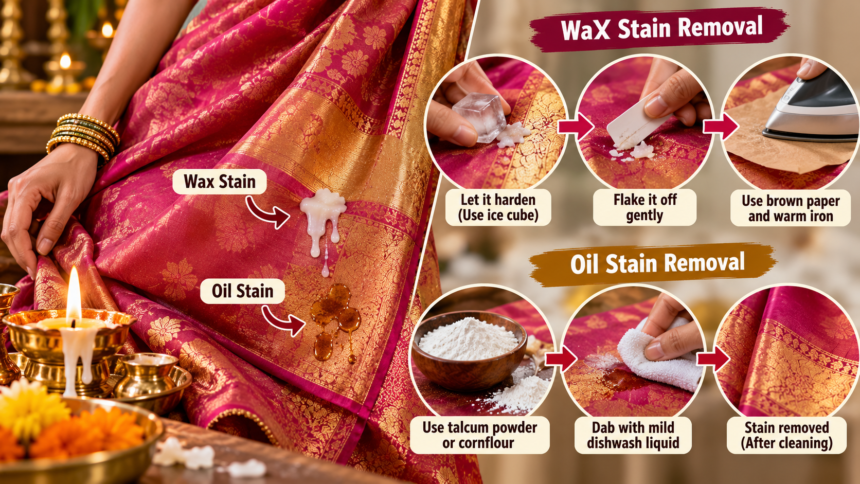
Festive celebrations often involve lighting diyas, preparing pooja thalis and enjoying traditional rituals while dressed in beautiful sarees. However, an accidental drop of candle wax, ghee or cooking oil can leave stubborn marks on delicate silk fabric. Before taking your favourite saree to a dry cleaner, there are a few home remedies you can consider for treating fresh stains.
The key is to handle the fabric gently and avoid methods that could damage its delicate fibres, colour or zari work. Here are some practical ways to tackle wax and oil stains on silk sarees at home.
How to Remove Candle Wax from a Silk Saree
Candle wax is easier to remove once it has hardened. Acting carefully can help prevent the wax from spreading or damaging the fabric.
1. Allow the wax to harden
Leave the wax untouched for around 10 minutes until it becomes firm. If you need to speed up the process, hold an ice cube wrapped in a soft handkerchief against the affected area for about a minute.
2. Remove the hardened wax gently
Use the edge of an old card or the back of a spoon to lift the wax carefully from the sides. Avoid sharp objects, as they can catch the silk threads and cause damage.
3. Use paper and gentle heat
Place brown paper or plain tissue paper beneath and over the stained area. Set a dry iron to its lowest silk setting and apply it briefly for a few seconds. The heat can help transfer the wax onto the paper. Replace the paper with a clean section and repeat carefully if needed.
4. Treat any remaining greasy mark
Wax can leave behind an oily residue even after the solid portion has been removed. Rubbing alcohol is sometimes used to treat this residue, but it may affect silk dyes and zari. Avoid applying it directly unless a professional has confirmed that it is suitable for the fabric.
Home Remedies for Oil and Grease Stains on Silk
Ghee, cooking oil and food grease can easily stain sarees during festive gatherings. Treating a fresh stain promptly may improve the chances of removing it, but delicate silk requires extra care.
1. Talcum powder or cornflour
Sprinkle talcum powder or cornflour over the affected area and leave it for three to four hours. For a larger stain, it can be left overnight. Gently brush away the powder with a soft cloth. If the mark remains, avoid repeated treatment if the fabric is delicate or embellished.
2. Mild dishwashing liquid
Mix one drop of mild dishwashing liquid with cool water. Gently dab the stained area with a soft cloth, working from the outer edge towards the centre to limit spreading. Use another cloth dampened with clean water to remove any soap residue, then press the area with a dry towel.
However, dishwashing liquid may affect certain silk dyes and finishes, so test it on a hidden area first. For valuable or heavily decorated sarees, professional cleaning is preferable.
3. White chalk
Plain white chalk may help absorb some oil from a small, fresh stain. Apply it gently, allow it to sit for a few hours and brush it away carefully. Test the method on an inconspicuous section before using it on the visible part of the saree.
4. Tissue paper or blotting paper
If you notice an oil stain while attending a function, place clean tissue paper or blotting paper over it and press lightly. This can absorb excess oil and help prevent the stain from spreading. Avoid rubbing, as it may push the grease deeper into the fibres.
5. Baby shampoo
For a light stain, a small amount of mild baby shampoo diluted in cool water may be considered after a patch test. Dab gently with a soft cloth and remove any remaining product with a clean, damp cloth. Do not soak the entire saree or apply this method to delicate embroidery without checking its suitability.
Mistakes to Avoid When Cleaning Silk Sarees
Silk is a delicate fabric, and the wrong cleaning technique can leave permanent marks. Keep these precautions in mind when treating stains at home.
- Do not rub the stain: Rubbing can spread the mark, damage the fibres and leave the fabric looking rough or dull. Dab or press gently instead.
- Avoid hot water: Use cool or room-temperature water when a cleaning method requires moisture. Heat and unsuitable cleaning techniques can damage silk and may make some stains harder to remove.
- Stay away from bleach and harsh chemicals: Strong stain removers can affect the colour, texture and sheen of silk.
- Always perform a patch test: Deep colours, hand-dyed fabrics and zari work may react differently to cleaning products. Test any suitable product on a hidden area first.
- Keep the saree away from direct sunlight: If a small area has been dampened, allow it to dry naturally in the shade to reduce the risk of fading.
- Never wring or twist the fabric: Twisting can damage delicate threads and create permanent creases. Instead, gently press out excess moisture with a clean, dry towel.
When Should You Take a Silk Saree to a Professional?
Home remedies may not be suitable for every stain. If the mark is several weeks old, covers a large area or appears on a heavily embroidered or zari-embellished saree, professional cleaning is the safer option.
Expensive and heirloom sarees, including Banarasi, Kanjivaram and Patola varieties, deserve particular care. Experimenting with household products on these fabrics may cause damage that is difficult to reverse.
When handing over the saree, explain whether the stain came from candle wax, ghee, cooking oil or another substance. This information can help the cleaner choose an appropriate treatment.
During the festive season, keeping clean tissue paper and a small packet of talcum powder handy can help manage fresh oil spills until proper cleaning is possible. For delicate silk sarees, however, gentle handling and timely professional care remain the best ways to protect their colour, texture and traditional craftsmanship.