
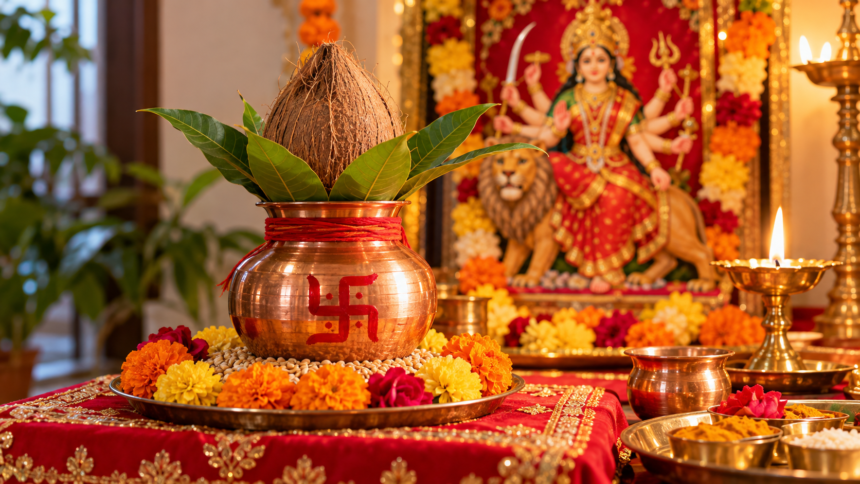
As Shardiya Navratri approaches, devotees begin preparing their homes for nine days of worship dedicated to Maa Durga. Arranging flowers, puja essentials and the sacred kalash is an important part of these preparations. However, many families have questions about the right direction for Kalash Sthapana and the Vastu guidelines they can follow during the festival.
Ghatasthapana, also known as Kalash Sthapana, marks the beginning of Navratri worship. The kalash is traditionally associated with auspiciousness, prosperity and divine feminine energy. Although customs differ across regions and families, choosing a clean and peaceful place for the ritual is an important part of the preparations.
When Is Ghatasthapana in Navratri 2026?
Shardiya Navratri will begin on Sunday, October 11, 2026. Ghatasthapana is performed on the first day of the festival to mark the beginning of the nine-day celebration.
According to the Drik Panchang timings provided for Delhi, the morning Ghatasthapana Muhurat will be from 6:19 AM to 10:12 AM. An additional Abhijit Muhurat is listed from 11:44 AM to 12:31 PM.
Auspicious timings can vary depending on the location. Devotees should therefore consult the Panchang applicable to their city before performing the ritual.
Which Direction Is Best for Kalash Sthapana?
According to commonly followed Vastu guidelines, the northeast direction, known as Ishan Kona, is considered a preferred location for a home temple and the Navratri kalash. If this area is unsuitable, the east or north side may also be considered.
The most important practical consideration is to select a clean, peaceful location where the family can perform daily prayers throughout Navratri. A dedicated home temple is suitable, but a properly arranged puja corner can also be used.
Place the kalash on a clean, stable and slightly elevated platform or chowki. It should not be positioned where it can easily be knocked over or disturbed during everyday activities.
Families that follow a particular religious tradition should give priority to their established puja procedures rather than treating every Vastu recommendation as compulsory.
How to Prepare the Kalash Sthapana Puja Space
Before the auspicious Muhurat begins, clean the designated area and arrange the necessary puja items. Depending on the family’s customs, these may include a chowki, red or yellow cloth, a kalash, water, mango leaves, a coconut, soil and barley seeds for sowing jau.
In traditions that include barley sowing, the seeds are planted in prepared soil as part of the Ghatasthapana ritual. The kalash is then installed according to the prescribed puja vidhi.
The exact materials, contents of the kalash and sequence of rituals may differ between communities. Devotees should follow the method traditionally observed in their households.
Keep enough space around the arrangement for flowers, offerings and daily worship. If a diya is lit, place it on a stable surface away from curtains, paper and other flammable materials. Never leave an open flame unattended.
Common Mistakes to Avoid During Ghatasthapana
A few simple precautions can help maintain the sanctity and safety of the puja area during Navratri.
- Avoid clutter: Keep footwear, storage items and unrelated household objects away from the worship space.
- Choose a stable platform: Ensure that the kalash cannot tip over accidentally.
- Avoid busy passageways: Select a location where family members can pray without disturbing the arrangement.
- Maintain cleanliness: Remove old flowers and unsuitable offerings regularly.
- Follow your family tradition: Vastu recommendations differ, and a small variation in placement should not automatically be considered a reason for concern.
- Prioritise fire safety: Keep diyas away from decorations and never leave burning lamps unattended.
These precautions help keep the worship area organised and safe. Vastu recommendations should be understood as customary guidance rather than a guarantee that a particular arrangement will bring good or bad fortune.
What If Your Home Does Not Have a Northeast Corner for Puja?
Not every home has a separate temple or enough space in the northeast direction. In such situations, a clean and stable location in the east or north may be considered under commonly followed Vastu practices.
The home’s layout, family traditions and the safety of the arrangement should all be taken into account when selecting the location.
Navratri preparations should not become a source of unnecessary worry over the placement of every object. Ghatasthapana is part of a wider religious observance centred on prayer, discipline and devotion to Maa Durga.
As Shardiya Navratri begins on October 11, devotees can prepare by arranging a peaceful worship space, checking the appropriate Muhurat and following their family’s traditional rituals throughout the festival.
Disclaimer
This article is intended for general informational purposes only. Vastu recommendations and religious rituals may vary according to regional customs, family traditions and individual beliefs. The dates and Muhurat timings mentioned are based on the information provided and should be verified through a reliable Panchang for your location. Readers should follow the religious practices customary to their families and consult knowledgeable local priests if they require specific ritual guidance.