
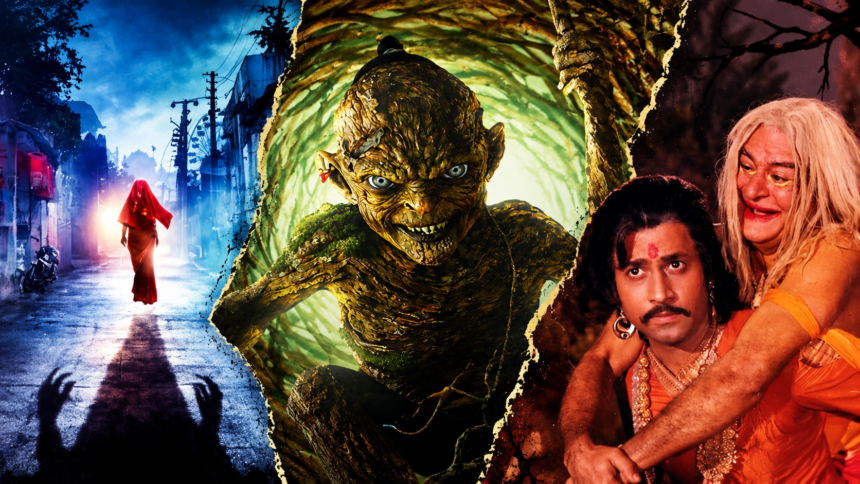
Vampires, witches and werewolves have long been popular figures in Western horror stories. However, India has its own fascinating collection of spooky folklore and supernatural legends that can bring a distinct desi flavour to Halloween. From childhood stories and traditional tales to their portrayal on the big screen, these mysterious creatures have remained a part of India’s rich storytelling heritage.
If you’re looking to explore something beyond the usual Halloween characters, Indian folklore offers plenty of eerie tales. From restless spirits to blood-drinking creatures, here are five Indian folklore beings that could make Halloween a little more desi.
1. Munjya: The Restless Spirit of a Young Boy
The horror film Munjya draws inspiration from centuries-old folklore associated with the Konkan region. Munjya is believed to be the spirit of a young Brahmin boy who dies shortly after undergoing his sacred thread ceremony.
According to the legend, the mischievous spirit remains connected to peepal trees and continues to wander the earthly world because of desires left unfulfilled by his untimely death. Its association with peepal trees and its restless nature have made Munjya a distinctive figure in Indian supernatural folklore.
2. Vetal: The Spirit That Inhabits Dead Bodies
The tales of Vikram and Vetal have been a familiar part of childhood storytelling for generations, appearing in publications such as Champak and Amar Chitra Katha, as well as in animated adaptations.
Vetal is a supernatural being associated with inhabiting corpses and is often depicted hanging upside down in cremation grounds. In many ways, it can be compared to a zombie, although its defining characteristic lies in its intelligence and mysterious nature.
Rather than relying solely on physical terror, Vetal challenges its captives with complicated riddles, often placing them in difficult situations involving life, death and moral dilemmas.
3. Tekhumiavi: India’s Folklore Version of a Were-Tiger
While werewolves dominate many Western supernatural stories, Indian folklore also features a fascinating figure known as Tekhumiavi, associated with the Angami Naga tribe.
According to the legend, a human soul inhabits the body of a tiger. Unlike conventional shapeshifters, however, the human is believed to remain conscious while inside the animal’s body.
This unusual concept offers a different take on the idea of humans and animals sharing a supernatural connection, making Tekhumiavi an intriguing addition to India’s collection of folklore creatures.
4. Naale Ba: The Mysterious Spirit That Knocks at Night
The horror film Stree draws parallels with the Karnataka urban legend known as Naale Ba, which translates to “come tomorrow.”
According to the legend, a female spirit dressed as a bride wanders through neighbourhoods after suffering a tragic death. She is believed to knock on people’s doors and call out their names or imitate the voices of their loved ones.
Those who respond to the mysterious calls and open their doors are said to disappear or die. The unsettling idea of a familiar voice being used to lure unsuspecting residents has helped make Naale Ba one of India’s chilling urban legends.
5. Penchapenchi: The Blood-Drinking Owl
Bengali folklore features Penchapenchi, a terrifying creature described as a blood-drinking owl that targets people travelling alone.
According to the tale, the creature patiently follows isolated travellers through the tree canopy before swooping down to drain their blood. Its association with darkness, lonely paths and sudden attacks makes it a particularly eerie figure in traditional folklore.
Indian Folklore Offers a Different Kind of Halloween Horror
While supernatural stories from other cultures continue to capture people’s imaginations, India has its own wealth of mysterious creatures, ghost stories and urban legends. From the restless Munjya and the enigmatic Vetal to the frightening Naale Ba, these tales offer a distinctly Indian perspective on horror.
For anyone looking to give Halloween a desi twist, these folklore creatures provide a glimpse into the fascinating and often unsettling stories that have been passed down through generations.