
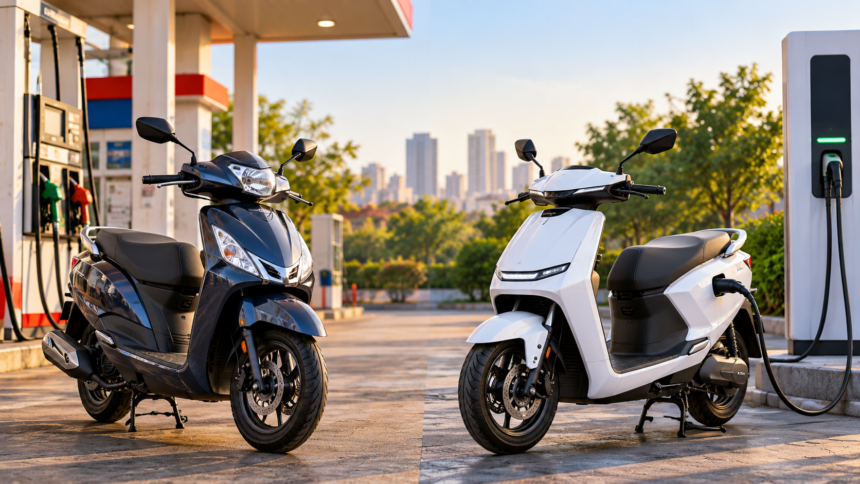
Choosing between a petrol scooter and an electric scooter involves more than comparing their showroom prices. Petrol scooters offer convenient refuelling, while electric models can significantly reduce daily running expenses. Before making a decision, buyers should consider their daily travel distance, maintenance requirements, charging facilities, battery warranty and overall ownership costs.
For someone who travels around 30 km every day, the difference in fuel and charging expenses can be substantial. However, the most economical option depends on individual riding habits and the total cost of owning the vehicle.
Petrol Scooter Running Costs: Monthly and Yearly Expenses
Consider a rider who covers 30 km daily, or approximately 900 km in 30 days and 10,950 km over a year. A typical petrol scooter delivers around 45–50 km per litre. With petrol prices ranging from ₹100 to ₹125 per litre, the estimated fuel expense comes to approximately ₹2–₹2.78 per kilometre.
Based on these figures, monthly petrol spending could range from ₹1,800 to ₹2,500. Over a full year, the expense may reach approximately ₹21,600 to ₹30,400.
Fuel is not the only cost associated with a petrol scooter. Owners also need to budget for engine oil changes, filter cleaning, brake servicing and tyre replacement. The final maintenance bill depends on the scooter’s age, distance travelled, spare-part prices and the manufacturer’s recommended service schedule.
Actual expenses will vary according to local petrol prices, vehicle mileage and riding conditions.
Electric Scooter Charging Costs and Maintenance
Electric scooters can offer lower running expenses, particularly for people who charge their vehicles at home. Based on an estimated charging cost of 20–30 paise per kilometre, a rider covering 30 km daily could spend around ₹180–₹270 per month on electricity.
Over 12 months, the estimated charging expense would be approximately ₹2,160–₹3,285. Compared with the projected petrol costs, this represents a substantial difference in day-to-day running expenses.
However, the actual cost of charging depends on battery capacity, real-world efficiency, electricity tariffs, charging losses and the use of public charging stations. Buyers should also check the scooter’s practical riding range rather than relying entirely on the range claimed in advertisements.
Electric scooters do not require conventional engine oil changes and have fewer engine-related mechanical components. Nevertheless, tyres, brakes, electrical systems and other parts still need regular attention. Repairs involving the battery or electronic control unit can also be expensive, so maintenance costs are not guaranteed to be lower in every case.
How Much Can You Save in One Year?
For a scooter covering 30 km daily, the estimated annual running costs compare as follows:
| Expense | Petrol scooter | Electric scooter |
|---|---|---|
| Monthly running cost | ₹1,800–₹2,500 | ₹180–₹270 |
| Annual running cost | ₹21,600–₹30,400 | ₹2,160–₹3,285 |
| Estimated annual difference | — | ₹18,315–₹28,240 |
These figures cover petrol or charging expenses only. They do not include purchase prices, insurance, servicing, loan interest or potential battery replacement costs.
The initial price is another important consideration. Some electric scooters cost more upfront than comparable petrol models. Government subsidies, dealer discounts and state-level policies can affect the final on-road price.
Buyers should calculate the total cost of ownership by combining the purchase price, financing expenses, insurance, fuel or electricity, routine maintenance and possible future battery replacement. As a result, it would not be accurate to promise that every electric scooter buyer will recover the additional purchase cost within 12–18 months. The payback period depends on the price difference and how much the vehicle is used.
Which Scooter Is Better for Your Needs?
An electric scooter may be worth considering if you travel long distances regularly, have access to convenient home charging and intend to keep the vehicle for several years. Higher daily usage can create greater opportunities to recover the initial price difference through lower running costs.
A petrol scooter may be more suitable for occasional riders, people without reliable charging facilities or those who prefer the convenience of refuelling. Buyers should also consider the availability of service centres and the manufacturer’s battery warranty before choosing an electric model.
Ultimately, the better option is the one that fits your travel routine and budget. Compare the total cost of ownership over 365 days using your expected daily distance, local fuel and electricity prices, maintenance expenses and final on-road price rather than relying on showroom prices alone.
Disclaimer: This article is for general informational purposes only. All running-cost figures are estimates based on the assumptions stated and may vary depending on local prices, vehicle efficiency, usage and maintenance requirements. Check the latest vehicle specifications, warranty terms and on-road prices before making a purchase decision.