
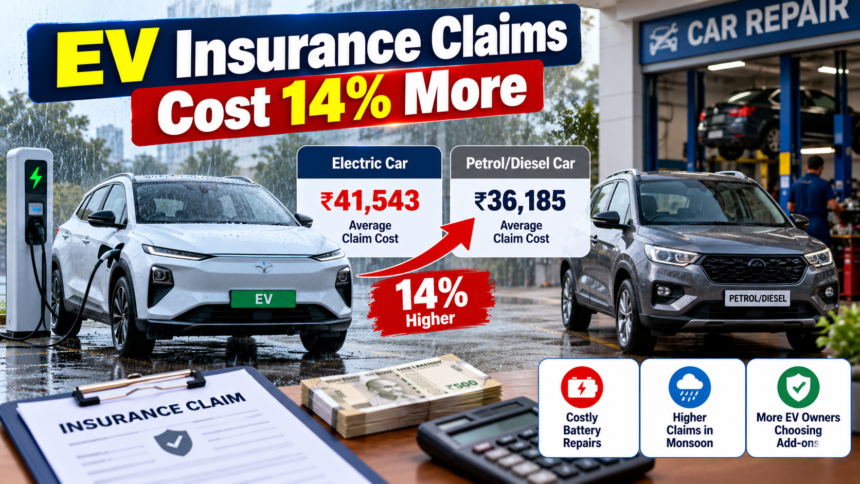
Insurance claims for electric cars cost an average of 14% more to repair than claims involving comparable petrol and diesel vehicles, according to data released by insurance marketplace Policybazaar. Higher battery replacement expenses, sophisticated electronic systems and limited repair facilities are among the factors contributing to the difference.
The average insurance claim for an electric car stood at ₹41,543, compared with ₹36,185 for an internal combustion engine (ICE) vehicle. The comparison covers cars priced between ₹10 lakh and ₹15 lakh during their first three years of ownership, excluding large-loss claims.
The data also highlights an increase in EV repair costs during the monsoon season, when flooding, waterlogging and difficult weather conditions can cause additional damage.
EV Insurance Claims Rise During the Monsoon
Electric vehicle insurance claims become more expensive during the rainy season, according to Policybazaar’s findings. The average claim amount rose to nearly ₹65,000 during the monsoon, around 25% higher than the average of ₹52,000 recorded during the rest of the year.
Water exposure and adverse weather conditions can increase the risk of damage to critical vehicle components. As a result, repair bills may rise, making suitable insurance coverage particularly important for electric car owners.
Why Are Electric Car Repairs More Expensive?
The higher average claim cost for electric vehicles is linked to their expensive battery systems, complex electronics, imported components and the limited availability of specialised repair infrastructure.
The battery is one of the costliest components of an electric car. Depending on the model, replacing it can account for approximately 40% to 50% of the vehicle’s total price.
Repair expenses are not limited to the battery or electric motor. Battery cooling systems, advanced electronic components and infotainment systems can also add significantly to the overall cost of repairs.
A comprehensive motor insurance policy generally covers accidental damage to the insured vehicle, subject to its terms and conditions. However, protection against battery-related damage depends on the policy wording and the additional covers selected by the owner.
Electric car owners should therefore review their coverage carefully to understand which types of damage are included and whether additional protection is necessary.
More EV Owners Choose Additional Insurance Protection
Policybazaar’s data indicates that around 80% of electric vehicle owners opt for at least two key insurance add-ons. These include battery protection, zero depreciation, roadside assistance (RSA) and consumables cover.
The corresponding share stands at 75% among petrol car owners and 77% among diesel car owners.
This difference suggests that electric vehicle owners are paying greater attention to additional insurance protection, particularly because battery-related repairs and replacement costs can be substantial.
Paras Pasricha, Head of Motor Insurance at Policybazaar, said customers need to understand the risks associated with their vehicles, locations and driving habits as electric vehicle adoption expands beyond major metropolitan areas. Choosing appropriate coverage, rather than focusing only on the lowest premium, is important.
Electric SUVs Record the Highest Claim Frequency
Among electric car body styles, SUVs recorded the highest insurance claim frequency, with 31 claims per 100 insured vehicles. Hatchbacks followed with 28 claims, while sedans recorded 26 claims per 100 insured vehicles.
According to Policybazaar, SUVs may experience more damage because they are used across different road conditions and for longer journeys, including highway travel. Such driving can increase exposure to underbody, tyre and suspension damage.
Hatchbacks, meanwhile, are often used in busy urban areas, where heavy traffic, restricted parking spaces and minor collisions can contribute to insurance claims.
Tier-II Cities and Eastern India Report Higher EV Claims
The data also points to differences in claim frequency across cities and regions. Tier-II cities recorded 33 claims per 100 insured electric vehicles, compared with 30 claims per 100 vehicles in Tier-I cities.
Among regions, East India reported the highest claim frequency at 41 claims per 100 insured EVs. North India followed with 34 claims per 100 insured vehicles.
These figures highlight the growing importance of understanding local driving conditions, weather-related risks and vehicle usage when selecting electric car insurance.
Disclaimer: This article is intended for general informational purposes only and is based on data and statements attributed to Policybazaar. Actual insurance premiums, claim amounts, repair costs and coverage benefits may vary depending on the vehicle model, insurer, policy terms and individual circumstances. Readers should review their policy documents and consult their insurer before making insurance-related decisions.