
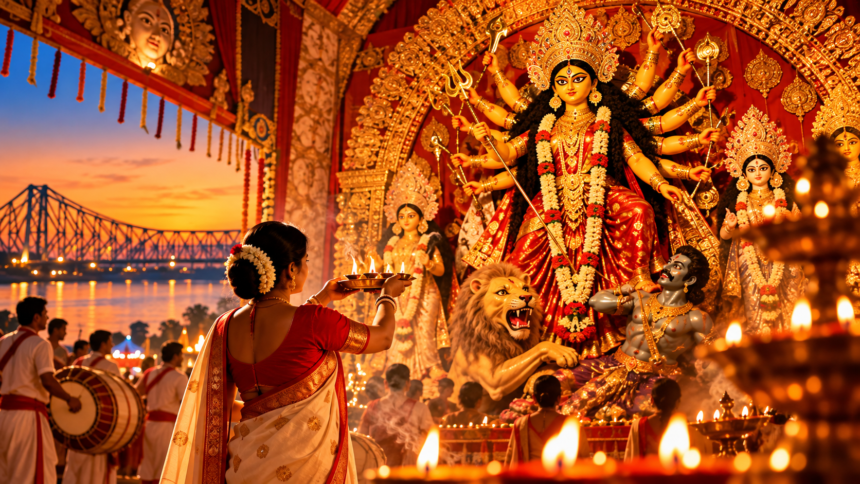
The countdown to Durga Puja 2026 in Bengal will begin with Mahalaya on October 10, followed by the main five-day celebrations from October 16 to October 21. The festival formally enters its principal phase with Shashthi and continues through Maha Saptami, Maha Ashtami, Maha Navami and Vijayadashami.
For devotees and families planning their celebrations, here is the complete Bengal Durga Puja calendar, including the major rituals and important dates.
Durga Puja 2026 Dates and Main Rituals
| Date | Day | Tithi | Main Puja/Ritual |
|---|---|---|---|
| October 10 | Saturday | Amavasya | Mahalaya |
| October 16 | Friday | Shashthi | Kalparambha, Akal Bodhon, Bilva Nimantran |
| October 17 | Saturday | Saptami | Maha Saptami, Kolabou Puja |
| October 18 | Sunday | Saptami | Saptami Tithi continues |
| October 19 | Monday | Ashtami | Maha Ashtami, Kumari Puja, Sandhi Puja |
| October 20 | Tuesday | Navami | Maha Navami, Navami Homa, Durga Visarjan |
| October 21 | Wednesday | Dashami | Vijayadashami, Bengal Durga Visarjan, Sindoor Utsav |
These dates follow the Bengal Durga Puja calendar. Exact ritual timings can vary according to local Panchang calculations.
Mahalaya 2026: When Is It?
Mahalaya will be observed on October 10, 2026. It marks the end of Pitru Paksha and the beginning of Devi Paksha in the Bengali religious calendar.
The day is traditionally associated with offering Tarpan to ancestors and invoking Goddess Durga. Mahalaya also has a deep cultural connection with the early-morning broadcast of Mahishasura Mardini, which has become a familiar part of the arrival of Durga Puja for many Bengalis.
The main Durga Puja celebrations will begin on October 16 with Shashthi. Rituals on the day include Kalparambha, Akal Bodhon, Amantran, Adhivas and Bilva Nimantran, marking the formal beginning of the five-day festivities.
Maha Saptami and Maha Ashtami
Maha Saptami falls on October 17, 2026. One of the key rituals associated with the day is Kolabou Puja, along with Navpatrika-related observances.
The Saptami Tithi continues into October 18, so devotees following specific ritual timings are advised to refer to their local Bengali Panchang.
Maha Ashtami will be observed on October 19. It is one of the most significant days of Durga Puja, with devotees participating in Pushpanjali and other traditional rituals.
Kumari Puja is observed in many Bengali traditions, while Sandhi Puja, performed during the transition between Ashtami and Navami, is another important ritual associated with this period.
Maha Navami and Vijayadashami
According to the Bengal Durga Puja calendar, Maha Navami falls on October 20, 2026. The day is associated with Navami Homa and other worship rituals before the festival moves towards its final day.
There is a Tithi overlap in 2026, which is why some broader Navratri calendars may show Navami on a different date. For Bengal’s Durga Puja observance, October 20 is marked as Maha Navami.
The festival concludes with Vijayadashami on October 21, 2026. The final day includes Durga Visarjan and Sindoor Utsav, as devotees bid farewell to Goddess Durga and accompany the idols for immersion.
Why Is Durga Puja Celebrated?
Durga Puja is dedicated to Goddess Durga and commemorates her victory over Mahishasura. The festival represents the triumph of divine power over evil and celebrates the strength of Shakti.
In Bengal, Durga Puja is also a major cultural celebration that goes beyond religious rituals. Community pujas, elaborate pandals, dhak performances, cultural programmes, family gatherings and the emotional traditions surrounding Durga’s arrival and farewell are all closely associated with the festival.
In 2026, the Bengal Durga Puja celebrations will begin with Shashthi on October 16 and conclude with Vijayadashami on October 21, while Mahalaya on October 10 will mark the beginning of the festive period.
Disclaimer
This article is intended for general informational purposes and is based on the Bengal Durga Puja calendar details provided in the source material. Festival dates, Tithi calculations and exact ritual timings may vary depending on location and the Panchang followed. Devotees should consult their local Panchang, temple or religious authority for precise timings before performing specific rituals.