
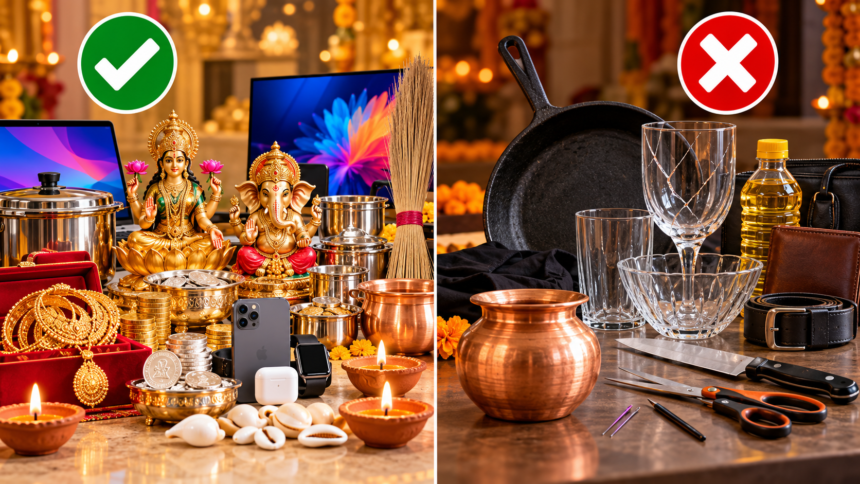
Dhanteras is considered an auspicious occasion to purchase new items and marks the beginning of the Diwali festival. Celebrated across India, the day is associated with Goddess Lakshmi, the deity of wealth, and Lord Dhanvantari, who is linked with health and well-being.
According to popular traditions, certain purchases made on Dhanteras are believed to bring prosperity, good fortune and positive energy into the home. Gold, silver, kitchen utensils and traditional lamps are among the items commonly purchased during the festival.
At the same time, some objects are traditionally avoided because they are considered inauspicious. Understanding these customs can help families prepare for Dhanteras 2026 and celebrate the occasion according to their beliefs.
What Should You Buy on Dhanteras 2026?
Several items are traditionally considered auspicious purchases during Dhanteras. Each carries a symbolic meaning related to wealth, happiness or well-being.
Gold and silver: Gold and silver jewellery, coins and other ornaments are popular Dhanteras purchases. These precious metals are traditionally associated with wealth, prosperity and financial security.
Utensils: Buying new kitchen utensils is another common custom. These items symbolise abundance and are believed to represent prosperity within the household.
Broom: In traditional beliefs, purchasing a broom on Dhanteras symbolises removing negativity and maintaining cleanliness in the home.
Gomti chakras and cowrie shells: These traditional objects are associated with good fortune and financial prosperity in some cultural and religious practices.
Diyas and lamps: Lighting diyas represents the victory of light over darkness. These lamps are an important part of Diwali celebrations and symbolise positivity and auspiciousness.
Idols of Goddess Lakshmi and Lord Ganesha: Many families purchase or bring home idols of Goddess Lakshmi and Lord Ganesha for worship and blessings during the festive period.
Electronic items and new gadgets: Purchasing electronics and modern gadgets is also popular during the festival. Such purchases are often associated with progress and new beginnings.
What Should You Avoid Buying on Dhanteras?
According to certain traditional beliefs, some items are best avoided when shopping on Dhanteras. These customs vary among families and communities.
Iron items: Iron objects are considered inauspicious by some people on this occasion because of traditional beliefs about their symbolism.
Glass items: Glass products are sometimes avoided because their fragile nature is associated symbolically with instability.
Black-coloured items: Some traditions discourage buying black-coloured objects on Dhanteras because the colour is associated with negative symbolism in these customs.
Oil and leather goods: Certain beliefs suggest avoiding oil and leather products on this day as part of traditional festive practices.
Sharp objects: Knives, scissors, needles and similar objects are avoided by some families because they are symbolically associated with cutting or separating good fortune.
Empty utensils: According to custom, newly purchased utensils should not be brought home empty. Some families place rice, sweets or coins inside them to symbolise abundance.
Dhanteras Shopping Traditions and Their Significance
Dhanteras is widely associated with wealth, health and prosperity. Purchasing precious metals, lighting diyas and bringing home new household items are among the traditions followed during the festival.
While these customs hold cultural and religious significance for many families, individual practices may differ according to regional traditions and personal beliefs. Families can follow the customs that are meaningful to them while preparing for the Diwali celebrations.
Disclaimer: This article is intended for general informational purposes and describes traditional beliefs and customs associated with Dhanteras. The suggested purchases and items to avoid are based on cultural practices and are not guarantees of financial prosperity, good luck or negative outcomes. Customs may vary across regions, communities and families.