
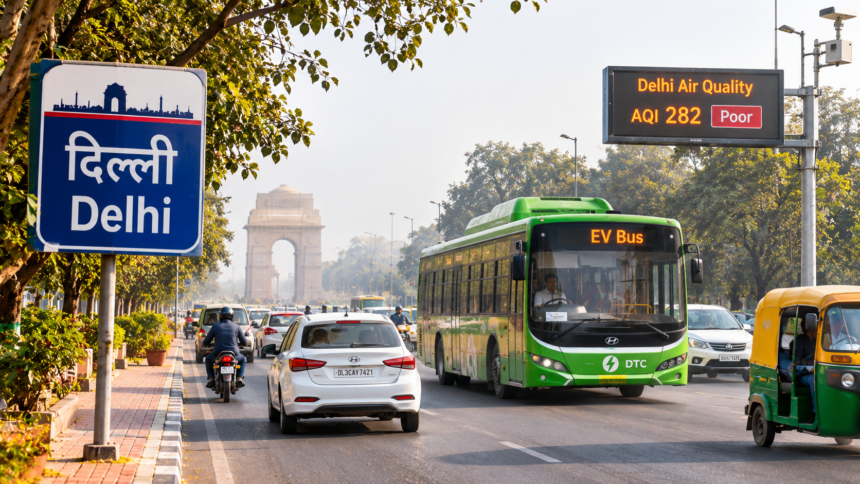
With winter approaching, air pollution is becoming a growing concern in Delhi. To tackle the worsening situation, the Delhi government is set to introduce a series of traffic and transport measures from November 1, 2026.
The new regulations will affect vehicle owners, including people travelling to the capital from other states. The measures include restrictions on vehicles that do not meet BS6 emission standards, mandatory Pollution Under Control (PUC) certificates, changes to truck movement and higher parking charges.
The government is also planning to introduce 150 new electric buses to encourage cleaner public transport and reduce pollution across the city.
Delhi Vehicle Restrictions 2026: Which Vehicles Are Exempt?
Under the new pollution-control measures, restrictions will apply to vehicles that do not comply with BS6 emission standards. These restrictions are scheduled to remain in force until January 31, 2027.
However, certain categories of vehicles will be exempt from these restrictions. These include BS6-compliant vehicles, CNG-powered vehicles and electric vehicles (EVs).
People planning to drive in Delhi should check their vehicle’s emission category before entering the city. This is particularly important for motorists travelling from outside the national capital.
Valid PUC Certificate Mandatory for Vehicles
Another important measure concerns the Pollution Under Control certificate. Vehicle owners will be required to carry a valid PUC certificate to demonstrate that their vehicles meet the prescribed emission requirements.
Under the announced rules, vehicles without a valid PUC certificate will not be provided petrol or diesel at fuel stations.
Motorists are therefore advised to check their certificate’s validity and complete the required pollution test before visiting a fuel station.
New Truck Entry Rules and Higher Parking Charges in Delhi
The government is also introducing restrictions on the movement of trucks to reduce emissions from heavy vehicles.
Trucks that are not authorised to enter Delhi will be prohibited from entering the capital. Instead, they will be required to use the Peripheral Motorway. The measure aims to reduce the number of heavy commercial vehicles operating on Delhi’s roads.
Parking fees are also scheduled to increase from November 1. Under the revised arrangement, parking charges for private vehicles will be doubled. Electric vehicles, however, will be exempt from these parking charges.
The exemption is intended to encourage more people to consider electric vehicles instead of conventional petrol and diesel-powered cars.
Delhi to Introduce 150 New Electric Buses
Along with restrictions on private and commercial vehicles, the Delhi government has announced plans to add 150 electric buses to the city’s public transport network.
The new buses are expected to provide passengers with additional transport options while supporting efforts to reduce vehicle-related pollution.
By expanding electric public transport and introducing stricter vehicle regulations, the government aims to improve Delhi’s transport system and address the city’s winter pollution concerns.
Disclaimer: This article is based on the information provided about the proposed Delhi traffic and pollution-control measures from November 1, 2026. The applicability of vehicle restrictions, PUC requirements, parking charges and truck-entry rules may depend on official government orders and subsequent updates. Vehicle owners should check the latest notifications issued by the Delhi Government and relevant transport authorities before travelling.