
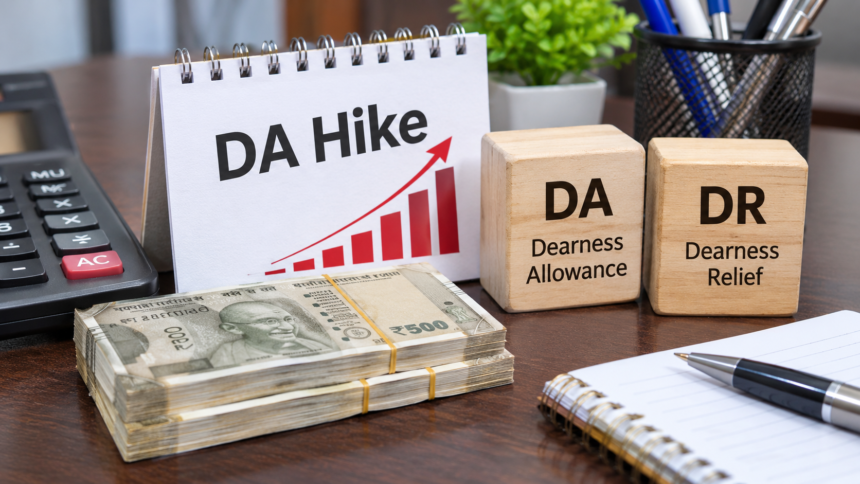
Several state governments have announced increases in Dearness Allowance (DA) and Dearness Relief (DR) for government employees and pensioners, following the Centre’s latest revision. The decisions are expected to provide additional financial support to lakhs of employees and retired government staff.
On October 31, 2026, Tamil Nadu Chief Minister C. Joseph Vijay announced a DA hike for state government employees and teachers. Rajasthan has also approved a 3% increase, while Madhya Pradesh and Chhattisgarh have announced separate revisions.
Here is a state-wise look at the latest DA hike announcements, revised rates and payment details.
Tamil Nadu: DA Increased for Employees and Pensioners
Tamil Nadu Chief Minister C. Joseph Vijay announced an increase in Dearness Allowance for government employees and teachers on Saturday, October 31, 2026.
According to the state government’s press release, the Central Government had increased DA for its employees from 60% to 63%, effective from July 2026. The Tamil Nadu Government has decided to extend the same increase to its employees and teachers from that date.
The decision is expected to benefit approximately 16 lakh government employees, teachers, pensioners and family pensioners. The revision will result in an additional annual expenditure of ₹1,858 crore for the state government.
Rajasthan: 3% DA Hike and Bonus for Eligible Employees
The Rajasthan Government has also approved a 3% increase in Dearness Allowance for state employees and Dearness Relief for pensioners. Chief Minister Bhajan Lal Sharma announced the decision, taking the DA rate to 63%.
The revised rates under the Seventh Pay Commission will be applicable from July 1, 2026. The decision is expected to benefit more than 7 lakh government employees and 5 lakh pensioners.
Employees will receive the increased DA in cash with their November salary, which is scheduled to be paid in December. The arrears for the four-month period from July 1 to October 31, 2026, will be deposited into the eligible employees’ General Provident Fund (GPF) accounts.
Pensioners will receive the revised Dearness Relief in cash with effect from July 1, 2026.
The DA and DR revision is expected to place an additional financial burden of ₹820 crore on the state government.
In another decision, the Rajasthan Government has approved an ad hoc bonus for approximately 6 lakh eligible employees. This will involve an additional expenditure of ₹406 crore.
Madhya Pradesh: 2% DA Increase Announced
Madhya Pradesh Chief Minister Mohan Yadav has announced a 2% increase in Dearness Allowance for state government officials and employees, along with an increase in Dearness Relief for pensioners.
The revised DA for employees will be applicable from January 2026, while pensioners will receive the increased relief from July 2026.
Chief Minister Mohan Yadav also stated that the nine months of DA arrears covering January to September will be paid in three equal monthly instalments.
The revised allowance will be paid in cash starting with the October salary.
Chhattisgarh: DA and DR Increased from 58% to 60%
The Vishnu Dev Sai-led government in Chhattisgarh has approved a 2% increase in Dearness Allowance and Dearness Relief for state government employees and pensioners.
Following the revision, the DA and DR rates will rise from 58% to 60%. The new rates will become effective from November 1, 2026.
The decision is expected to benefit approximately 5.35 lakh people across the state. This includes around 3.85 lakh government employees and 1.50 lakh pensioners.
The latest announcement will provide additional financial benefits to eligible employees and retired personnel in Chhattisgarh.
Disclaimer: This article is intended for general informational purposes and is based on the state-wise DA and DR announcements described above. The effective dates, revised rates, arrears, bonus eligibility and payment schedules are subject to official government orders. Employees and pensioners should consult their respective state government notifications or departments for confirmed details.