
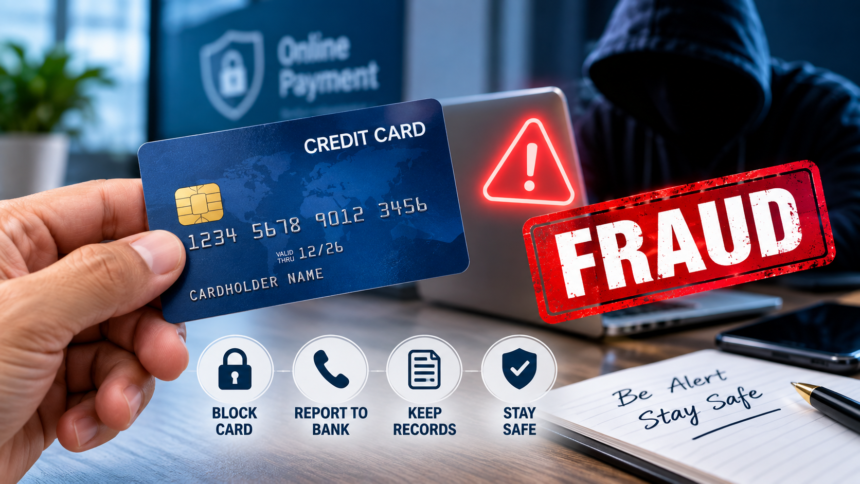
Credit Card Fraud: Credit cards have become a convenient way to manage everyday expenses, especially with digital payments and quick online card approvals becoming increasingly common. However, the growing use of digital transactions has also created more opportunities for fraudsters to target unsuspecting customers.
If you notice an unauthorised credit card transaction, don’t panic. Taking immediate action can help limit your losses and improve your chances of resolving the issue. The Reserve Bank of India (RBI) has established customer protection measures for unauthorised electronic transactions, subject to applicable conditions and timely reporting.
Here are the important steps you should take if you suspect credit card fraud.
1. Block Your Credit Card Immediately
The first step after spotting a suspicious transaction is to block your credit card. Acting quickly can prevent fraudsters from making additional transactions.
You can generally block or temporarily disable your card through your bank’s mobile application, net banking facility or customer-care helpline. Many banks also provide 24-hour support for reporting lost cards and suspicious transactions.
Along with blocking the card, regularly check your credit card statement and transaction alerts so that you can identify any other unauthorised payments.
2. Report the Fraud to Your Bank
Simply blocking the card is not enough. You should also inform your bank about the suspicious transaction as soon as possible.
The bank may ask you to submit a dispute or fraud-reporting form. You may need to provide information such as:
- Transaction amount
- Date and time of the transaction
- Transaction or reference ID
- Details of the disputed payment
- A declaration that you did not authorise the transaction
Providing accurate information allows the bank to begin its investigation and process your dispute.
3. Use Official Complaint Channels
If you have become a victim of financial fraud, make sure your complaint is properly recorded through the relevant official channels.
Apart from contacting your bank’s customer-care team, you can use the RBI’s Complaint Management System when appropriate. You can also approach the police and file an FIR at the nearest police station, particularly in cases involving significant financial fraud or criminal activity.
Keeping a record of every complaint and reference number can be useful during the investigation.
4. Keep All Fraud-Related Evidence Safe
Do not delete messages, emails or other information connected with the fraudulent transaction.
Save SMS alerts, transaction screenshots, account statements, emails exchanged with the bank, complaint acknowledgements and a copy of the FIR, if one has been filed.
These documents can serve as supporting evidence while your dispute is being investigated and may be required by the bank or other authorities.
5. Keep Following Up With the Bank
Reporting the fraud is only the beginning. You should continue monitoring the complaint until the matter is resolved.
Keep track of the bank’s investigation and chargeback or dispute process, where applicable. Check your credit card statement regularly to determine whether the disputed amount has been reversed and watch for any additional suspicious transactions.
Depending on the circumstances and the bank’s process, investigations can take anywhere from 7 to 45 days.
Is a Credit Card Fraud Refund Guaranteed?
An important point to remember is that filing a complaint does not automatically guarantee a refund. The outcome can depend on factors such as the nature of the transaction, when the fraud was reported, the customer’s actions and the applicable banking and RBI rules.
However, reporting an unauthorised transaction as quickly as possible can be extremely important. Delaying the complaint may make it more difficult to establish the circumstances of the fraud or limit further losses.
How to Stay Safe From Credit Card Fraud
Credit card fraud can happen to anyone, but basic precautions can significantly reduce the risk.
Never share your PIN, CVV, OTP, card password or other confidential banking credentials with anyone. Avoid clicking suspicious payment links and regularly review your transaction alerts and card statements.
If something looks unfamiliar, contact your bank through its official customer-care channel immediately. Quick reporting, proper documentation and regular monitoring are the most important steps when dealing with credit card fraud.