
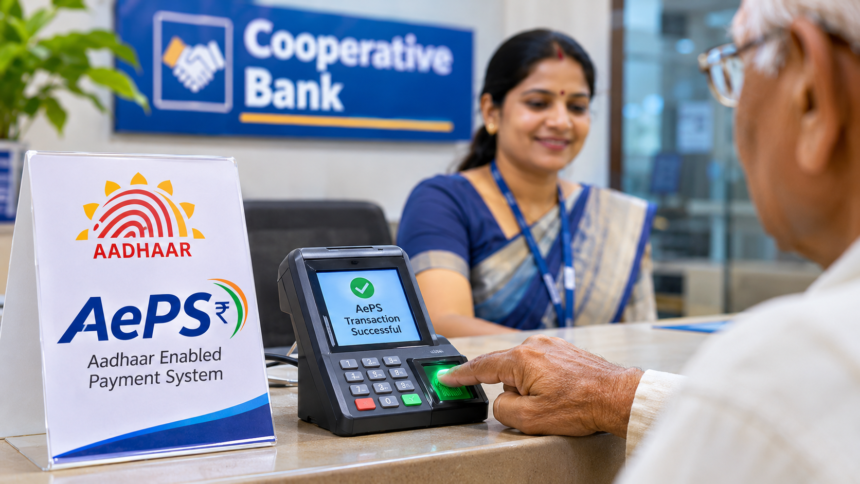
Cooperative banks are increasingly looking towards digital solutions to improve their banking services and make transactions more convenient for customers. The Aadhaar-Enabled Payment System (AePS) offers an opportunity for these banks to become part of the digital banking ecosystem and extend essential financial services to customers beyond traditional bank branches.
With AePS, banking services can be made available through authorised banking agents and micro-ATMs, allowing customers to carry out basic transactions without travelling to a bank branch. This facility can be particularly useful for elderly people, rural residents and customers living in remote areas.
Here is a closer look at how the Aadhaar-Enabled Payment System works and what it offers to cooperative banks and their members.
What Is AePS and How Does It Work?
The Aadhaar-Enabled Payment System (AePS) is a banking service that allows customers to perform financial transactions using their Aadhaar number and biometric verification.
Instead of visiting a bank branch, customers can access selected banking facilities through authorised banking agents or micro-ATMs. The system uses biometric authentication to verify the customer’s identity before processing a transaction.
Through AePS, customers can access several basic banking services, including cash withdrawals, balance enquiries and mini-statements. This makes everyday banking more accessible, particularly for people who have difficulty reaching a physical bank branch.
Benefits of AePS for Cooperative Banks
Introducing AePS can help cooperative banks strengthen their digital banking infrastructure and expand their reach among existing members.
One of the key advantages is the opportunity to provide banking facilities through agents, making services accessible at customers’ doorsteps or at nearby locations. This can reduce the need for frequent branch visits while saving time for both customers and bank staff.
The facility also offers an affordable licensing option, along with complimentary access for the first three months. By adopting this technology, cooperative banks can extend their service network without relying entirely on traditional branch-based banking.
How Cooperative Bank Customers Can Benefit from AePS
AePS can make banking more convenient for members of cooperative banks, especially those who live in villages and areas with limited access to banking facilities.
Customers can use their Aadhaar details and biometric authentication to access supported banking services through authorised agents. Elderly individuals and people living in remote locations may find this particularly helpful, as they do not need to visit a bank branch for every basic transaction.
However, certain conditions must be fulfilled before customers can use the service. Their Aadhaar number must be linked to their bank account, and their bank must be connected to the AePS network.
How Can Cooperative Banks Start AePS Services?
Cooperative banks interested in introducing AePS can begin by contacting an authorised AePS service provider to understand the available solutions and implementation process.
Banks can discuss important details such as licensing charges, transaction volumes, technical infrastructure and pre-production access before proceeding.
Reviewing these requirements will help banks understand the costs, technical arrangements and conditions involved in introducing AePS services.
Disclaimer: This article is intended for general informational purposes only. The availability, pricing, licensing terms and technical requirements of AePS services may vary depending on the service provider and applicable regulations. Cooperative banks should verify all details with the relevant service provider before making any implementation decisions.