
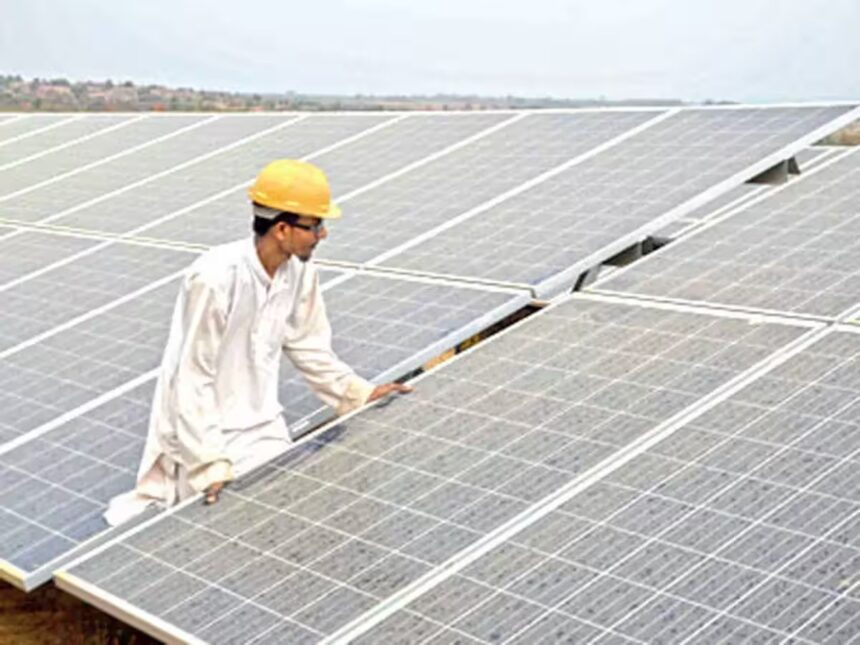
Renewable Energy Tariff Cut: The Centre has introduced a new flexibility for renewable energy developers, allowing successful bidders to voluntarily reduce their quoted tariffs even after winning a tender. The move could help unlock nearly 40 GW of renewable power projects stuck without signed power purchase agreements (PPAs).
Under a clarification issued by the Ministry of New and Renewable Energy (MNRE) on July 31, renewable energy implementing agencies (REIAs), including the Solar Energy Corporation of India (SECI), NTPC, SJVN and NHPC, can accept a lower tariff if the reduction is proposed independently by the successful developer.
However, there is an important condition: the developer must initiate the tariff reduction voluntarily. REIAs, electricity buyers and other procuring entities cannot demand, negotiate or pressure a successful bidder into lowering its tariff.
Why the New Rule Matters
The clarification could provide a way to revive renewable energy projects where PPAs have remained unsigned after the tender process.
Developers may now voluntarily offer a lower tariff if market prices have fallen since they secured the project. This could make their electricity more attractive to distribution companies (discoms) without requiring authorities to reopen the original bidding process.
The development comes amid a substantial backlog of unsigned PPAs for standalone renewable projects. At the same time, discoms are entering into relatively expensive contracts to secure thermal power.
India’s non-fossil electricity generation capacity has already crossed 300 GW, with solar power accounting for a major share of the country’s renewable expansion.
What Did MNRE Clarify?
The latest communication follows an earlier MNRE directive issued in April, which instructed REIAs to avoid post-tender negotiations aimed at changing the tariff discovered through competitive bidding.
The July clarification addressed a specific question: whether a successful bidder could itself offer to reduce the tariff after the bidding process had concluded.
MNRE clarified that a developer can make such an offer on its own initiative, provided the reduction is not the result of any request, negotiation, inducement or direction from the REIA or procuring entity.
If the developer voluntarily proposes the lower tariff, the concerned REIA can accept it. Such a reduction will not be treated as post-tender tariff negotiation.
REIAs Cannot Demand a Lower Price
The distinction between a voluntary reduction and a negotiated reduction is central to the new framework.
Under the April directive, REIAs and procuring entities cannot:
- Ask developers to lower their discovered tariffs
- Negotiate a reduced price after the tender
- Pressure or induce bidders to reduce tariffs
- Make a lower tariff a condition for issuing or executing project agreements
- Make a Letter of Award, PPA or Power Sale Agreement dependent on a tariff cut
The new clarification therefore gives developers greater flexibility while keeping procurement agencies from changing the commercial terms of a tender after bids have been awarded.
Why Developers May Choose to Cut Tariffs
Market conditions can change significantly between the time a developer wins a tender and when the project is ready to secure a buyer.
For example, if subsequent renewable energy auctions produce substantially lower tariffs, a developer holding an earlier award may find it difficult to convince a discom to sign a PPA at the original price.
In such circumstances, voluntarily offering a lower tariff could allow the developer to move forward rather than leave the awarded capacity and associated land unused.
An official familiar with the matter said the option could allow developers to generate at least some return from projects that might otherwise remain stalled.
Could the Move Help Clear the 40-GW PPA Backlog?
Experts believe the clarification could help address the growing volume of renewable capacity awaiting PPAs.
One challenge has been that demand for standalone or “plain-vanilla” renewable power, particularly solar, has not always kept pace with the capacity awarded through tenders.
REIAs had explored ways of making such projects more attractive to discoms, including changes to project structures and the addition of wind or energy-storage components.
However, changing the original bid configuration could have raised regulatory questions and potentially invited challenges from competing bidders.
According to Jatin Arya, director and head of Energy and Infrastructure Ratings at CareEdge Ratings, the latest clarification avoids that complication by limiting the change to the tariff itself.
If the developer voluntarily lowers the price, the underlying project configuration remains unchanged. This means the original bidding conditions are not substantially altered, while consumers and power buyers could potentially benefit from cheaper electricity.
Government Exploring More Ways to Unlock Stalled Projects
The Centre has been examining several measures to accelerate the signing of pending renewable PPAs and increase demand from discoms.
Among the options considered have been allowing developers to withdraw from stalled projects without forfeiting bank guarantees.
Other proposals have included:
- Waiving transmission charges
- Adding battery energy storage systems to solar projects
- Relaxing certain regulatory requirements
- Easing grid connectivity provisions
The latest tariff clarification provides another possible route to get awarded renewable capacity moving without reopening completed tenders.
What the New Rule Means for India’s Renewable Sector
The policy change comes at a time when India is rapidly expanding renewable power capacity but also faces challenges in converting awarded projects into operational assets.
Allowing developers to voluntarily reduce tariffs could bridge the gap between older tender prices and current market conditions. At the same time, the restriction on REIAs and procurers from seeking such reductions is designed to preserve the integrity of the competitive bidding process.
If the measure helps unlock even a portion of the stalled capacity, it could provide a significant boost to renewable power deployment while potentially offering discoms access to more competitively priced electricity.
The key question now is how many developers will actually choose to reduce their tariffs and whether the move will be sufficient to clear India’s large backlog of unsigned renewable PPAs.