
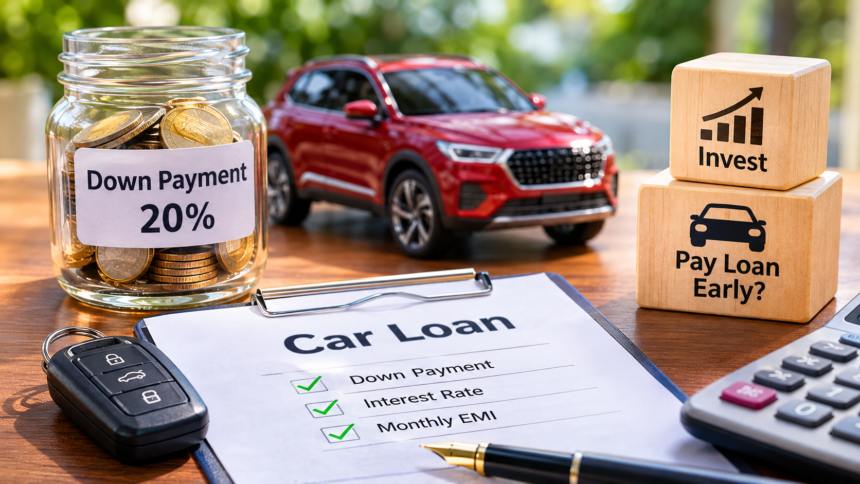
Buying a new car requires more than choosing the right model and features. Buyers also need to decide how much money to pay upfront and how much to borrow through a car loan. One common approach is to make a 20% down payment, but putting more money into the purchase may not always be the best financial decision.
The choice between reducing your loan and keeping money invested depends on factors such as the loan interest rate, potential investment returns, existing debts and the amount of cash you have available.
Is a 20% Car Loan Down Payment the Right Choice?
Paying 20% of the car’s price upfront can reduce the amount you need to borrow. A smaller loan generally means lower monthly EMIs and less interest payable over the loan period.
However, making a large down payment also means having less money available for emergencies or investments. Buyers should be careful about using their emergency savings or withdrawing money from long-term investments simply to reduce their car loan.
The decision should be based on an individual’s overall financial position rather than following a fixed down payment rule. Maintaining sufficient liquidity while managing borrowing costs is equally important.
Should You Repay the Car Loan Early or Invest the Money?
Borrowers sometimes consider closing their car loans ahead of schedule to reduce their interest burden. However, experts suggest evaluating the financial impact before making an early repayment.
Foreclosure charges, if applicable, and the potential returns that could have been earned by investing the money should also be considered.
For example, suppose a car loan carries an interest rate of 9% or less, while the expected return from equity investments is 12.62%. In such a situation, investing the surplus money may appear more beneficial than using it to repay the loan early.
However, equity market returns are not guaranteed and can fluctuate, while the interest charged on a loan is a definite expense. Therefore, comparing these two figures alone is not enough to make a decision.
How to Choose the Right Car Loan Strategy
Before deciding how much to pay upfront or whether to invest surplus funds, buyers should assess their total loan requirement, existing liabilities, investment plans and monthly financial commitments.
It is also important to understand the loan’s interest rate, associated charges, foreclosure costs and the financial impact of extending repayments over a longer period.
If the expected investment return is higher than the effective cost of borrowing, investing the surplus may be worth considering. However, the decision should account for market risks and the actual returns available after taxes.
Buyers should first ensure that they have an adequate emergency fund and that their monthly EMI does not put unnecessary pressure on their budget. Avoid making decisions based only on expected investment gains or the desire to become debt-free quickly.
A balanced approach that considers both existing loan obligations and long-term investment goals can help buyers make a more informed financial decision.
Disclaimer: This article is for general information and educational purposes only. Investment returns are subject to market risks and are not guaranteed. Actual car loan costs, interest rates and foreclosure charges may vary depending on the lender and loan agreement. Readers should assess their individual financial circumstances and consult a qualified financial adviser before making borrowing or investment decisions.