
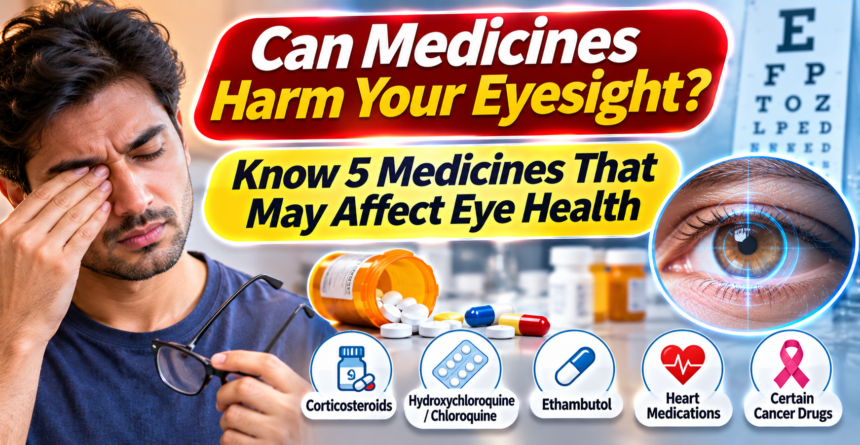
Medicines play an important role in treating diseases, controlling chronic conditions and improving patients’ quality of life. However, while people are generally aware that certain medicines can affect the stomach, liver or kidneys, their possible impact on eyesight often goes unnoticed.
Some prescription medicines used to treat autoimmune disorders, tuberculosis, heart conditions and inflammatory diseases may affect different parts of the eyes, particularly when taken over a long period.
Depending on the medicine and the duration of treatment, possible side effects include dry eyes, blurred vision, changes in colour perception, increased eye pressure and retinal damage. These complications do not affect everyone, but knowing the warning signs and attending regular eye examinations can help detect problems early.
5 Types of Medicines That May Affect Your Eyesight
Certain commonly prescribed medicines are associated with potential eye-related side effects. The level of risk depends on factors such as dosage, treatment duration, the specific medicine and a patient’s overall health.
1. Corticosteroids
Medicines such as prednisolone and dexamethasone are widely used to treat inflammation, autoimmune disorders and allergic reactions.
However, prolonged corticosteroid use can increase pressure inside the eyes, potentially leading to steroid-induced glaucoma. Long-term treatment may also contribute to cataracts, particularly posterior subcapsular cataracts.
People affected by these conditions may experience blurred vision, glare and difficulty seeing clearly in bright surroundings. These complications can occur with steroid eye drops as well as certain oral or other systemic treatments. The risk varies according to the dose, duration and method of administration.
2. Hydroxychloroquine and Chloroquine
Hydroxychloroquine is commonly prescribed to manage autoimmune conditions such as rheumatoid arthritis and lupus.
Although the medicine is generally well tolerated, prolonged exposure or doses higher than recommended can cause retinal toxicity. This condition can damage the macula, the central area of the retina responsible for detailed vision.
One concern is that retinal damage may develop without noticeable symptoms during its early stages. For this reason, patients taking hydroxychloroquine should undergo baseline and periodic retinal examinations as advised by their ophthalmologist.
3. Ethambutol
Ethambutol is an antibiotic used as part of tuberculosis treatment. In some patients, it can cause optic neuropathy, which involves damage to the optic nerve responsible for transmitting visual information from the eyes to the brain.
Possible symptoms include blurred central vision, reduced visual clarity and difficulty identifying certain colours, particularly red and green.
Early detection is important because delayed diagnosis can increase the possibility of permanent vision problems.
4. Certain Heart Medicines
Some medicines used to manage heart rhythm disorders may also have effects on eye health. One example is amiodarone.
The medicine can cause deposits to develop in the cornea. These deposits are often identified during an eye examination and may not cause significant vision problems.
In rare cases, amiodarone may also be associated with optic nerve damage. Anyone experiencing unexplained changes in eyesight while taking this medicine should seek medical evaluation.
5. Certain Cancer Medicines
Some cancer treatments, including tamoxifen, may affect the retina, particularly when used for an extended period or at higher cumulative doses.
In certain patients, treatment may be associated with crystalline deposits, retinal changes or abnormalities in the macula. These conditions can affect central vision.
The likelihood of such complications varies from person to person, making appropriate eye monitoring important during long-term treatment.
Warning Signs That Your Medication May Be Affecting Your Eyes
Medication-related eye problems do not always cause immediate symptoms. Conditions such as early retinal toxicity and increased eye pressure may develop without obvious changes in eyesight.
However, certain symptoms should be taken seriously, including:
- Persistent blurred vision or difficulty focusing.
- Changes in colour perception, especially difficulty distinguishing certain colours.
- Increased sensitivity to light or glare.
- Difficulty reading or performing close-up activities.
- Unexplained changes in central vision.
- Persistent dryness or unusual visual disturbances.
People experiencing these symptoms while taking long-term medication should inform their prescribing doctor and consult an eye specialist.
Why Regular Eye Check-Ups Are Important
Routine eye examinations can help identify potential medication-related complications before they cause significant damage to vision.
Depending on the medicine being used, an ophthalmologist may recommend several tests, including visual acuity assessment, eye pressure measurement, retinal examination, Optical Coherence Tomography (OCT) and visual field testing.
For example, patients taking hydroxychloroquine may need specialised retinal screening to detect early changes in the macula. Those receiving long-term corticosteroid treatment may require regular eye pressure checks to identify possible signs of glaucoma.
Similarly, people taking ethambutol may need initial and follow-up assessments of visual clarity and colour vision, depending on their treatment plan and individual risk factors.
The frequency of these examinations is decided according to the medicine, dosage, duration of treatment and the patient’s medical condition.
How to Reduce the Risk of Medication-Related Eye Problems
Although every medication-related complication cannot be prevented, following certain precautions can help reduce the risk of delayed diagnosis and serious vision problems.
- Follow the prescribed dosage: Do not change, increase or reduce your medication dose without consulting your doctor.
- Attend regular eye examinations: Follow the recommended screening schedule, particularly when taking medicines associated with retinal damage or increased eye pressure.
- Inform doctors about your medicines: Share details of prescription drugs, over-the-counter medicines and supplements with your physician and ophthalmologist.
- Pay attention to vision changes: Do not ignore unexplained blurring, glare or changes in colour perception. Seek medical advice promptly.
- Avoid using eye drops without medical advice: Steroid-containing eye drops, in particular, should not be used without proper medical supervision.
Importantly, patients should never stop essential medication on their own because of concerns about possible eye-related side effects. Any change in treatment must be discussed with the prescribing doctor.
When Should You Visit an Eye Specialist?
Sudden or unexplained vision changes while taking medication should be evaluated by a medical professional. Sudden loss of vision, severe eye pain, flashes of light or a sudden increase in floaters require urgent medical attention.
People taking medicines such as hydroxychloroquine, corticosteroids and ethambutol for extended periods should also discuss an appropriate eye-screening schedule with their treating doctors, even if they have no noticeable symptoms.
Medicines remain essential for managing many health conditions, and their benefits often outweigh their potential risks. However, understanding their possible effects on eyesight is an important part of long-term treatment.
Following medical advice, attending recommended eye examinations and responding promptly to unusual vision changes can help patients manage their treatment while protecting their eye health.
Disclaimer: This article is intended for general health information and awareness. Medication-related risks vary between individuals. Do not stop or change prescribed treatment without consulting your doctor. Seek professional medical advice for any vision-related symptoms.