
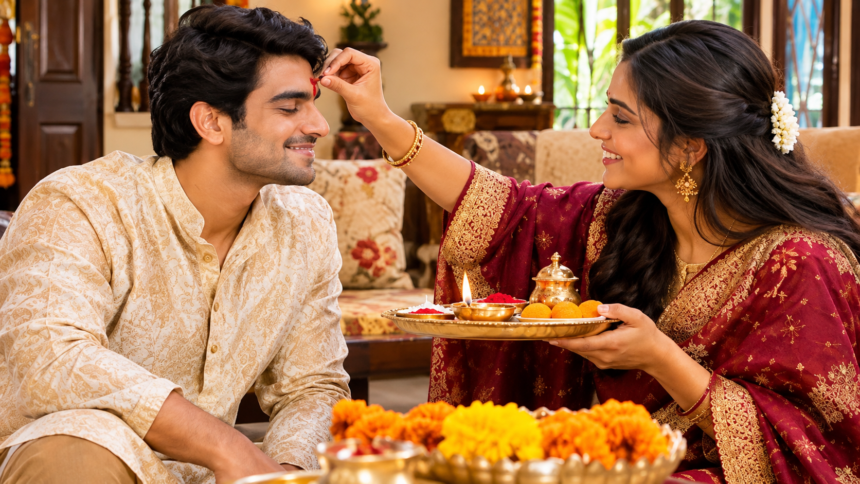
Bhai Dooj is one of the special festivals that brings the Diwali celebrations to a close. Observed two days after Diwali, the festival will be celebrated on Wednesday, November 11, 2026. The occasion highlights the bond between brothers and sisters, with sisters praying for their brothers’ long lives, happiness and prosperity, while brothers promise to support and protect them.
Although the central sentiment remains the same, Bhai Dooj is celebrated through different customs and traditions across India. From Bhau Beej in Maharashtra to Bhai Phonta in West Bengal, each region adds its own cultural touch to the festival.
Why Is Bhai Dooj Celebrated?
Bhai Dooj is observed on the second day of Shukla Paksha in the Hindu month of Kartik. According to a popular Hindu legend, the festival is associated with Yamuna and her brother Yama, the god of death.
As the story goes, Yamuna invited Yama to her home and welcomed him with a traditional tilak and a meal. Pleased by her affection and hospitality, Yama blessed her and declared that brothers who visit their sisters on this day would receive his protection and remain free from fear.
This legend is believed to be the reason behind the festival’s other name, Yama Dwitiya. The occasion celebrates the affection, care and lifelong connection shared by siblings.
How Bhai Dooj Is Celebrated in Different Parts of India
1. North India: Bhai Dooj
In Delhi, Uttar Pradesh, Haryana and Punjab, the festival is widely known as Bhai Dooj. Sisters prepare a traditional puja thali containing roli, rice, a diya, sweets and a coconut.
During the ceremony, the brother sits in front of his sister as she applies a tilak to his forehead and performs an aarti. In some households, sisters also tie a sacred thread around their brothers’ wrists before offering sweets.
Brothers express their affection by giving gifts, clothes or money to their sisters. Family gatherings and special lunches are also an important part of the celebration, with relatives coming together at their parents’ or sisters’ homes.
2. Maharashtra and Goa: Bhau Beej
In Maharashtra and Goa, Bhai Dooj is celebrated as Bhau Beej. One of the traditional customs involves the brother sitting on a wooden seat called a ‘patla’, while his sister decorates the surrounding area with rangoli.
She then applies a tilak, performs the aarti and, in some traditions, offers a betel nut as a symbol of blessings.
Food is an important element of Bhau Beej celebrations. Sisters prepare their brothers’ favourite dishes, while traditional sweets such as shrikhand and puran poli are commonly served. In Gujarat, the festival is known as Bhai Beej and is observed through similar rituals.
3. West Bengal: Bhai Phonta
In West Bengal, the festival takes the name Bhai Phonta and is celebrated with distinctive rituals and elaborate meals.
Traditionally, sisters observe a fast until they perform the phonta ceremony. They apply a mark made from sandalwood paste to their brothers’ foreheads and place dhaan and durba grass on their heads as a blessing.
During the ritual, sisters recite a traditional rhyme expressing their wish to protect their brothers from Yama, the god of death. The ceremony is followed by a festive meal featuring Bengali favourites such as luchi, mutton curry, fish and sweets, including sandesh and rasgulla.
In many Bengali households, Bhai Phonta is observed on the day after Kali Puja, which means its celebration date can vary.
4. Nepal, Sikkim and Darjeeling: Bhai Tika
In Nepal, Sikkim and the Darjeeling hills, the festival is known as Bhai Tika. In Nepal, it marks the final day of Tihar, the five-day festival of lights.
A major highlight of the celebration is the application of a seven-coloured tika on the brother’s forehead. Sisters also place garlands made from marigold or makhmali flowers around their brothers’ necks.
The seven colours are traditionally believed to offer protection and represent wishes for a brother’s long life. Following the ceremony, siblings exchange gifts and enjoy a special meal that often includes sel roti and fruits.
5. Bihar and Jharkhand: A Distinctive Bhai Dooj Tradition
Certain communities in Bihar and Jharkhand follow a unique tradition during Bhai Dooj, also known as Bhaiya Dooj.
As part of the custom, sisters initially scold or playfully curse their brothers. They then pierce their own tongues with a small plant thorn as an expression of apology. Following this ritual, they offer blessings and sweets to their brothers.
The practice symbolises the importance of a sister’s words and the strength of her blessings.
Different Names, One Special Sibling Bond
Bhai Dooj is celebrated under several names across different parts of the country. While it is commonly called Bhai Dooj or Bhaiya Dooj across the Hindi-speaking regions, some southern communities observe it as Bhathru Dwitiya. Other regional names include Bhau Beej, Bhai Phonta and Bhai Tika.
Despite differences in rituals, food and traditional practices, the festival carries the same message of love, protection and affection between siblings.
Modern celebrations have also adapted to changing lifestyles. Siblings living in different cities or countries often exchange gifts online, send sweets and flowers through courier services or connect through video calls to participate in the tilak ceremony.
Whether celebrated together or across long distances, Bhai Dooj remains an occasion to appreciate the special relationship between brothers and sisters.