
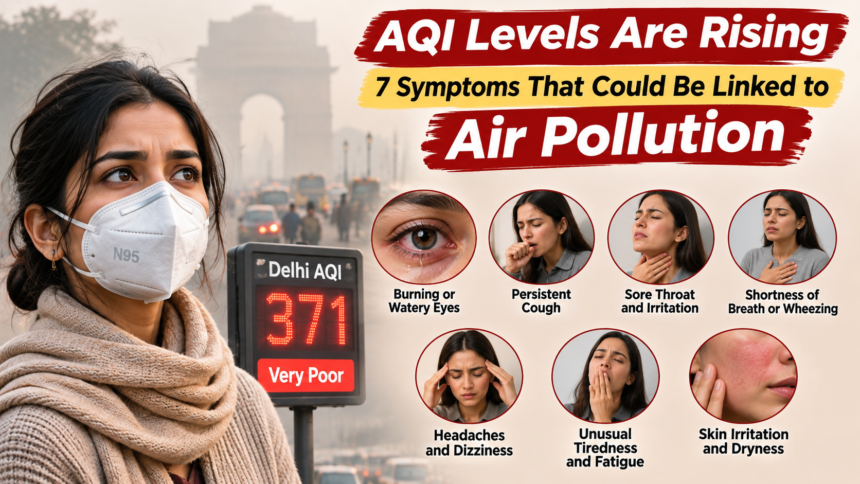
Air pollution is becoming a growing concern across Delhi-NCR, particularly after the festive celebrations. As pollution levels increase, many people may experience symptoms such as throat irritation, headaches, burning eyes and unexplained tiredness without immediately connecting them to poor air quality.
Delhi’s overall Air Quality Index (AQI) is currently around 371, placing it in the ‘Very Poor’ category. Several pollution hotspots have already recorded AQI levels above 400, entering the ‘Severe’ category.
Health experts warn that prolonged exposure to polluted air can affect different parts of the body. While some symptoms may appear mild initially, they should not be ignored. From persistent coughing to breathing difficulties and skin problems, here are seven common symptoms that could be associated with air pollution.
7 Symptoms That Could Be Linked to Air Pollution
1. Burning or Watery Eyes
Eye irritation is one of the common reactions to polluted air. Dust, smoke and microscopic pollutants can come into contact with the eyes, leading to redness, itching, discomfort and excessive watering.
If your eyes frequently feel irritated or gritty after spending time outdoors, poor air quality could be a contributing factor.
2. Persistent Cough
A dry cough that continues for several days can be another sign of exposure to polluted air. When harmful particles enter the respiratory system, they can irritate the airways and trigger coughing.
Some people may experience more discomfort during the early morning or late evening when smog levels can remain high. A cough that does not improve should not be overlooked.
3. Sore Throat and Irritation
High pollution levels can leave the throat feeling dry, rough or itchy. This irritation may resemble the early symptoms of a common cold, even when there is no fever or body ache.
Smoke and airborne particles can irritate the throat, making swallowing or speaking uncomfortable.
4. Breathlessness or Wheezing
Difficulty breathing during routine activities, such as walking short distances or climbing stairs, can indicate that polluted air is affecting the respiratory system.
Exposure to pollutants may cause airway inflammation, resulting in chest tightness, wheezing or shortness of breath. People with asthma and existing respiratory conditions may experience these problems more frequently, although otherwise healthy individuals can also be affected.
5. Headaches and Dizziness
Frequent headaches, dizziness and difficulty concentrating may also occur during periods of poor air quality.
Spending extended periods in polluted outdoor environments or poorly ventilated indoor spaces can contribute to discomfort. Exposure to certain pollutants, including carbon monoxide, can interfere with the body’s oxygen supply and cause symptoms such as headaches and lightheadedness.
6. Unusual Tiredness and Fatigue
Feeling exhausted despite getting sufficient sleep could be another possible effect of prolonged exposure to polluted air.
The body’s response to airborne pollutants, along with disturbed sleep during high-pollution periods, may contribute to low energy levels and persistent fatigue.
7. Skin Irritation and Dryness
The effects of air pollution are not limited to the respiratory system. Pollutants and airborne particles can settle on the skin, potentially causing dryness, itching, redness, rashes and breakouts.
People with sensitive skin or conditions such as eczema may experience increased irritation and flare-ups when pollution levels rise.
How to Protect Yourself When AQI Levels Rise
Although outdoor pollution cannot always be avoided, certain precautions can help reduce exposure and protect your health.
Check the AQI before leaving home and limit outdoor activities when pollution levels are high. Avoid morning walks, jogging and outdoor workouts during poor or severe air quality conditions. Keeping windows closed during peak smog hours can also help reduce the entry of polluted air.
If travelling outdoors is unavoidable, wear a properly fitted N95 mask, which offers better protection against fine particles than ordinary cloth masks.
Maintaining good hydration, washing your face after returning home and rinsing your eyes with clean water can help manage irritation. Avoid indoor sources of pollution, including incense sticks, smoke and excessive dust. Using an air purifier, if available, can also help improve indoor air quality.
When Should You Consult a Doctor?
Mild symptoms such as occasional coughing or eye irritation may improve as air quality gets better. However, medical attention is important if symptoms continue for several days or become more severe.
Seek medical advice if you experience persistent wheezing, chest discomfort or breathing difficulties. Severe breathlessness or chest pain requires immediate medical attention.
Children, older adults, pregnant women and individuals with existing heart or lung conditions should take additional precautions because they are more vulnerable to the effects of air pollution.
As AQI levels continue to rise, recognising the early warning signs of pollution exposure is important. Symptoms such as headaches, coughing, eye irritation and unexplained fatigue may seem minor, but paying attention to them can help people take timely steps to protect their health.