
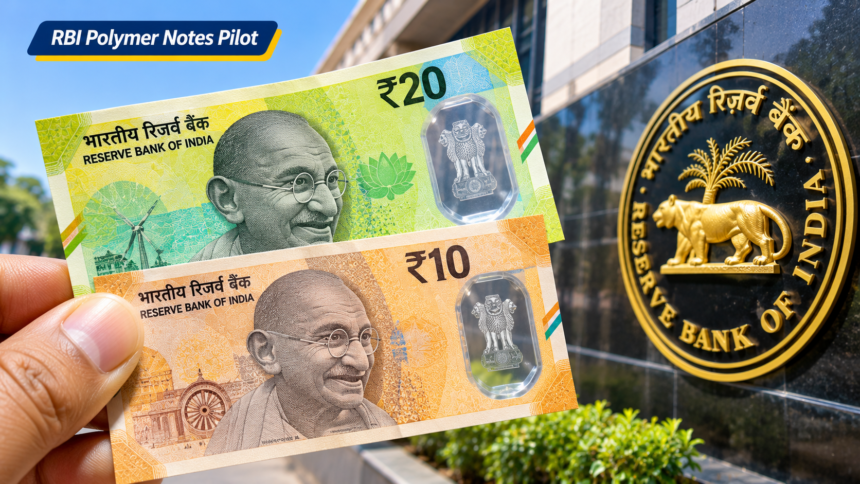
RBI Plastic Notes: The Reserve Bank of India (RBI) is reportedly preparing to test polymer currency notes in denominations of Rs 10 and Rs 20. The proposed pilot project could begin on April 1, 2027, and aims to assess whether plastic-based banknotes can offer better durability than conventional paper currency.
New Delhi: Although digital payment methods such as UPI have become increasingly popular across India, cash continues to play an important role in everyday transactions. To improve the durability of physical currency, the RBI is considering the introduction of polymer notes in smaller denominations.
Unlike traditional banknotes, polymer currency is manufactured using a specialised plastic film that offers greater resistance to water, moisture and everyday damage. These notes are also capable of carrying advanced security features that can make counterfeiting more difficult.
Here is everything you need to know about the proposed RBI plastic currency note pilot project.
What Are Polymer or Plastic Currency Notes?
Polymer notes are banknotes manufactured using a specialised polymer film instead of the traditional paper-based material used for currency.
Despite being made from plastic-based material, these notes are flexible and can be folded easily. They can also be manufactured in dimensions similar to existing paper currency.
One of their major advantages is their ability to withstand moisture, water exposure and regular handling more effectively than conventional notes.
Polymer banknotes can also include transparent sections and additional security features. These elements make it more difficult for counterfeiters to reproduce genuine currency.
When Will RBI Introduce Rs 10 and Rs 20 Plastic Notes?
According to reports, the RBI is preparing to conduct a pilot project involving polymer notes of Rs 10 and Rs 20 denominations.
The proposed testing programme could start from April 1, 2027. The initial phase is expected to help assess the durability, usability and practical requirements of polymer currency in everyday transactions.
However, an official announcement confirming the launch date and other implementation details is still awaited.
Therefore, the proposed April 2027 timeline should not be treated as a confirmed nationwide circulation date.
What Are the Benefits of Polymer Currency Notes?
The introduction of plastic currency could offer several advantages over traditional paper banknotes.
Greater durability: Polymer notes are designed to withstand regular handling and can remain usable for longer periods.
Water resistance: Their material provides better protection against water and moisture compared with conventional paper currency.
Improved security: Transparent windows and other specialised security features can make counterfeit currency more difficult to produce.
Reduced replacement requirements: Longer-lasting notes could reduce the frequency of currency replacement and reprinting.
These features could be particularly useful for lower-denomination notes, which are frequently used for everyday purchases and small transactions.
Why Is Cash Still Important Despite Growing UPI Payments?
Digital payment services have changed the way people make transactions in India. UPI is now widely used for everything from shopping and food purchases to small everyday payments.
However, physical currency remains important, particularly in rural areas, local markets and small businesses where internet connectivity or digital payment facilities may not always be available.
Small shopkeepers and customers continue to depend on cash for many routine transactions.
For this reason, improving the quality and security of physical currency remains important even as digital payments continue to expand.
If the RBI proceeds with the proposed polymer currency pilot for Rs 10 and Rs 20 notes, it could represent another development in India’s currency system, combining the continued usefulness of cash with improved durability and security features.
Disclaimer: This article is based on the information provided in the source material and is intended for general informational purposes. The proposed RBI polymer currency pilot and its expected timeline have not been confirmed through an official announcement in the supplied information. The launch date, denominations and implementation details may change. Readers should refer to official Reserve Bank of India notifications for verified updates.