
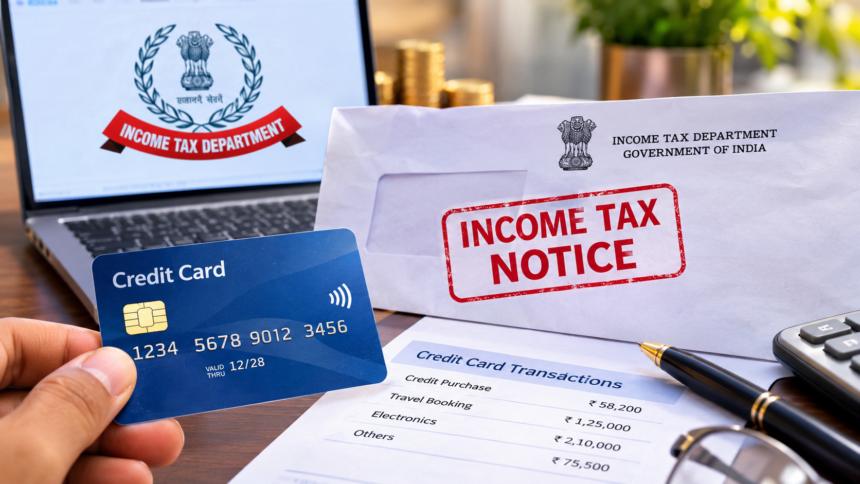
Using a credit card for everyday shopping and large financial transactions has become common. However, cardholders should be careful when making substantial payments, as high-value credit card transactions may come under the scrutiny of the Income Tax Department.
If your spending does not match the income declared in your Income Tax Return (ITR), tax authorities may ask you to explain the source of the money used for these payments. Maintaining proper financial records and supporting documents is therefore important to avoid unnecessary complications.
Here is what taxpayers should know about credit card spending, reporting requirements and the importance of keeping transaction records.
How Does the Income Tax Department Track Credit Card Spending?
The Income Tax Department receives financial transaction information from banks and other financial institutions through the Annual Information Statement (AIS) and Statement of Financial Transactions (SFT).
These records include details of certain high-value credit card transactions made during a financial year. Tax authorities may compare this information with the income reported in a taxpayer’s ITR.
If there is a significant difference between declared income and reported expenditure, the department may seek an explanation from the cardholder.
This makes it important to ensure that financial transactions can be properly explained and supported by relevant documents.
Why Can Family Members’ Credit Card Spending Create Problems?
Many people allow family members to use their credit cards for shopping, household expenses or other payments. Credit cards may also be used for business-related transactions.
However, from a tax reporting perspective, the card is linked to the primary cardholder’s PAN. Consequently, questions about the transactions may initially be directed to the person whose name is registered on the card, even if someone else made the payments.
Tax expert Bangar highlighted that proving who actually incurred the expenses can become difficult when proper records are not maintained.
For this reason, cardholders should keep clear information about payments made by family members or other users, including the source of funds and the purpose of each transaction.
How Proper Documents Helped in a ₹16.6 Lakh Credit Card Case
An example involving a taxpayer named Pratik highlights why documentary evidence is important when explaining high-value credit card transactions.
In this case, Pratik explained that the credit card had been used by several family members, including his father, brother and himself. He submitted supporting records to establish who had made the payments and where the money had come from.
The documents included bank statements, details of other card users, ITRs of the related individuals and additional evidence such as affidavits. These records helped explain the source and purpose of the transactions.
The Income Tax Appellate Tribunal (ITAT) accepted the explanation based on the evidence submitted. As a result, the entire amount of ₹16.6 lakh was accepted as explained.
The case demonstrates that maintaining proper documentation can make a significant difference when a taxpayer is asked to explain credit card expenditure.
If other people use your card, it is advisable to preserve payment receipts, bank statements, details of the users and records explaining the purpose of each transaction.
When Can Credit Card Spending Trigger Income Tax Reporting?
Certain high-value credit card transactions are required to be reported under the applicable financial transaction reporting rules.
The thresholds mentioned for reporting include:
- Cash payments above ₹1 lakh: Cash payments exceeding this amount towards credit card bills are reportable.
- Total annual spending above ₹10 lakh: Credit card payments exceeding this amount through one bank’s credit card during a financial year are also reportable.
Such reporting does not automatically mean that the cardholder has violated tax rules or will receive a notice. However, the department may examine transactions if the reported spending appears inconsistent with the taxpayer’s declared income or available financial records.
How Can Credit Card Users Avoid Tax-Related Problems?
Cardholders should maintain a proper record of their credit card expenses, particularly when family members or other individuals use the same card.
Keep payment receipts, bank statements and details showing who made each transaction. It is equally important to retain documents explaining the source of funds used to clear the credit card bill.
Make sure your ITR accurately reflects your income and that significant financial transactions can be explained whenever required.
Keeping these records organised can help you respond more effectively if the Income Tax Department seeks clarification about your credit card spending.
Disclaimer
This article is intended for general tax awareness and informational purposes only. Reporting requirements and tax provisions are subject to applicable income tax laws and may change. A reportable credit card transaction does not automatically indicate tax evasion or guarantee that a notice will be issued. Taxpayers should refer to official Income Tax Department guidelines or consult a qualified tax professional for advice regarding their individual circumstances.