
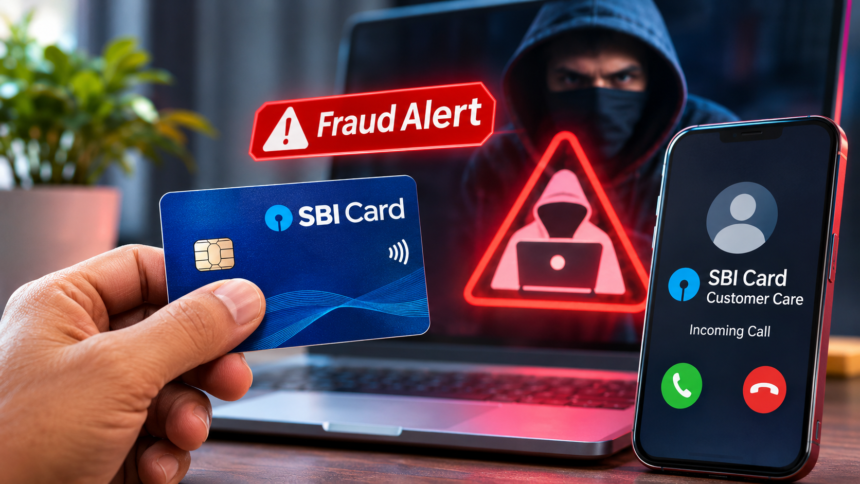
As digital payments continue to grow, online fraudsters are finding new ways to target credit card users. SBI Card has issued an advisory highlighting several common scams, including fake refund messages, fraudulent reward point redemption offers, false credit limit enhancement promises and account reactivation tricks.
The warning comes amid the rapid expansion of India’s digital payments sector. According to PwC’s Indian Payments Handbook 2025–2030, digital payment volumes in India are expected to reach 617 billion transactions by FY30, while transaction values could rise to ₹907 lakh crore. The number of outstanding credit cards is also projected to reach approximately 210 million during the same period.
Fake Credit Card Offers and Impersonation Scams
SBI Card has warned that fraudsters often pose as bank employees, credit card representatives, customer care executives or financial advisors to collect sensitive customer information.
These scammers may approach cardholders with tempting offers such as higher credit limits, upgraded cards, reward point redemption options and settlement discounts. In some cases, they create urgency by informing customers that their credit cards have been blocked or need immediate reactivation.
Such messages and calls may include suspicious links that lead users to fake websites or pages designed to steal confidential details, including card numbers, CVVs, passwords and one-time passwords (OTPs).
Fake refund alerts are another method used by fraudsters. Customers may receive messages claiming that a refund has been processed or money has been credited to their accounts. These notifications can encourage users to follow instructions or make transactions without checking their actual account balance.
SBI Card has advised customers to verify all payment and refund-related information through official banking channels rather than relying on unverified messages.
SBI Card CEO Highlights the Importance of Customer Awareness
Salila Pande, Managing Director and CEO of SBI Card, highlighted the importance of customer awareness in preventing digital payment fraud.
She said, “At SBI Card, protecting our customers and earning their trust remain fundamental to our business. As digital payments become deeply embedded in everyday life, we recognise the importance of staying ahead of emerging fraud risks.”
She further emphasised that awareness plays an equally important role alongside technology in preventing financial scams. Customers should verify information before making transactions, protect their personal and financial details and report suspicious activities without delay.
How to Protect Yourself from Credit Card Fraud
SBI Card has shared several safety measures that customers should follow to reduce the risk of financial fraud.
- Avoid opening suspicious links received through WhatsApp, SMS, email or social media.
- Download mobile applications only from trusted and verified app stores.
- Do not allow unknown individuals to access your device through screen-sharing applications.
- Never share your card PIN, OTP, CVV or password with anyone, including people claiming to be bank representatives.
- Enable transaction alerts and regularly check credit card statements for unfamiliar transactions.
- Verify promotional offers independently through official bank channels before responding.
If a customer notices an unauthorised transaction or suspicious activity, they should immediately contact the bank or card issuer, block the affected card and report the incident to cybercrime authorities.
Disclaimer: This article is based on the SBI Card advisory and information provided in the source material. Fraud prevention measures are intended for general awareness. Customers should contact SBI Card through its official communication channels for assistance with suspicious transactions or account-related concerns.