
Imagine booking a confirmed train ticket with a side lower berth in coach B1. After boarding, you visit another coach to spend some time with friends. When you return to your allotted seat later, you find another passenger sitting there. Despite having a confirmed ticket, you are suddenly left wondering how someone else could occupy your reserved berth.
This situation is associated with the Indian Railways’ NT (Not Turned Up) status. Under the applicable ticket-checking procedure, a Travelling Ticket Examiner (TTE) can record a passenger as absent if they fail to turn up at their allotted berth and their presence cannot be verified. The vacant berth may then be considered for allocation to another eligible passenger, including someone travelling on an RAC ticket.
Therefore, having a confirmed reservation is important, but passengers should also make sure they board the correct coach and report to their allotted berth promptly. Here is how the NT process works and what travellers should know.
What Is the NT Rule in Indian Railways?
NT stands for Not Turned Up. It refers to a situation in which a passenger does not report to their reserved berth and cannot be located during the TTE’s ticket inspection.
For example, suppose you have booked a ticket from Delhi to Patna and received berth number 25 in coach B1. After the train departs, the TTE checks the reservation chart and finds that your allotted berth is empty.
The TTE may try to establish whether you have boarded the train and check your presence in the relevant coach. If you cannot be found and your absence is confirmed, your ticket may be marked as NT according to the applicable railway procedure.
Once the absence is recorded, the berth may become available for reassignment under railway rules. This is particularly relevant for passengers travelling on RAC or waiting-list tickets.
How Does the TTE Update Passenger Details Through the HHT System?
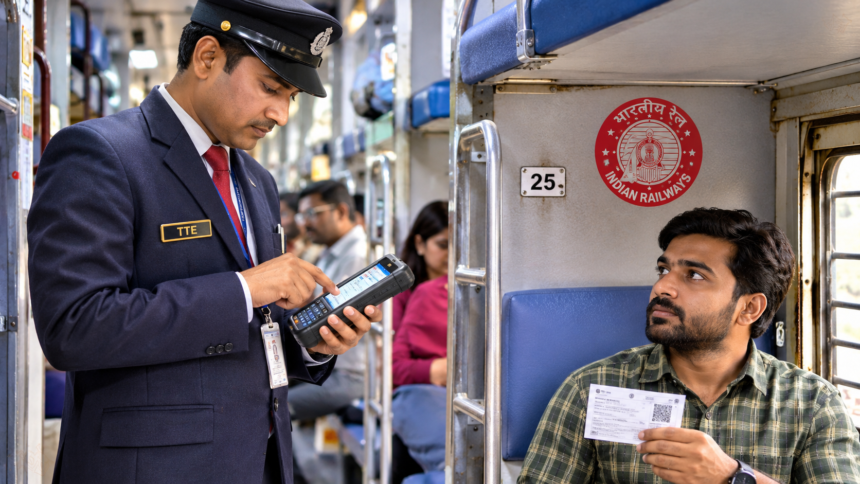
Indian Railways uses a Hand Held Terminal (HHT) to help TTEs manage passenger reservations and verify ticket details during journeys.
The device provides access to passenger information, including coach and berth numbers, reservation status and other relevant details.
During ticket checking, the TTE can use the HHT to identify passengers who have been allotted particular berths. If a reserved seat is found vacant, the TTE can verify the passenger’s presence and update the relevant information in the system.
This digital process helps railway staff maintain updated reservation records and manage berths that become available during a journey.
Can an RAC Passenger Get Your Confirmed Berth?
An RAC passenger is permitted to travel but may not initially have a full berth allocated. Such passengers can receive a full berth if one becomes available, subject to railway rules and the TTE’s verification.
For instance, if a confirmed passenger does not turn up and the berth is officially treated as vacant, the TTE may allot it to an eligible RAC passenger.
This means that failing to report to your reserved berth and remaining untraceable during ticket verification could create problems, even if you originally had a confirmed reservation.
However, it is important to understand that simply stepping away from your seat for a short time does not automatically mean that your reservation will be cancelled. Berth reassignment must follow the applicable railway procedures and verification process.
How to Protect Your Confirmed Train Seat
Passengers can follow a few simple precautions to avoid confusion during their journey.
- Board the correct coach: Check your ticket carefully and enter the coach mentioned in your reservation.
- Reach your allotted berth: After boarding, locate your reserved seat instead of spending an extended period in another coach.
- Inform the TTE: If you cannot reach your berth immediately due to a genuine reason, contact the TTE and explain the situation.
- Keep your ticket and ID ready: Carry your confirmed ticket and valid identification throughout the journey.
A confirmed railway reservation gives you the right to travel on your allotted berth, but passengers should also follow the prescribed boarding and ticket-verification procedures. Reaching your coach on time and communicating with the TTE whenever necessary can help prevent unnecessary disputes during your journey.
Disclaimer: This article is intended for general informational purposes only and explains the NT procedure as described in the supplied information. Railway reservation, passenger verification and berth-allocation procedures are governed by official Indian Railways rules, which may vary according to the circumstances. Passengers should confirm specific issues with authorised railway staff or official railway sources before making decisions.