
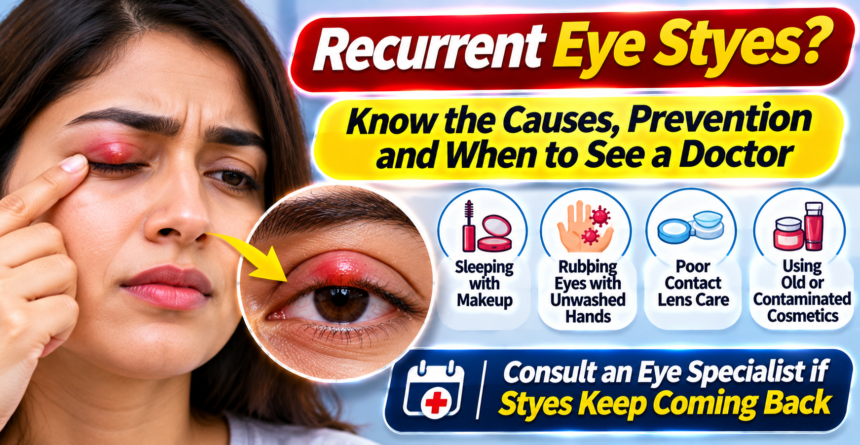
A painful, red bump along the edge of the eyelid can make everyday activities uncomfortable. Commonly known as a stye, this condition is usually caused by an infection involving an eyelash follicle or an oil gland in the eyelid.
Although occasional styes are common, repeated episodes may indicate poor eyelid hygiene or an underlying eye condition that needs medical attention. Habits such as rubbing the eyes with unwashed hands, sleeping without removing makeup, using old cosmetics and improper contact lens care can increase the risk of infection.
In an interaction with News9 Digital, Dr Nisha Ahuja, Chief Medical Officer at Sankara Eye Hospital, Anand, explained why styes develop, what causes them to return and how people can protect their eyelid health.
What Causes a Stye in the Eye?
Medically known as a hordeolum, a stye is a red and painful swelling that usually develops near the edge of the eyelid. According to Dr Ahuja, it occurs when an oil gland or eyelash follicle becomes infected, commonly due to bacteria such as Staphylococcus.
The eyelids contain several small oil-producing glands that help maintain the tear film and prevent tears from evaporating too quickly. When these glands become blocked or infected, a stye may develop.
Poor eyelid hygiene, frequent touching of the eyes, contaminated makeup and existing eyelid inflammation can increase the chances of developing this condition.
Why Do Styes Keep Coming Back?
Repeated styes can sometimes be linked to everyday hygiene habits. Touching or rubbing the eyes without washing hands may transfer bacteria to the delicate eyelid area. Similarly, sleeping with eye makeup, sharing cosmetics or using old and contaminated products can increase the possibility of infection.
However, poor hygiene is not the only reason behind recurring styes.
Dr Ahuja explained that blepharitis, a condition involving inflammation along the eyelid margins, can make people more vulnerable to repeated eyelid infections. Common symptoms include itching, redness, crusting around the eyelashes and a gritty sensation in the eyes.
People with meibomian gland dysfunction, rosacea and certain other skin conditions may also experience recurring eyelid problems.
Everyday Habits That Increase the Risk of Eyelid Infection
Certain routine activities may affect eyelid health without people realising their possible consequences.
- Rubbing the eyes: Touching the eyes with unwashed hands can introduce bacteria and irritants to the eyelids.
- Sleeping with makeup: Leaving mascara, eyeliner and other eye cosmetics on overnight may block oil glands and cause irritation.
- Using old cosmetics: Expired or contaminated makeup products can increase the risk of bacterial exposure.
- Improper contact lens care: Handling lenses without clean hands or failing to clean and disinfect them correctly can contribute to eye infections.
- Sharing personal items: Sharing towels, face cloths and eye makeup may expose the eyelids to infectious agents.
How to Prevent Recurrent Styes
Maintaining proper eyelid hygiene is one of the most effective ways to reduce the chances of repeated styes.
Dr Ahuja recommends washing hands before touching the eyes, removing all eye makeup before going to bed and keeping the eyelids and eyelashes clean. People who frequently experience eyelid inflammation may also benefit from doctor-recommended eyelid wipes or cleansing solutions.
Another helpful measure is applying a clean, comfortably warm compress over closed eyelids. According to the doctor, this can soften accumulated oils and support the normal functioning of the eyelid glands.
However, people who experience repeated symptoms should consult an ophthalmologist instead of depending entirely on home remedies.
Contact lens users should follow the recommended cleaning, disinfection and replacement instructions. They should also avoid wearing lenses during an active eye infection unless their eye specialist advises otherwise.
When Should You Consult an Eye Specialist?
Many uncomplicated styes improve with appropriate home care. However, persistent swelling or repeated infections should not be overlooked.
Dr Ahuja advises consulting an ophthalmologist if a person experiences:
- Repeated episodes of styes.
- Increasing pain or significant eyelid swelling.
- Persistent discharge from the affected area.
- Changes in vision.
- Redness or swelling spreading beyond the eyelid.
- Fever or severe discomfort.
Symptoms such as fever, spreading redness and severe pain require prompt medical attention.
Stye vs Chalazion: What Is the Difference?
A stye and a chalazion may both appear as lumps on the eyelid, but they develop for different reasons.
A stye is generally caused by an infection of an oil gland or eyelash follicle and is usually painful. A chalazion, on the other hand, develops when an oil gland becomes blocked. It typically forms a lump that is less painful.
When these problems occur repeatedly, an eye specialist may recommend checking for underlying conditions such as blepharitis, meibomian gland dysfunction or other contributing health issues.
Dr Ahuja emphasised that maintaining eye hygiene involves protecting not only the eyes but also the delicate tissues surrounding them. Simple practices, including regular handwashing, removing makeup before sleeping and following proper contact lens care, can help reduce the risk of eyelid infections.
If styes continue to return, identifying and treating the underlying cause is important rather than repeatedly focusing only on the visible swelling.
Disclaimer: This article is based on medical inputs shared by Dr Nisha Ahuja and is intended for general awareness. It should not be treated as medical advice or used for self-diagnosis or treatment. Consult a qualified healthcare professional for personalised guidance.