
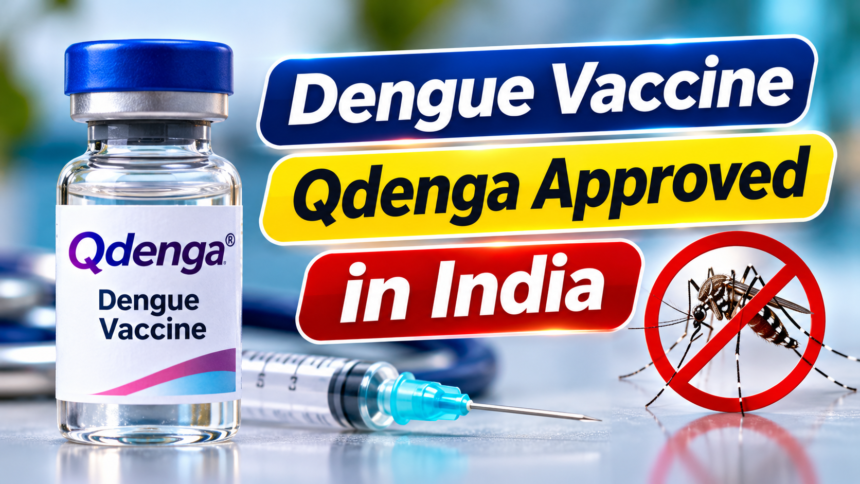
India is preparing for the introduction of Qdenga, a dengue vaccine developed by Takeda, which plans to launch it in the country in partnership with Dr Reddy’s Laboratories. The Central Drugs Standard Control Organisation (CDSCO) approved the vaccine in July for people aged between four and 60 years.
Dengue is one of the fastest-spreading mosquito-borne diseases worldwide. Until now, access to a widely available vaccine has remained limited. According to the World Health Organization’s surveillance system, around 14.1 million dengue cases were reported across more than 100 countries in 2024, marking the highest annual figure recorded. India is also among the countries affected by the disease.
Dengue Cases in India Highlight the Need for Prevention
India has experienced a significant rise in reported dengue infections over recent years. Cases increased from 44,585 in 2020 to 193,245 in 2021. In 2024, the country recorded 233,519 cases and 297 deaths.
The numbers declined by November 2025, when 113,440 cases and 94 deaths had been reported. These were the lowest figures since 2021, although official records may not reflect the actual scale of infections.
An Indian study estimated that the real number of dengue infections could be as much as 282 times higher than reported figures. The disease is also increasingly being seen throughout the year rather than only during specific seasons.
The arrival of a vaccine could therefore provide another option for dengue prevention. However, some medical experts believe that its effectiveness and suitability for India’s varied population and regional virus patterns need further assessment before widespread use.
Paediatrician Dr Sanjeev Bagai has raised questions about changes in the dengue virus, differences in circulating strains across regions and the possibility of antibody-dependent enhancement (ADE), a phenomenon in which an existing immune response may contribute to more severe illness during a later infection.
Why Developing a Dengue Vaccine Is Challenging
Dengue spreads mainly through the bite of infected Aedes aegypti mosquitoes. The virus has four major serotypes, known as DENV-1, DENV-2, DENV-3 and DENV-4. Infection with one type does not provide protection against the remaining three, so a person can contract dengue more than once.
An initial infection may cause mild symptoms or go unnoticed. However, a later infection involving a different serotype can increase the risk of severe disease in some individuals. This makes the development of an effective vaccine more complicated.
India faces an additional challenge because different dengue serotypes circulate in different parts of the country. Their dominance can also change over time.
Dr Bagai points out that predicting which strain will be most common in a particular region during a specific period is extremely difficult. He also highlights the possibility of simultaneous infections involving multiple serotypes and genetic changes in the virus. These factors make it harder to determine how consistently a vaccine will work across India.
Qdenga is a tetravalent vaccine designed to provide protection against all four dengue serotypes. Its development uses a weakened DENV-2 virus as the backbone, with genes responsible for the surface proteins of the other three serotypes incorporated into it.
Dr Bagai has questioned whether this design can deliver balanced protection against all four types, considering the changing pattern of dengue strains. However, Qdenga does contain components targeting all four serotypes and is not exclusively designed against DENV-2.
Qdenga Vaccine Effectiveness and WHO Recommendations
Clinical trial findings have shown that Qdenga can protect against virologically confirmed dengue and reduce hospitalisations related to the disease. However, its effectiveness differs depending on the virus serotype and whether a person has previously been infected.
A long-term analysis of the pivotal clinical trial, published by the manufacturer, reported vaccine efficacy of 61.2% against confirmed dengue and 84.1% against hospitalisation after 4.5 years. These findings indicate meaningful protection, although the vaccine does not prevent every infection.
Dr Bagai believes that researchers should continue examining how protection changes over time, particularly against individual dengue serotypes. He argues that headline efficacy figures do not provide the complete picture if the duration and consistency of protection are not considered.
He has also questioned whether existing trial results adequately represent India’s diverse population and the different dengue patterns found across its regions.
The WHO recommends Qdenga for children aged six to 16 in areas where dengue transmission is high. However, it has highlighted uncertainty about the vaccine’s protection against DENV-3 and DENV-4 among people who have not previously been infected.
The organisation does not recommend routine vaccination in areas with low or moderate dengue transmission until more evidence becomes available. It also advises countries to consider local transmission patterns instead of following the same vaccination policy everywhere.
ADE and Concerns About the Immune Response
One of Dr Bagai’s major concerns is antibody-dependent enhancement, commonly known as ADE. This process can occur when antibodies produced after an earlier infection do not effectively neutralise a virus during a subsequent infection. Instead, they may help the virus enter certain cells, potentially increasing the risk of severe disease.
Dengue is a recognised example of this concern. A second infection with a different serotype can sometimes trigger a stronger inflammatory response and lead to complications.
Because people have different histories of dengue exposure, Dr Bagai believes their existing immune status should be considered when evaluating vaccination. He stresses that researchers need to understand how the vaccine interacts with the immune responses already present in an individual.
He has also suggested that previous infections, including COVID-19 and influenza, could influence the immune response to dengue vaccination because of similarities in certain immune-recognition pathways.
However, the suggestion that shared protein sequences could cause the immune system to respond as though it were facing another dengue infection has not been established as clinical evidence of ADE following Qdenga vaccination. Such possibilities require specific scientific investigation and validation.
Disclaimer: This article is intended for general informational purposes only. Vaccine approvals, eligibility criteria and medical recommendations may vary. Readers should consult qualified healthcare professionals and refer to official health authorities for guidance before making vaccination-related decisions.