
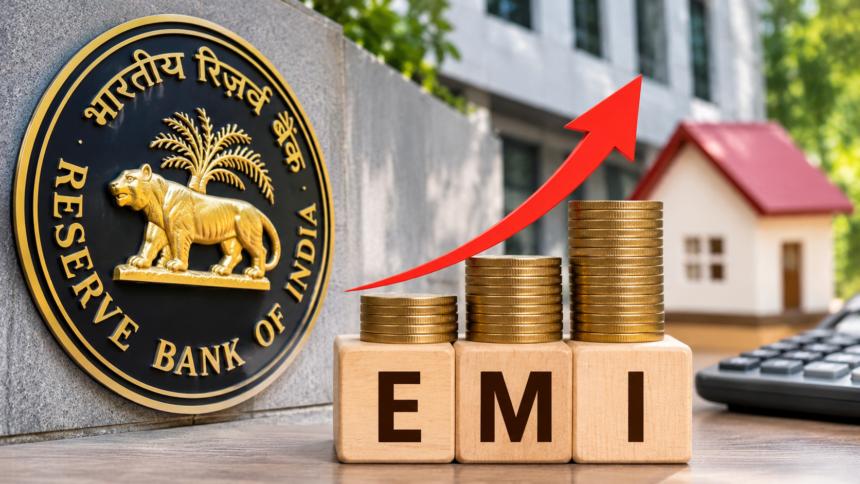
New Delhi: People with existing bank loans and those planning to borrow money could face higher EMI payments in the coming months if the Reserve Bank of India (RBI) decides to increase interest rates. According to a recent report released by Bank of Baroda on Saturday, the central bank may raise interest rates by 0.50% to 0.75% (50–75 basis points) during the current cycle to control inflation and manage liquidity in the banking system.
The RBI recently raised its policy interest rate by 0.25%, marking its first increase in nearly four years. The central bank has also changed its monetary policy stance from ‘neutral’ to ‘calibrated tightening’. According to the Bank of Baroda report, the RBI may consider further rate hikes in its next monetary policy review after withdrawing excess liquidity from the banking system.
Strong Festive Demand Supports Economic Activity
Economic activity in India remained strong during September, supported by increased consumer spending ahead of and during the festive season. The Bank of Baroda report highlighted higher sales across several sectors, including automobiles and electronics, along with an increase in non-oil and non-gold imports.
Other indicators also pointed towards stronger demand. Electricity consumption increased, steel usage remained higher, and the personal loan segment recorded growth. These developments indicate continued economic activity and spending across different sectors.
However, the report also highlighted some concerns regarding consumer sentiment. Referring to an RBI survey, it noted that consumer confidence had weakened in both rural and urban areas despite the strong festive-season demand.
Below-Normal Monsoon Raises Concerns Over Food Inflation
Agriculture remains another important area of concern. India’s southwest monsoon rainfall this year was 13% below normal, with El Niño conditions cited as a contributing factor.
The weaker monsoon has affected Kharif crop production and raised concerns about agricultural output. Reservoir water levels have also declined, potentially creating challenges for the sowing of the upcoming Rabi crops.
If agricultural production faces further pressure, food prices could come under additional upward pressure in the coming months. This could become an important factor in the RBI’s decisions regarding inflation and interest rates.
Government Fiscal Deficit and Tax Collections
The report also highlighted an improvement in the central government’s fiscal position. By September 2026, the fiscal deficit had declined to 4.4%, compared with 5.1% during the same period last year.
During the April–September period of the current financial year, the government’s total revenue increased by 3.6%. Direct tax collections recorded stronger growth of 13.1%, providing support to government finances.
However, indirect tax collections declined by 4.9% during the same period. Government expenditure, meanwhile, continued to grow at a relatively strong rate of 10.7%.
Disclaimer: This article is based on the information and economic projections presented in the Bank of Baroda report. The possibility of an RBI interest rate increase is an expectation and not a confirmed policy decision. Actual interest rate changes will depend on the central bank’s monetary policy assessment and official announcements. Readers should refer to RBI notifications and official financial updates for the latest information.