
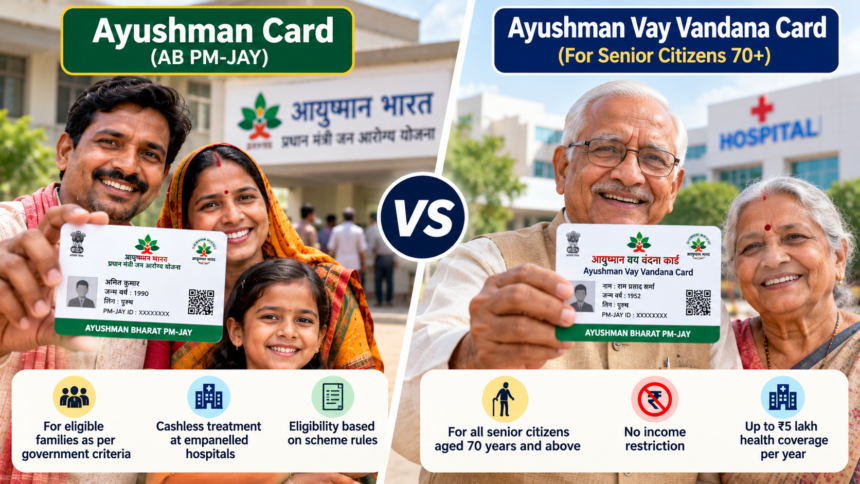
The Central Government provides healthcare assistance through the Ayushman Bharat scheme, including the regular Ayushman Card and the Ayushman Vay Vandana Card. Although both are designed to make medical treatment more affordable, their eligibility requirements are different.
The regular Ayushman Card is issued to beneficiaries who meet the government’s prescribed eligibility conditions. In comparison, the Ayushman Vay Vandana Card is specifically intended for senior citizens aged 70 years and above, irrespective of their income or financial background.
Understanding the difference between these two cards can help people identify which healthcare benefits they may be eligible to receive.
What Is the Regular Ayushman Card and Who Can Apply?
The regular Ayushman Card is provided under the Ayushman Bharat Pradhan Mantri Jan Arogya Yojana (AB PM-JAY).
Eligibility for this card is determined according to the government’s prescribed beneficiary identification criteria. This means that every Indian citizen cannot automatically apply for or receive the regular Ayushman Card.
Eligible families can access cashless hospitalisation facilities at government and private hospitals registered under the scheme. Treatment benefits are provided according to the applicable coverage limits and scheme guidelines.
What Is the Ayushman Vay Vandana Card?
The Ayushman Vay Vandana Card has been introduced to extend healthcare protection specifically to senior citizens aged 70 years and above.
Unlike the regular Ayushman Card, eligibility for this facility is not dependent on a person’s income or financial condition. Senior citizens from economically weaker, middle-income and financially well-off families can qualify based on the age requirement.
Under this initiative, eligible senior citizens receive health coverage of up to ₹5 lakh per year under AB PM-JAY.
For elderly people aged 70 and above who belong to families already covered under the Ayushman Bharat scheme, a separate additional coverage arrangement is available.
Ayushman Card vs Vay Vandana Card: Key Differences
The biggest difference between these two healthcare cards is their eligibility criteria.
The regular Ayushman Card is available to families identified under the government’s prescribed eligibility conditions. Applicants must meet the applicable beneficiary requirements to receive its benefits.
On the other hand, the Ayushman Vay Vandana Card is specifically designed for senior citizens aged 70 years and above, without any income-based restriction.
Both facilities aim to reduce the financial burden of medical treatment and provide access to cashless healthcare at empanelled hospitals.
Which Card Is Suitable for Senior Citizens?
Senior citizens who are 70 years or older can access the Ayushman Vay Vandana facility regardless of their family’s financial status.
This is particularly relevant for elderly people who may not qualify for the regular Ayushman Card under the existing beneficiary criteria but can meet the age requirement for the Vay Vandana initiative.
Therefore, the main distinction is that the regular Ayushman Card depends on government-defined beneficiary eligibility, while the Vay Vandana Card extends coverage specifically to senior citizens aged 70 and above.
Disclaimer: This article is intended for general informational purposes only. Eligibility conditions, healthcare coverage and benefits under Ayushman Bharat and Ayushman Vay Vandana are subject to official government guidelines. Readers should verify their eligibility and the latest scheme details through the official Ayushman Bharat portal or authorised government centres before applying. This website does not guarantee approval or medical coverage under either scheme.