
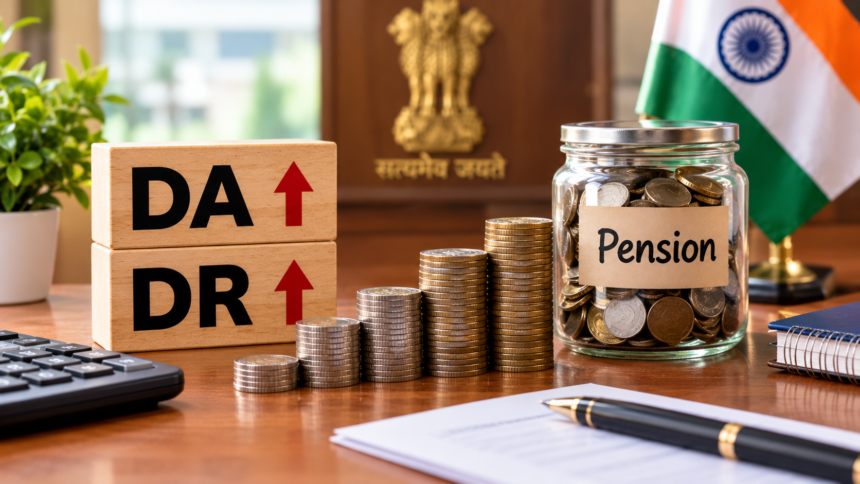
The Union Cabinet has approved a 3-percentage-point increase in Dearness Allowance (DA) for central government employees and Dearness Relief (DR) for pensioners. Union Railways Minister Ashwini Vaishnaw announced the decision on October 28, 2026, stating that the revision would benefit approximately 48.54 lakh employees and 68.71 lakh pensioners.
Describing the increase as a Diwali gift from Prime Minister Narendra Modi, Vaishnaw confirmed that the Cabinet had cleared the proposal at its meeting on Wednesday. According to the Press Information Bureau (PIB), the revised rates will take effect retrospectively from July 1, 2026.
With this decision, DA and DR will rise from 60% to 63% of basic pay and basic pension, respectively. The government estimates that the revision will increase its annual expenditure by ₹10,016.10 crore. The hike follows the accepted formula based on the recommendations of the 7th Central Pay Commission.
1. How Much Will Employees Gain From the 3% DA Hike?
The additional amount employees receive will depend on their basic salary. With DA increasing from 60% to 63%, eligible employees will receive an amount equivalent to an additional 3% of their basic pay each month.
Here are some examples of how the increase could affect monthly salaries:
| Basic monthly pay | Additional DA per month |
|---|---|
| ₹18,000 | ₹540 |
| ₹25,000 | ₹750 |
| ₹50,000 | ₹1,500 |
Since the revised rate is effective from July 1, 2026, eligible employees will also be entitled to arrears for the applicable period before the revised rate is reflected in their salaries. The amount payable will depend on the relevant salary periods and government instructions.
Dearness Allowance is intended to help central government employees manage the effects of inflation on household expenses. The government generally reviews DA twice a year, with revisions taking effect from January and July.
2. How Much More Will Pensioners Receive After the DR Increase?
The Cabinet’s decision also increases Dearness Relief for eligible central government pensioners from 60% to 63% of basic pension.
The additional monthly amount will vary according to each pensioner’s basic pension. For example, a pensioner receiving a basic pension of ₹20,000 will get an additional ₹600 per month. Someone with a basic pension of ₹30,000 will receive an extra ₹900 per month, before applicable deductions or other adjustments.
The revised DR rate will also apply from July 1, 2026. Eligible pensioners will therefore be entitled to the corresponding arrears for the applicable period, subject to the government’s implementation instructions.
Dearness Relief is designed to help pensioners cope with rising living costs by increasing the inflation-linked component of their pension.
3. What Is the Financial Impact of the DA and DR Hike?
The latest revision is expected to benefit around 48.54 lakh central government employees and 68.71 lakh pensioners, taking the total number of beneficiaries to more than 1.17 crore.
The estimated annual financial impact on the government exchequer is ₹10,016.10 crore. While the additional allowance will increase government spending, it will also provide extra income support to households that depend on central government salaries and pensions.
The increase applies to both serving employees and eligible retirees, with the actual benefit determined by their basic pay or pension.
4. When Will the Revised DA and DR Be Paid?
Although the revised rates are effective from July 1, 2026, the timing of their inclusion in salary and pension payments will depend on the applicable government orders and implementation arrangements.
Employees and pensioners should check official notifications for details about when the increased rates will appear in their payments and how arrears will be calculated.
The 3-percentage-point increase raises the inflation-linked component of both salaries and pensions from 60% to 63%, providing additional financial support to eligible central government employees and pensioners.
Disclaimer: This article is intended for general informational purposes and is based on the details provided about the DA and DR revision announced on October 28, 2026. Actual payments, arrears and implementation dates are subject to official government orders. Employees and pensioners should consult the relevant department or official notification for confirmation of their individual entitlements.